Facebook’s New Pay-to-Post Link Policy Threatens Independent Artists, Venues, and Media Outlets

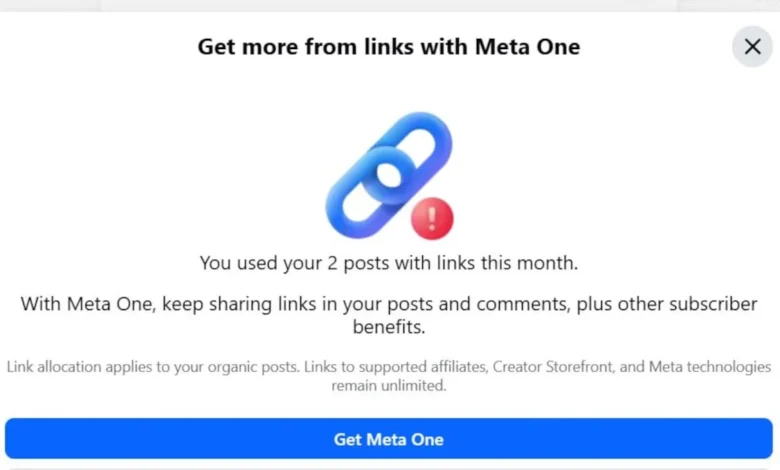
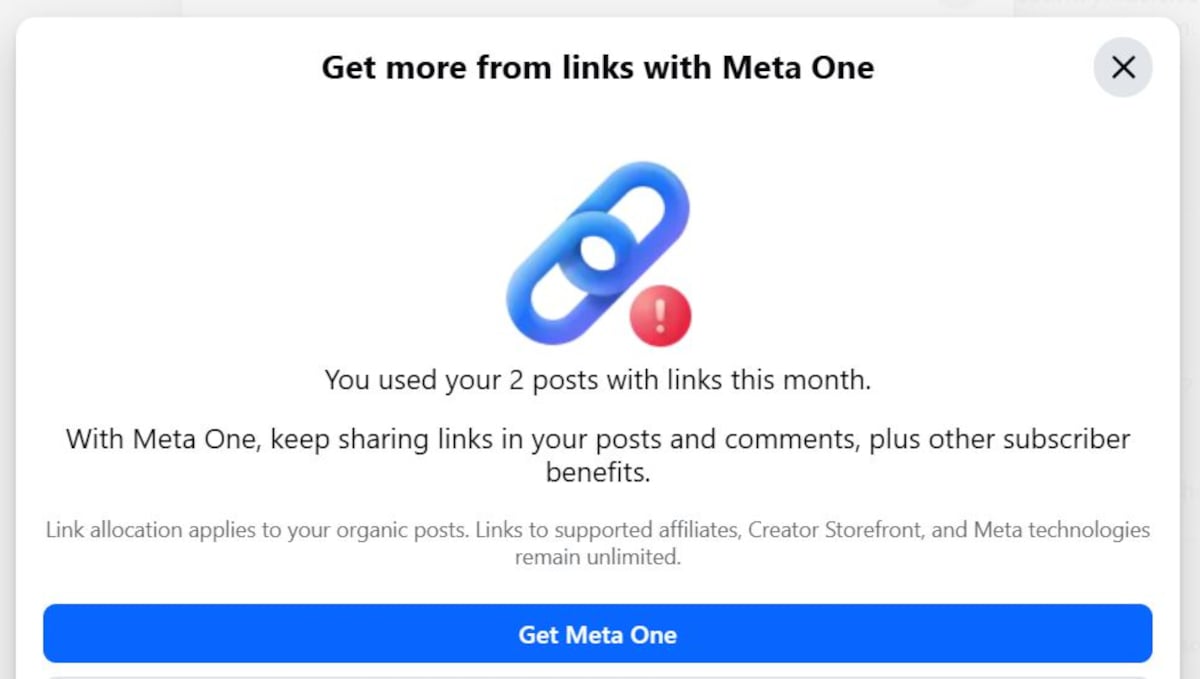
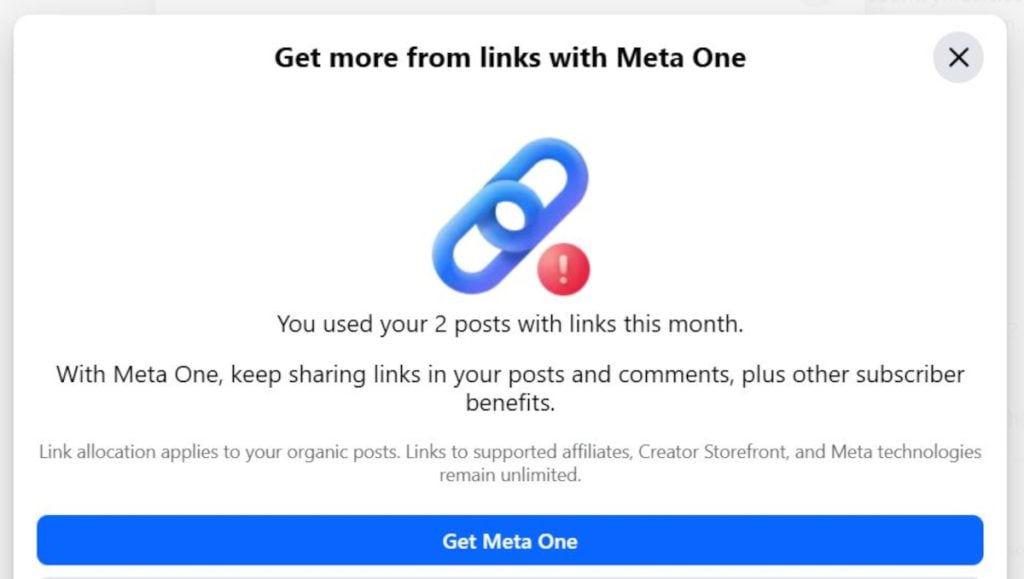
Meta’s recent rollout of the "Meta One for Business" subscription tiers has introduced a controversial structural shift that severely restricts outbound link-sharing for Facebook pages, raising urgent concerns across the independent arts, entertainment, and publishing sectors. Under the newly implemented policy, standard and verified business pages are restricted to sharing a maximum of two outbound links per month without incurring substantial additional fees. For independent musicians, local music venues, small business owners, and digital publishers who have relied for nearly two decades on Facebook as a primary conduit for community engagement and economic survival, the policy represents a potentially existential threat.
The transition marks the culmination of a multi-year trend in which Meta has systematically devalued and deprioritized external web traffic across its ecosystem. While historical features allowed page administrators to publish unrestricted links to ticket vendors, merchandise platforms, crowdfunding campaigns, and journalistic articles, the newly structured tiered pricing model demands significant monthly investments to restore basic operational capabilities. Industry analysts and independent creators argue that the policy fundamentally alters the digital landscape, transforming a once-open networking tool into an expensive, pay-to-play corporate gateway.
Chronology of a Digital Shift
The groundwork for the current restrictions was established incrementally over several years, marked by a steady degradation of organic reach for posts containing external hyperlinks. Throughout the late 2010s and early 2020s, Meta’s proprietary content distribution algorithms increasingly penalized posts that directed users away from the Facebook platform, favoring native content such as uploaded video files, images, and text-only updates.
Data compiled by Meta’s own transparency reports illustrate the rapid decline of external visibility. As recently as 2022, outbound link posts accounted for approximately 9.8% of total content views in the United States. By the first quarter of 2026, that figure had plummeted to a negligible 1.8%, reflecting a deliberate corporate strategy to keep users within the walled garden of the social network.
The policy escalated significantly in December 2025, when Meta first signaled its intention to formally cap outbound linking capabilities for professional accounts. This preliminary warning materialized last week with the official commercial launch of the Meta One for Business packages. Even pages enrolled in the monthly $14.99 "Verified" subscription program—a trust and safety feature originally introduced to authenticate identities and prevent impersonation—found their linking privileges abruptly curtailed to two per month.
The Tiered Pricing Structure and Economic Realities
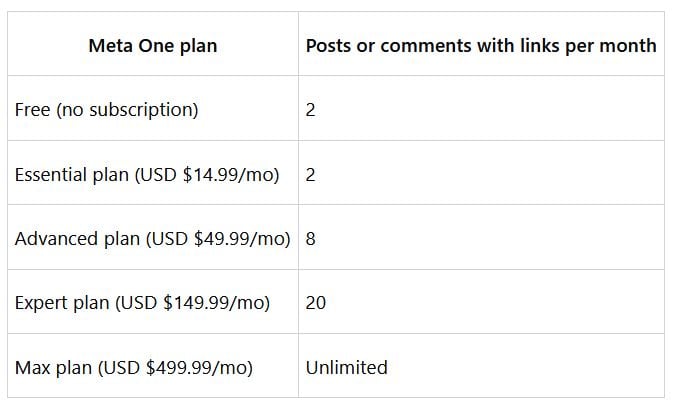
To bypass the strict two-link monthly ceiling, page administrators are required to subscribe to increasingly costly tier levels. The pricing architecture scales exponentially based on publishing volume:
- Basic Verified Plan ($14.99 per month): Permits up to two outbound links per month.
- Advanced Plan ($49.00 per month): Permits up to eight outbound links per month.
- Expert Plan ($149.00 per month): Permits up to 20 outbound links per month.
- Max Plan ($499.00 per month): Purported to restore unlimited link-sharing capabilities.
For independent musicians, touring acts, and small-scale venues, these subscription costs represent a harsh financial imposition during an already challenging economic climate. Independent music venues that host nightly events and routinely publish weekly or daily calendars quickly exhaust even the twenty-link limit offered by the $149-per-month Expert tier.
Independent digital media outlets face an even steeper barrier. Publications operating on lean budgets find that premium tiers consume a disproportionate share of monthly overhead. For instance, a small independent newsroom publishing approximately 50 articles a month would be forced to adopt the highest-tier Max plan at $499 monthly—an expenditure equivalent to a major fraction of total operating costs for niche publishers. Furthermore, affected organizations note that the subscription fees offer no algorithmic guarantees; paying the fee grants the permission to post links, but does not reverse the algorithmic suppression that keeps those links hidden from the majority of followers.
Broader Industry Impact and the "Great Purge"
The timing of Meta’s policy change compounds existing financial pressures facing blue-collar creatives and independent enterprises in 2026. Often described by industry observers as part of a broader "Great Purge" affecting independent musicians, the sector is concurrently navigating depressed concert ticket sales, inflated touring and fuel expenses, and tightened consumer discretionary spending.
Unlike younger demographics heavily concentrated on visually driven platforms like TikTok and Instagram, older and more affluent audiences frequently rely on Facebook to track tour dates, purchase physical merchandise, pre-order albums, and support creators via platforms like Patreon. These consumers typically possess higher disposable income and dedicated free time to support live arts, yet their engagement depends fundamentally on the accessibility of direct checkout and ticketing links.
Furthermore, critics argue that the policy penalizes entities that have spent years cultivating organic audiences. Musicians, promoters, and local businesses were originally encouraged to build communities on Facebook under the promise of a free, open communication channel. Now, having established vital communication pathways, these entities face sudden monetization barriers that render their historical audience acquisition efforts effectively obsolete.
Implications for the Broader Media Ecosystem
The ramifications of Meta’s updated framework extend far beyond the music industry, threatening the operational models of independent journalism, non-profit organizations, and localized commerce. By imposing steep financial tolls on outbound navigation, social media conglomerates exert immense pressure on the flow of open-web traffic, centralizing information consumption within proprietary feeds.
Industry stakeholders and digital rights advocates warn that this precedent could encourage competing platforms—such as X (formerly Twitter) and decentralized networks—to introduce similar monetization schemes for basic publishing functions. As access to the open web behind social media walls becomes increasingly commodified, smaller creators and independent publishers face diminished visibility, heightened financial vulnerability, and accelerated consolidation of digital attention among major corporate entities.
Related posts: