Joe Nichols Challenges Country Music Authenticity Amid Rising Use of AI Generation Tools in Songwriting and Demos

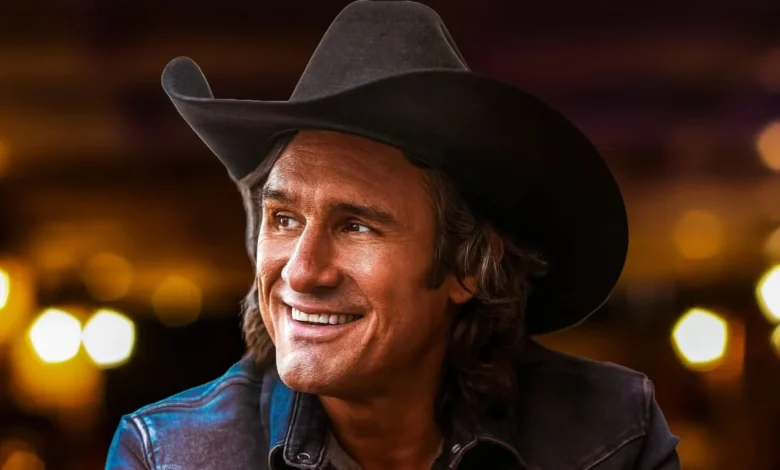
Joe Nichols, a prominent figure in the traditional country music scene, has sparked an industry-wide debate regarding the integrity of the creative process in Nashville following a series of candid revelations about the use of generative artificial intelligence. In an interview with Evan Paul of Taste of Country, the multi-platinum artist claimed that many contemporary singers are being untruthful about their use of AI tools, specifically the music generation platform Suno. Nichols’ comments come at a pivotal moment for the music industry as it grapples with the rapid integration of generative technologies, legal battles over copyright infringement, and a shifting definition of "authentic" artistry.
The Role of AI in the Production of Say La V
The catalyst for this discussion was the production history of Nichols’ latest single, "Say La V," which was released on July 17, 2024. According to Nichols, the song’s writers—industry veterans Brett Warren, Jason Sellers, and Lance Miller—composed the track through traditional human means. However, the path from composition to the recording studio involved a controversial technological shortcut. To pitch the song to Nichols and other potential performers, the writers utilized Suno, an AI tool capable of generating full musical arrangements and vocals from text prompts, to create a polished demo.
Nichols recounted that the writers initially developed the song as a "joke" before realizing they had a "catchy melody" on their hands. By inputting the lyrics and stylistic prompts into Suno, they generated a demo that showcased how the song might sound with a modern production sheen. When Nichols first heard the AI-generated version while on a trip to Washington D.C., his initial reaction was negative, dismissing the track as "too pop." Despite this, the AI-generated melody proved to be an "earworm," eventually leading Nichols to record a more traditional, "country-fied" version of the track. Critics have noted, however, that the final studio version still retains significant pop-country influences, highlighting how the initial AI "vibe" can influence the final human product.
Allegations of Widespread Industry Deception
Beyond his personal experience, Nichols leveled a serious accusation against his peers in the music industry. He suggested that the denial of AI use by many artists is a fabrication, stating that he has witnessed singers claim in interviews that they do not use the technology while knowing "for a fact" that they are lying. Nichols posited that some artists might be narrowly defining what constitutes "using AI," perhaps excluding the use of AI-generated demos or algorithmic assistance from their definition of creative involvement.
"They’re lying through their teeth," Nichols told Taste of Country. "Whether they know it or not is sometimes another story. But they do." This assertion points to a growing transparency gap in Nashville. As AI tools become more sophisticated and accessible, the line between human inspiration and machine assistance is blurring, leading to a potential crisis of authenticity in a genre that prides itself on "three chords and the truth."
Strategic Use of AI as a Creative Mirror
While Nichols remains a vocal proponent of traditional country sounds, he admitted to using Suno as a diagnostic tool for his own songwriting. He described a process where he inputs his written work into the algorithm to see how a "non-human" entity interprets the genre and "vibe" of the song. By observing whether the AI outputs a bluesy gospel track or a bluegrass version of his lyrics, Nichols uses the technology to identify his own "blind spots" and ensure he is on the intended creative track.
However, Nichols drew a firm line at using AI-generated vocals or arrangements for final releases. He acknowledged that the vocal outputs from Suno are "amazing," describing them as the "best singers in the world combined as one," which he argued makes it nearly impossible for a human to replicate the same level of technical perfection. For Nichols, this perfection is precisely the problem, as it lacks the organic imperfections that define human art.
Legal and Ethical Volatility: The RIAA vs. Suno and Udio
The use of Suno by mainstream artists and songwriters is particularly contentious given the current legal climate. In June 2024, the Recording Industry Association of America (RIAA), representing major labels such as Universal Music Group, Sony Music Entertainment, and Warner Music Group, filed a massive copyright infringement lawsuit against Suno and its competitor, Udio. The lawsuit alleges that these companies "ripped off" decades of copyrighted recordings to train their AI models without permission or compensation.
This creates a paradoxical situation within the industry: while record labels are spending millions in legal fees to sue AI companies for intellectual property theft, the artists signed to those very labels are increasingly utilizing those tools to facilitate their creative workflows. The ethical dilemma extends to royalties; because Suno generates music based on existing catalogs without paying into the royalty pool, its use in the demo process could be seen as an indirect endorsement of a system that devalues human labor.
Market Saturation and the Rise of "Ghost" Content
Supporting Nichols’ concerns about the ubiquity of AI are recent data points from the streaming industry. On July 20, 2024, the streaming platform Deezer reported that for the first time, AI-generated tracks accounted for more than 50% of all new uploads to its service. This equates to approximately 91,000 new tracks being added every single day.
Perhaps more alarming is the quality and intent of this content. Deezer revealed that up to 85% of the streams directed toward these AI-generated tracks are fraudulent, often driven by "stream farms" designed to manipulate algorithms and siphon royalty payments away from human artists. This "noise" in the digital marketplace makes it increasingly difficult for emerging human artists to gain visibility, a factor that may be driving even more creators toward AI tools in an attempt to "crack the code" of the algorithm.
From Auto-Tune to Generative AI: A Slippery Slope
The conversation with Nichols also touched upon the historical precedent of Auto-Tune. For decades, pitch correction software was the primary "electronic help" in the studio. Nichols argued that while Auto-Tune began as a time-saving tool for minor pitch corrections, it eventually fundamentally altered the way a generation of singers performs, leading to a "nasally pitch and pinch" that mimics the software’s output.
He warned that generative AI is following a similar trajectory but at a much faster pace. While Auto-Tune modifies a human performance, Suno and Udio can replace it entirely. Nichols expressed frustration with the use of "live tuning" at music festivals, where artists appear to sing perfectly through the use of real-time pitch correction. "If you’re not good enough to come out here and do it 90 minutes, then you’re not good enough," he remarked, emphasizing that live performance remains the "last frontier" for authentic music.
Broader Implications and Industry Infrastructure
The expansion of AI in music also has physical and environmental consequences that are often overlooked in creative discussions. The infrastructure required to process the massive amounts of data for real-time AI generation—such as the demos Nichols mentioned—requires the construction of massive data centers. These centers have become a point of contention in local communities due to their high energy consumption and impact on local resources. The shift toward AI-assisted songwriting is therefore not just a cultural shift, but one that carries a significant environmental footprint.
Furthermore, the industry is currently evaluating the "No Fakes Act" and other legislative proposals aimed at protecting an artist’s voice and likeness from AI duplication. There is a growing movement toward "AI Labeling," which would require creators to disclose when a song has been AI-assisted. However, the definition of "assisted" remains a point of debate. If a song is written by humans but its production was influenced by an AI demo—as was the case with Nichols’ "Say La V"—does it require a label?
The Future of the Human Element in Nashville
As Nashville continues to integrate these technologies, the long-term impact on the workforce is a major concern. The "demo singer" and "session musician" economy, which has long been a training ground for future stars and a livelihood for veteran players, is under direct threat. If songwriters can generate high-quality demos for a monthly subscription fee rather than hiring a band and a vocalist, a vital part of the music ecosystem could disappear.
Joe Nichols’ revelations serve as a warning of a "slippery slope." While AI currently serves as a tool for testing "vibe" or creating quick demos, the technology is rapidly approaching a point where it can replace co-writers and musicians entirely. For a genre like country music, which is built on the foundation of shared human experience and storytelling, the transition to a fully digital, algorithmically-driven production model represents a fundamental shift in the identity of the art form.
The industry now faces a choice: embrace the efficiency and "perfection" of AI at the risk of losing the human soul of the music, or establish clear boundaries and transparency standards to protect the organic art that Nichols and many others believe is the heart of the "country" tradition. As "Say La V" climbs the charts, it stands as a testament to this new reality—a song born of human words, filtered through a machine’s "ear," and finally delivered by a human voice trying to reclaim its authenticity.
Related posts: