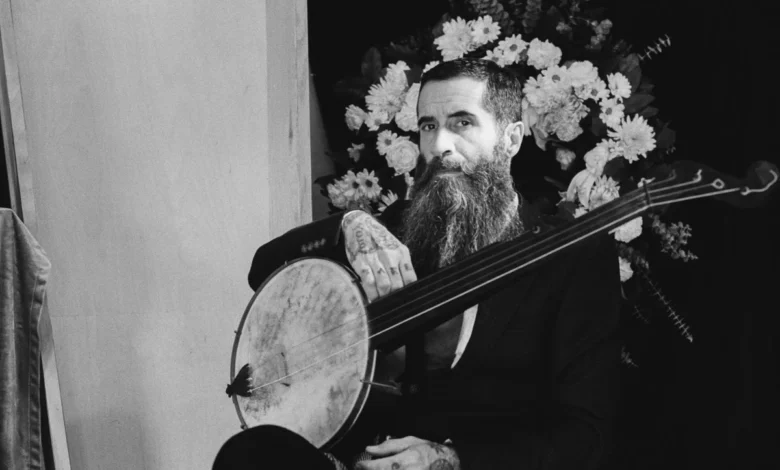
The contemporary roots and Americana music landscape has received a dynamic injection of traditional Appalachian artistry with the release of JP Harris’s latest single, a vigorous and reverent interpretation of the classic old-time standard "Hang Me." Long recognized as a staple of late-night campground sessions at fiddler’s conventions and a beloved anthem in rowdy old-time acoustic jams, the song receives a meticulous yet fiery revival under Harris’s direction. The track is further elevated by the production prowess and musical contributions of Chance McCoy, widely celebrated for his multi-instrumental mastery with Old Crow Medicine Show, who lends his signature fiddle work and evocative harmony vocals to the recording.
Distributed alongside an official music video and sponsored by the esteemed roots music institution Bloodshot Records, this release bridges the gap between historical preservation and modern roots innovation. As genres like Americana, bluegrass, and old-time music continue to experience a resurgence in mainstream commercial interest, interpretations of foundational regional folk songs serve as crucial cultural touchstones. Harris’s rendition not only honors the enigmatic and itinerant origins of Appalachian string band music but also demonstrates how contemporary artists can modernize centuries-old material without stripping away its raw, unfiltered authenticity.
Main Facts and Artistic Collaboration
At the core of the single is a powerhouse partnership between two respected figures in modern American roots music. JP Harris, a seasoned songwriter, carpenter, and traditionalist known for his gritty honky-tonk and authentic country pedigree, approaches "Hang Me" with an intrinsic understanding of blue-collar storytelling and rural ethos. Rather than treating the song as a museum piece, Harris infuses the traditional arrangement with a driving tempo and a visceral energy that mirrors its historical context as a late-night jam room favorite.
The production credit belongs to Chance McCoy, whose deep roots in traditional West Virginia fiddle styles and mainstream Americana success with Old Crow Medicine Show uniquely position him to shape the track’s sonic profile. McCoy’s presence is immediately felt through the soaring, weeping tones of his fiddle, which cuts through the rhythm section to converse directly with Harris’s weathered vocal delivery. In addition to producing the track, McCoy contributes essential harmony vocals that root the recording in the vocal traditions of early country and mountain music, where close-interval harmonies and high lonesome sounds defined the regional aesthetic.
The release is accompanied by an official music video, capturing the kinetic energy of the collaboration and providing visual context to the auditory landscape. The project’s sponsorship by Bloodshot Records underscores its alignment with the independent roots community, a sector known for championing boundary-pushing artists who operate outside the polished Nashville pop-country machine.
Historical Context and Lineage of the Tune
To understand the weight of JP Harris’s latest offering, one must examine the deep historical lineage of "Hang Me" within the canon of American folk music. Traditional Appalachian tunes rarely possess a single definitive author; instead, they are living, breathing entities passed down through oral traditions, shaped by generations of banjo players, fiddlers, and traveling balladeers. Songs like "Hang Me"—often categorized among murder ballads, jailhouse complaints, or outlaw lamentations—served as both entertainment and emotional catharsis for isolated rural communities.
In the lore of modern old-time music, "Hang Me" holds a revered status. It is the type of song that emerges organically in the small hours of the morning at gatherings like the Appalachian String Band Music Festival (commonly known as Clifftop) in West Virginia, the Galax Old Fiddlers’ Convention in Virginia, or myriad smaller regional gatherings. As festival grounds quiet down and individual campsites illuminate campfires, musicians gather to trade tunes that are fast, intense, and demanding of technical dexterity and stamina.
By selecting a song heavily tied to this communal, informal tradition, Harris and McCoy are participating in a centuries-old continuum. They are acting as modern conduits for a folk process that relies on reinterpretation, improvisation, and communal validation. This cultural transmission ensures that songs born from the hardship, isolation, and resilience of early American settlers continue to resonate in the twenty-first century.
Chronology of the Project and Production Timeline
While traditional folk releases often appear deceptively simple, the journey from field archive to high-fidelity studio recording involves a deliberate chronology of curation, arrangement, and production.
The conceptualization of this version of "Hang Me" began during informal picking sessions shared between Harris and McCoy. Both artists, heavily steeped in the itinerant culture of the modern roots circuit, recognized a mutual desire to record a definitive studio version of the tune that captured the unbridled spirit of a festival jam rather than a sterile clinical performance.
- Pre-Production and Arrangement: Harris and McCoy spent time deconstructing the standard melodic framework of "Hang Me," deciding on a tempo that would push the limits of traditional acoustic pacing while maintaining structural integrity.
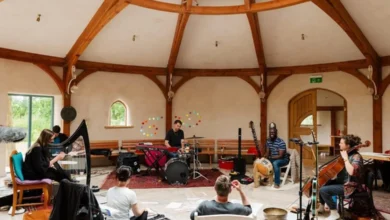
- Principal Recording Sessions: Production duties fell to McCoy, who utilized a hybrid recording approach. The sessions prioritized vintage microphone techniques and live-room acoustics to preserve the woody resonance of the instruments and the natural acoustics of the performance space.
- Overdubs and Harmonization: McCoy layered his signature fiddle tracks over Harris’s rhythm guitar and lead vocal, subsequently adding harmony vocal tracks designed to evoke the high-lonesome sound characteristic of traditional mountain music.
- Visual Media Integration: Production on the official music video took place concurrently with the final audio mixing stages, ensuring a cohesive aesthetic that aligns the visual grit of Appalachian imagery with the sonic texture of the recording.
- Distribution and Promotional Rollout: Bolstered by Bloodshot Records sponsorship, the single was pushed to digital streaming platforms alongside targeted marketing highlighting Harris’s adherence to traditional roots aesthetics.
Industry Implications and Cultural Impact
The release of "Hang Me" arrives at a fascinating cultural crossroads for roots music. In recent years, genres like bluegrass, old-time, and Americana have enjoyed unprecedented mainstream visibility, driven in part by high-profile crossover successes, television sync placements, and a broader societal yearning for authentic, human-made art in an increasingly digital world.
However, this commercial growth creates a distinct tension within the traditional music community regarding preservation versus commodification. Artists who operate in the traditional space often face the challenge of making historical material relevant to modern listeners without sanitizing its edges or stripping away its regional identity.
Through this single, Harris and McCoy offer a masterclass in how to navigate this tension. By selecting a tune deeply rooted in the gritty, unpolished realities of Appalachian jam culture and producing it with uncompromising reverence for its stylistic origins, they demonstrate that commercial viability does not require artistic compromise. The collaboration highlights the ongoing vitality of the old-time idiom, proving that the genre is not a static artifact preserved behind glass, but a dynamic, evolving language capable of infinite reinvention.
Furthermore, the involvement of Bloodshot Records—a label legendary for its championing of punk-infused country, roots-rock, and fiercely independent artists—reinforces the counter-cultural roots of the material. "Hang Me" is fundamentally a song about margins, judgment, and defiance, themes that align seamlessly with the ethos of independent roots music.
Conclusion
JP Harris’s interpretation of "Hang Me," featuring and produced by Chance McCoy, stands as a significant addition to the contemporary old-time canon. By pairing a ubiquitous festival classic with top-tier musicianship, thoughtful production, and a clear-eyed respect for historical precedent, the collaborators have delivered a track that honors the past while speaking urgently to the present. As the single gains traction across streaming platforms and roots radio formats, it serves as a powerful reminder of the enduring strength of Appalachian music—a tradition that continues to thrive so long as dedicated artists are willing to pick up the instruments, gather around the metaphorical fire, and pass the music down the line.
Related posts: