Hardtekk und Hitlergruß: Wie Rechtsextremismus eine ostdeutsche Techno-Subkultur unterwandert

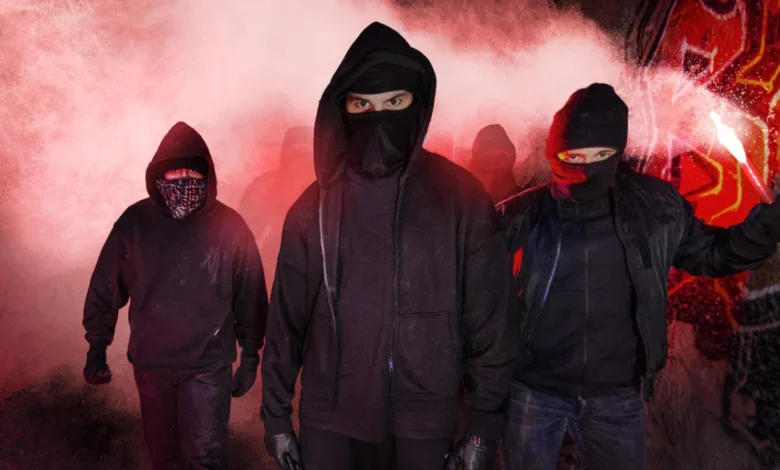
The emergence of radical ideologies within electronic music subcultures has long been a subject of sociological study, but a new documentary from the public-service production Y-Kollektiv has brought a disturbing trend into sharp focus: the infiltration of the Hardtekk scene by neo-Nazi elements. Titled "Hardtekk und Hitlergruß – Wie Rechtsextreme eine Techno-Szene unterwandern," the thirty-minute investigative report exposes how a music genre rooted in the post-reunification industrial landscapes of East Germany is being co-opted by nationalist forces, creating a climate of fear and division within the dance community.
Origins and Evolution of the Hardtekk Genre
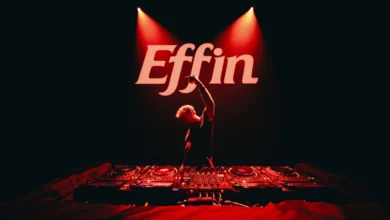
To understand the current crisis, one must first look at the origins of Hardtekk. Born in the late 1990s and early 2000s in the former German Democratic Republic, Hardtekk was a localized mutation of Techno, characterized by an aggressive, high-tempo aesthetic often reaching 190 beats per minute (BPM). Unlike traditional techno, which frequently relies on hypnotic, repetitive loops, Hardtekk is defined by rapid-fire rhythm changes and a raw, abrasive sound profile. Iconic tracks such as "Seelenficker" by the artist Klatschkind became anthems for a subculture that prided itself on being underground, rebellious, and distinct from the more commercialized club scenes in Berlin or Western Europe.
However, the insular nature of this scene, coupled with its heavy concentration in structurally disadvantaged rural areas of Eastern Germany, provided fertile ground for the normalization of extremist vernacular. What began as a celebration of high-octane sonic intensity has, in recent years, been increasingly marred by the inclusion of political extremism, leading to a profound identity crisis within the community.
Investigative Findings: From Festivals to SoundCloud
Reporters Henrike Müller-Mahn and Patrick Wagner conducted an extensive undercover investigation, traversing various festivals and club nights to document the extent of the infiltration. A focal point of their inquiry was the Helene Beach Open Air near Frankfurt (Oder). While the event hosts a diverse range of attendees, the journalists documented the overt display of nationalist symbolism and instances of Hitler salutes, suggesting that these extremist elements are no longer hiding in the shadows but are becoming a visible component of the festival’s sub-culture.
The investigation further highlights the digital dimension of this radicalization. On platforms such as SoundCloud, the researchers identified a growing catalog of Hardtekk productions that utilize blatant neo-Nazi rhetoric. Tracks with titles such as "Abschiebermukke" (Deportation Music) and "Hitlertekk" represent a deliberate attempt to link the genre’s aggressive sound with xenophobic and anti-democratic messaging. This digital footprint serves as both a recruiting tool and a means of normalizing extremist ideology among younger listeners who may be drawn to the music without initially realizing the underlying political agenda.
The Human Cost: Experiences on the Ground
The documentary brings the impact of this shift to life through the eyes of those participating in the scene. In the state of Saxony-Anhalt, the reporters visited events featuring artists such as Hunnel and Anormal—figures who have gained a significant following within the right-wing fringe.
The testimonies captured during these visits paint a bleak picture. A gay attendee described being subjected to repeated verbal abuse, including being labeled a "leftist tick" (linke Zecke), a slur commonly used by German neo-Nazis. Conversely, other guests interviewed during the events maintained a stance of denial, insisting that "despite the right-wing ideologies, there are no Nazis in the clubs." This cognitive dissonance—the attempt to separate the music from the hate speech embedded within it—is a recurring theme that complicates the fight against extremism. A female raver interviewed for the piece confessed that the prevalence of far-right activity has fundamentally changed her relationship with the music, admitting that she now experiences genuine anxiety and fear when attending Hardtekk events.
Artistic Perspectives and the Debate Over "Bunkerkultur"
The controversy has forced artists to take a stand. TikTok-based artist Schillah, whose lyrics have been widely criticized for being discriminatory, defended his work by citing the "Bunkerkultur" (bunker culture) of the 1990s and 2000s. According to Schillah, his aggressive vocabulary is not rooted in political hate, but rather in the harsh, nihilistic environment in which he was socialized as a musician. This defense, however, is being increasingly challenged by industry peers.
Artists like Fabitekk have publicly positioned themselves against the co-option of the genre, arguing that the music should remain an inclusive space free from political radicalization. Similarly, club operators in Frankfurt and other regions have begun implementing stricter door policies, with some managers explicitly stating that individuals displaying far-right symbols or expressing extremist views are immediately expelled from their venues. These efforts represent a burgeoning "zero-tolerance" movement, yet the effectiveness of such measures remains limited in the face of decentralized, outdoor festival culture.
Broader Implications for Youth Culture
The infiltration of Hardtekk by extremist groups is not an isolated phenomenon; it is a manifestation of a broader strategy employed by far-right organizations in Germany to gain influence within youth subcultures. By targeting genres that lack centralized, institutionalized structures, these groups can operate with a degree of impunity.
Sociologists suggest that the "Einfallstor" (gateway) for this radicalization is often a sense of alienation among youth in rural, post-industrial regions. When traditional structures of social support fail, extremist groups provide a sense of belonging and identity, often cloaked in the guise of "rebellious" music. The case of Hardtekk serves as a case study for how cultural assets can be weaponized to foster polarization.
Looking Ahead: Can the Scene Reclaim Its Identity?
The concluding segment of the Y-Kollektiv documentary asks a pivotal question: how can a music scene protect itself from external appropriation? For the Hardtekk community, the answer likely lies in a combination of professionalization, clear political signaling, and a collective refusal by artists and fans alike to tolerate the presence of extremist rhetoric.
The evidence presented by Müller-Mahn and Wagner suggests that the scene is at a crossroads. The normalization of symbols and slurs threatens the longevity and credibility of the genre. If the music continues to be associated with the ideologies of the far-right, it risks losing its legitimacy, alienating its broader audience, and ultimately becoming a closed, radicalized space. However, the pushback from club owners and independent artists provides a glimmer of hope that the community may be capable of self-regulation.
As Germany grapples with rising political tensions, the story of Hardtekk remains a poignant reminder that no subculture is immune to the influence of extremism. The challenge moving forward is whether the music’s original spirit of rebellion can be reclaimed as a force for inclusivity, or if it will remain trapped in the cycle of hate and division documented in this investigation. For now, the documentary serves as a critical wake-up call for the electronic music industry to pay closer attention to the ideologies festering within its sub-genres and to take proactive steps to ensure that dance floors remain spaces for liberation rather than platforms for prejudice.
Related posts: