The global guitar community has experienced a profound technological shift in recent years, largely catalyzed by the rapid proliferation of open-source amp modeling ecosystems. Among these, the Neural Amp Modeler (NAM) has emerged as a dominant force, transforming how musicians, producers, and hobbyists capture, share, and utilize tone profiles. Driven by sophisticated machine-learning algorithms, the NAM platform allows users to replicate the exact acoustic and electronic behavior of virtually any audio hardware. While the vast majority of the hundreds of thousands of available captures focus on revered boutique amplifiers, classic vintage cabinets, and coveted overdrive pedals, a burgeoning subculture within the open-source community has taken the technology into delightfully absurd territory. Today, producers can download and integrate NAM profiles derived not from multi-thousand-dollar tube stacks, but from household lentils, discarded answering machines, and pocket-sized novelty amplifiers.
Understanding the Mechanics of Neural Amp Modeling
To appreciate the unconventional nature of these community-driven profiles, one must first examine the foundational mechanics of the Neural Amp Modeler ecosystem. Unlike traditional algorithmic modelers or older convolution-based profiling systems, NAM leverages neural networks to "learn" the non-linear transfer functions of analog audio gear. The capture process typically involves routing a specialized test sweep signal through the target hardware device—whether it be a high-end studio preamp or a malfunctioning piece of consumer electronics—and recording the altered output.
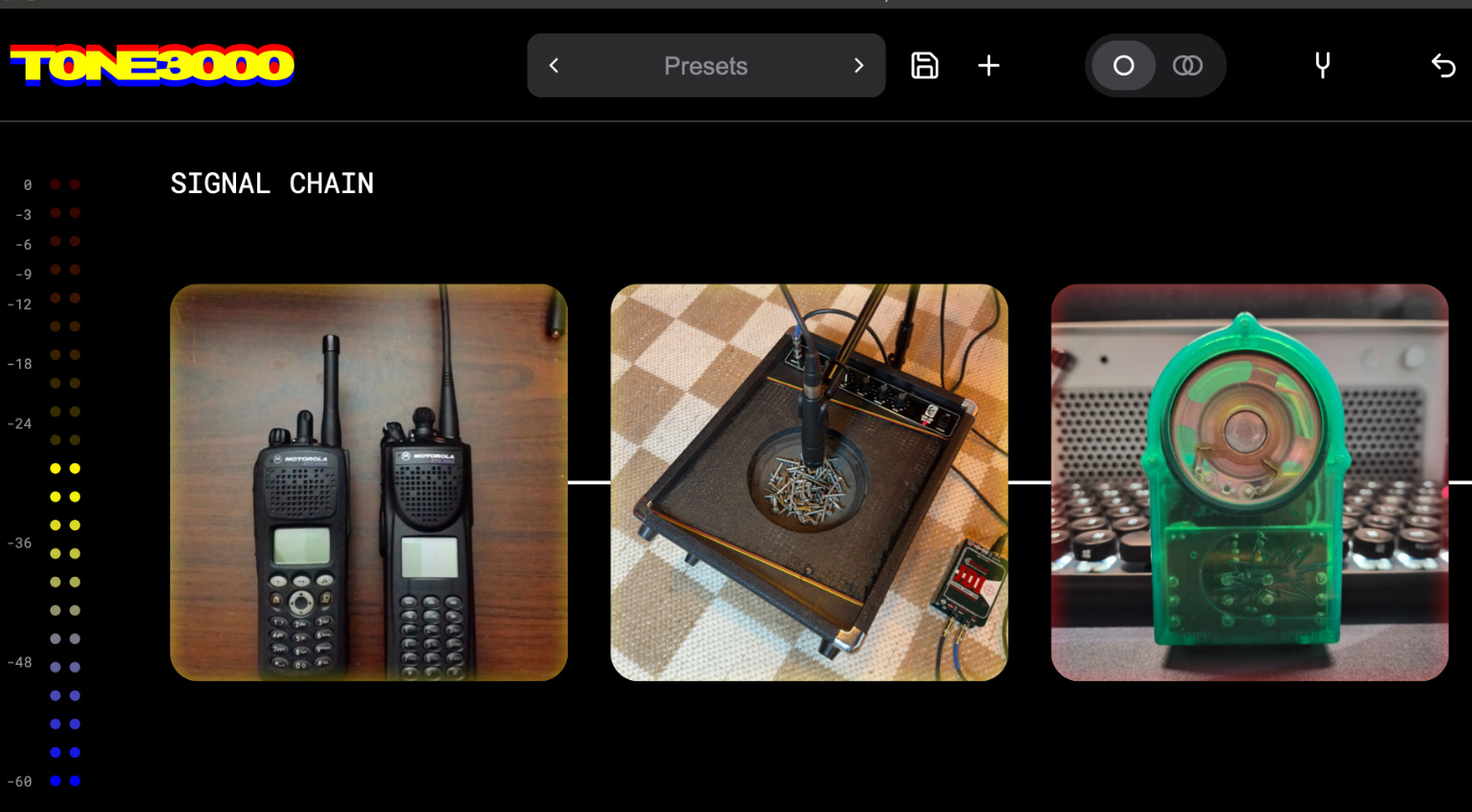
By comparing the pre-sweep and post-sweep audio files, the training algorithm maps out how the device compresses, filters, distorts, or otherwise colors the incoming signal. Because this profiling method is agnostic to the nature of the hardware, it can theoretically map any device that alters an electrical or acoustic waveform. Platforms like TONE3000 have evolved into the central repositories for these creations, offering vast databases alongside dedicated Digital Audio Workstation (DAW) plugins that allow creators to stream and load captures directly into their recording sessions in real time. This frictionless accessibility has lowered the barrier to entry, empowering bedroom producers and sound designers to experiment with signal paths that were previously impossible to recreate reliably.
Household Items and Organic Circuit Bending
The phenomenon of unorthodox sound design reached a milestone when the curation team behind TONE3000 decided to test the absolute limits of neural profiling using everyday kitchen ingredients and discarded objects. Inspired by rudimentary internet experiments involving rice grains placed directly onto active speaker cones, the team dismantled a budget Gorilla GB-30 bass amplifier, exposed the raw speaker driver, and miked it with a standard Shure SM57 microphone.
Instead of standard input signals, they systematically layered organic and household materials directly onto the vibrating speaker membrane, generating profiles based on lentils, stacks of physical mail, breakfast cereal, and literal rocks. When paired with high-end impulse responses—such as a Mesa 412 oversized cabinet simulation—these profiles yield aggressively broken, lo-fi textures that defy traditional categorization. Studio engineers seeking a truly unpredictable, mathematically chaotic distortion source have increasingly turned to these experimental categories, proving that acoustic feedback and physical impedance can generate unique harmonic saturation.
Vintage Consumer Electronics: Answering Machines and Walkie-Talkies

Beyond pantry items, the NAM repository boasts an impressive array of repurposed vintage telecommunications and consumer electronics. Users such as the prominent profile creator "steppan" have documented extensive hardware modifications, converting obsolete domestic technology into functional guitar peripherals. One notable capture centers on a 1980s Sanyo TAS-155 analog answering machine. By soldering custom input jacks directly onto the unit’s internal circuitry and routing the signal through its primitive onboard speaker amplifier, the creator forced the vintage preamp components well past their intended operational limits.
The resulting audio profile exhibits severe, hard-clipped fuzz characteristics that behave distinctly differently from conventional stompboxes. When subjected to high gain inputs, the answering machine’s preamp struggles audibly, producing a gritty, asymmetrical distortion reminiscent of degraded cassette multi-track recorders but with a uniquely compressed midrange profile. Similarly, experiments involving low-cost consumer walkie-talkies have yielded ultra-narrowband, highly compressed frequency responses that simulate distant radio transmissions, offering producers an authentic "first-responder" or field-recording aesthetic without the need for post-processing EQ filters.
Industrial and Environmental Anomalies
The exploratory nature of the NAM community extends deeply into environmental and accidental captures. Entries such as the "Radiator Next Door" profile highlight a growing fascination with ambient acoustics and unintended signal coloration. Categorized under experimental audio profiles, these captures simulate the physical distance, resonant frequencies, and environmental muffling associated with sounds bleeding through architectural barriers. While such profiles offer little in terms of traditional sustain or dynamic clarity, they provide invaluable depth for cinematic sound designers and experimental musicians looking to place clean DI tracks into hyper-specific acoustic spaces.
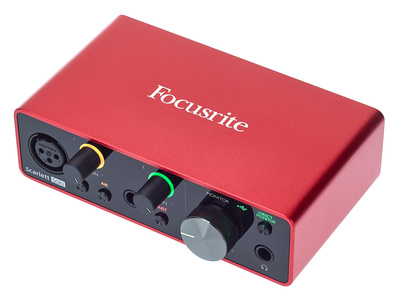
Similarly, technical anomalies have been weaponized by the community. A profile generated by user "dudepersonjr" documents a Focusrite Scarlett Solo audio interface driven aggressively into severe digital and analog clipping. Where early digital recording technology spent decades attempting to eradicate inter-sample peaks and converter distortion, this profile embraces the aggressive, square-wave-like degradation of an overwhelmed pre-amp stage, offering bassists a synthetic, synth-bass-adjacent texture that traditional distortion pedals struggle to emulate.
Transistor Radios and Novelty Pocket Amps

The intersection of vintage consumer hardware and modern digital modeling is further illustrated by profiles of mid-century transistor electronics, such as the Telefunken Mignonette 66 radio amplifier. Widely found in Italian households throughout the 1960s, these simple transistor circuits introduce a characteristic midrange crunch and dynamic compression that differs significantly from American or British guitar amplifier topologies.
On the smaller end of the scale, novelty items like the "Smokey Amp"—a cigarette-pack-sized amplifier marketed in the 1990s—have also been preserved within the database. Built with minimal components and intended as a novelty travel accessory, the physical unit offers a remarkably boxy, telephone-grade frequency response. Captured via NAM, this pocket-sized curiosity provides producers with a distinct upper-midrange bite that can help instruments cut through dense mixes in ways that defy standard EQ curves.
Implications for the Future of Audio Production
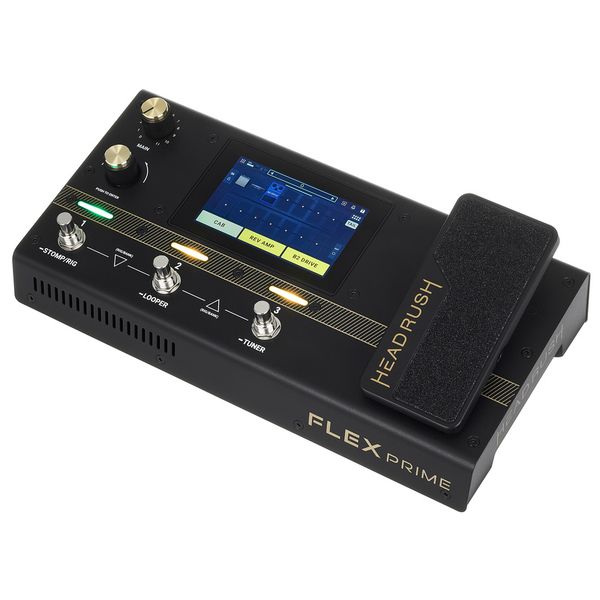
The proliferation of these bizarre and unconventional NAM captures signals a broader maturation in how musicians and engineers approach tone generation. As machine-learning profiling technology becomes faster, more accurate, and increasingly integrated into hardware floor units and software plugins, the boundary between high fidelity and intentional sonic degradation continues to blur.
What began as an open-source tool designed to replicate vintage vacuum-tube amplifiers has evolved into a comprehensive archiving medium for global sound exploration. Whether utilized as a novelty talking point or as the secret weapon behind a modern industrial track, these experimental captures demonstrate that compelling audio textures can emerge from anywhere—provided there is an open-source modeler ready to learn from it.
Related posts: