Johnny Marr Reflects on the Creative Magic and Legacy of The Smiths as Iconic Guitars Head to Auction

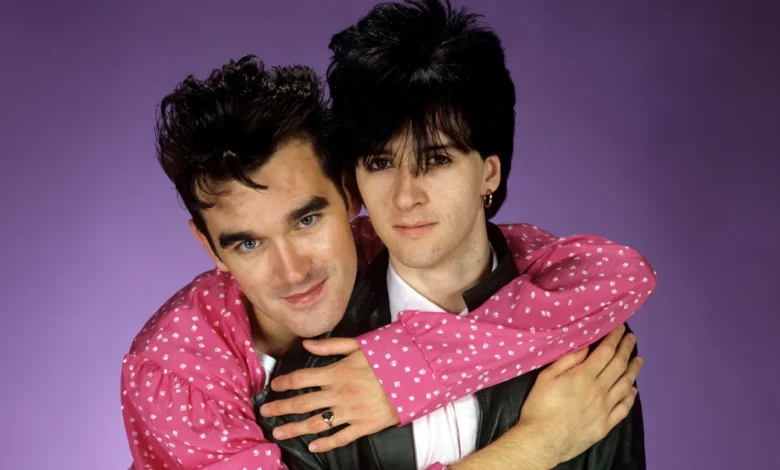
Legendary guitarist Johnny Marr has provided an intimate look into the creative architecture of The Smiths, reflecting on the band’s meteoric rise in the 1980s and the specific sonic textures that defined their sound, even as a significant collection of his instruments prepares to go under the hammer at Christie’s. In a wide-ranging interview with Channel 4 News, the musician detailed the deliberate methodology behind the band’s compositions, the collaborative tension with frontman Morrissey, and the band’s intentional distance from the prevailing Manchester music scene of the era.
The Sonic Architecture of a Band
For Marr, the aesthetic of The Smiths was a calculated departure from the synthesizer-heavy trends that permeated the mid-80s, particularly within the orbit of Manchester’s influential Factory Records. While bands like New Order were exploring the intersection of post-punk and electronic dance music, Marr sought to reinvigorate the role of the guitar.
“I was very excited about us being a guitar band,” Marr stated during the interview. He emphasized that his approach was not merely about playing; it was about orchestration through layering. Marr’s signature sound, which balanced jangle-pop sensibilities with a dense, melodic depth, relied heavily on the acoustic guitar—an instrument he felt was frequently underutilized or relegated to a passive background role in popular music of the time.
He cited the prominent acoustic work on tracks like "Bigmouth Strikes Again" and "Half A Person" as evidence of this design. By elevating the acoustic guitar to the forefront, he aimed to disrupt the standard production practices of the period, drawing direct inspiration from the raw, driving energy of Eddie Cochran’s 1958 hit "C’mon Everybody" and the harmonic sensibilities of The Everly Brothers.
Chronology of a Creative Partnership
The partnership between Johnny Marr and Morrissey is often cited as one of the most productive in British music history. Their output, which spanned four studio albums between 1984 and 1987, was characterized by a rapid and highly disciplined creative cycle.
Marr described a process defined by a unique form of proximity and spontaneity. In the early days, the two would collaborate face-to-face, with Marr capturing his instrumental ideas on a simple tape recorder. As he gained the resources to invest in a Portastudio—a piece of gear that has since become a collector’s item—the complexity of his demos increased. He recalled the routine of recording drum machine tracks, layering several guitar parts, and then traveling by motorbike to deliver the cassettes to Morrissey’s home, located just minutes away.
This period, particularly the sessions for their 1986 magnum opus The Queen Is Dead, represents the zenith of the band’s collaborative output. Marr reflects on those sessions as a moment of near-telepathic synergy. “I think when I pressed ‘record’ the two of us breathed in, and then when I finished we then breathed out,” he said. This creative process relied on a feedback loop where Marr’s musical structures served as the canvas for Morrissey’s lyrical and vocal contributions, which were then further colored by the rhythm section of bassist Andy Rourke and drummer Mike Joyce.
The Manchester Context and the Factory Records Divide
The Smiths’ decision to sign with the London-based independent label Rough Trade, rather than the locally prestigious Factory Records, was a point of contention that remains a subject of music history lore. Factory Records, headed by Tony Wilson, was the home of Joy Division and later New Order. Given that Marr was working in a clothing shop where he regularly interacted with other local musicians signed to Factory, the label would have been the natural, geographic choice.
However, Marr’s rejection of the offer was both personal and artistic. He observed that the Factory roster was increasingly focused on funk, electronics, and keyboard-driven arrangements, which did not align with his vision for a guitar-centric band. Tony Wilson’s later public admission of regret over missing out on signing The Smiths underscores the label’s awareness of what they had lost. For Marr, the decision was about maintaining autonomy and ensuring the band’s identity remained distinct from the “obvious” path of his peers.
Supporting Data: The Christie’s Auction
The upcoming auction at Christie’s provides a rare window into the technical history of these recordings. The collection includes not only the guitars that defined the band’s era but also the aforementioned cassette recording equipment that served as the cradle for their initial song concepts.
The items on the block offer a tangible timeline of the band’s history, from their early independent releases to the global success of The Queen Is Dead and Strangeways, Here We Come. Analysts note that such auctions are rare for artists of Marr’s stature, as they often serve to provide a permanent, curated record of an instrument’s provenance, effectively transitioning the tools of creation into artifacts of cultural history.

Broader Implications and Legacy
The legacy of The Smiths is frequently discussed in terms of the tension between the band members, but Marr’s recent commentary shifts the focus back to the technical and collaborative achievements of the group. By detailing the intentionality behind the layering of instruments and the rigorous process of song construction, Marr offers a rebuttal to the myth that their sound was merely a fortuitous accident.
The implications of this documentation are significant for musicology. As interest in 1980s alternative rock continues to influence modern indie artists, understanding the specific mechanics of Marr’s guitar work—the use of Rickenbackers, the layering of acoustic and electric textures, and the reliance on specific home-recording technology—provides a blueprint for how a band can achieve a high level of sonic complexity with limited resources.
Furthermore, Marr’s reflection on the "magic" of the songwriting process serves as a reminder of the human element in an increasingly digitized industry. His description of waiting to hear how Rourke’s bassline or Joyce’s drumming would transform his initial sketches highlights the importance of the ensemble dynamic. Even decades after the band’s dissolution in 1987, the interest in these instruments and the stories behind them confirms that the influence of The Smiths continues to resonate, not only as a cultural phenomenon but as a masterclass in independent musical innovation.
As the auction approaches, the attention remains fixed on the man who, with a cassette player between his knees and a guitar in his hands, helped define the sound of a generation. Whether or not these instruments find their way into a museum or the hands of a new generation of players, their significance in the canon of British rock remains secured by the meticulous, deliberate, and undeniably magical process described by their creator.