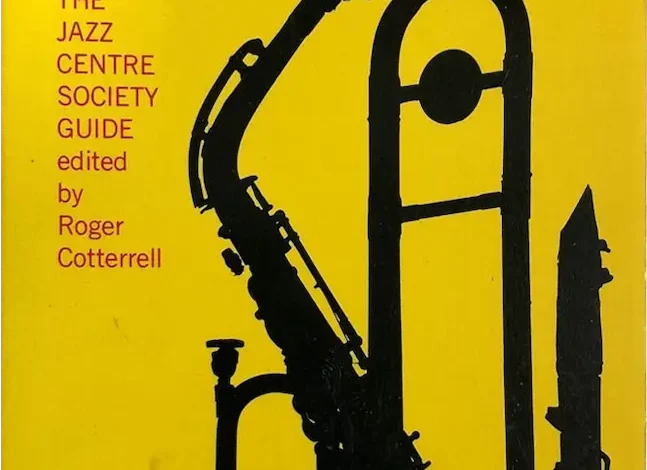
Context and Editorial Scope
Quartet Books has rapidly carved out a reputation for producing high-quality music literature, following successful releases such as Ross Russell’s The Bird, Dick Sudhalter’s definitive work on Bix Beiderbecke, and John Chilton’s Billie’s Blues. The release of Jazz Now continues this trajectory, positioning the publisher as a key player in the jazz discourse. Edited by Roger Cotterrell, the volume attempts to bridge the gap between academic musicology and the realities of the touring jazz musician in the 1970s.
The structural integrity of the book is divided into two primary sections: a collection of expert-led essays exploring the various sub-genres and historical facets of jazz, and a reference directory designed for logistical utility. The editorial decision to include a preface by the renowned comedian and jazz enthusiast Spike Milligan underscores the book’s intent to reach a broader audience, blending serious musical analysis with a populist appeal.
Analysis of Essays and Critical Contributions
The first half of the book features a roster of prominent writers and musicians who provide a snapshot of the state of the art in Britain at the time of publication. The contributions are diverse, covering a wide spectrum of the jazz experience:
- Peter Clayton provides technical insight into the art of interviewing jazz personalities, a skill vital for the preservation of jazz history.
- Charles Fox contributes a historical examination of ragtime, grounding the reader in the foundational elements of the genre.
- Ron Atkins offers an analytical look at the avant-garde movement, which was challenging traditional boundaries during this period.
- John Chilton demonstrates his established authority by documenting the career of Billy Butterfield.
- Dick Sudhalter utilizes an oral history approach, gathering insights from veteran musicians who discuss the evolution of the British scene.
- Brian Case examines the work of the Skidmores, while Michael Garrick provides a personal perspective on the life of a working jazz musician.
- Tony Russell addresses the blues, while the editor, Roger Cotterrell, explores the folk roots that underpin much of the jazz tradition.
Perhaps the most resonant contribution is Brian Blain’s portrait of the late Phil Seamen. Blain’s account provides an emotionally charged reflection on the life of a musician who was central to the development of the British jazz identity. The inclusion of such a piece elevates the book from a mere directory to a meaningful cultural document.
The Practical Directory: A Logistical Breakthrough
The second half of the book, which functions as a reference manual, is arguably its most groundbreaking feature. It contains 250 biographies of jazz musicians currently active in the United Kingdom. This section is designed to be highly functional, providing contact information, such as addresses and telephone numbers, for artists who perform at venues like the Seven Dials or The Phoenix.
From a logistics standpoint, the availability of direct contact information for musicians is a significant advancement. In the professional world of music promotion, the process of securing talent often involves complex, multi-layered communication chains—for example, contacting one musician solely to obtain the contact details of another. By centralizing this data, Cotterrell has effectively streamlined the booking process, providing a service that is both timely and highly relevant.
Furthermore, the inclusion of discographies, birth dates, and personal anecdotes adds a layer of depth to the directory. It allows researchers and fans to track the professional output of their favorite artists while fostering a sense of community within the scene. Despite minor editorial errors, such as the inversion of captions for the Skidmore photographs, the sheer volume of data makes this an indispensable resource.
Industry Implications and Distribution Challenges
The publication also touches upon the infrastructure of the jazz industry, including sections on jazz societies, film, and literature. However, the section concerning record importers highlights a notable gap in the current market. While the book provides a list of record companies and importers, it omits key players such as Tony Williams of Spotlite, who serves as the sole importer for labels like Queen Disc, SteepleChase, and Dogwood.
This oversight reflects the difficulty in maintaining a perfectly accurate directory in an industry that relies on a decentralized network of independent labels and specialized importers. Such challenges suggest that for a publication like Jazz Now to remain relevant, it must be treated as a living document. The editor has expressed the hope that sales figures will justify the release of an updated edition annually, a model that would be highly beneficial for the continuity of the British jazz scene.
Chronology of Production and Market Impact
The production timeline of Jazz Now is a testament to the efficiency of the editorial team at Quartet Books. In the traditional publishing landscape, the delay between manuscript submission and retail availability is often extensive. However, Jazz Now manages to remain remarkably current, capturing the status of the British jazz scene as it existed during the publication window.
The book’s reception within the industry has been largely positive, with promoters and critics noting that it provides a level of clarity that was previously absent. By aggregating the contact details of 250 musicians, the book has effectively democratized the booking process, allowing for greater transparency in the local talent market.
Broader Cultural Context
The significance of Jazz Now extends beyond its role as a guide; it is an important historical snapshot. The mid-1970s represented a period of transition for jazz in Britain, characterized by the persistence of traditional styles and the rise of experimental, avant-garde improvisational music. By documenting the individuals who performed at local clubs during this time, the book creates a permanent record of an ecosystem that might otherwise be lost to time.
The inclusion of birth dates and personal events alongside professional information invites comparisons between artists, allowing readers to map out the generational shifts within the community. For instance, the editor’s own note comparing his age to that of Stan Tracey and Ken Colyer provides a humanizing touch, grounding the statistical data in personal reality.
Concluding Assessment
Jazz Now is an ambitious and largely successful project that serves a dual purpose: it informs the public through expert analysis and facilitates industry activity through its comprehensive directory. Roger Cotterrell’s diligence in gathering and organizing such a vast amount of information is evident throughout the 216 pages of this paperback original.
The book is an essential acquisition for anyone involved in the business of jazz, from promoters and club owners to journalists and researchers. Its value lies not just in the information it presents, but in the efficiency it brings to the often-chaotic world of music booking. If the publisher follows through on the potential for annual updates, Jazz Now could become the definitive authority on the British jazz scene, evolving in tandem with the artists it seeks to represent.
At a price point of £1.75, the book is accessible to both the professional industry and the dedicated fan. Its existence validates the importance of the Jazz Centre Society’s mission and highlights the ongoing need for high-quality, documented literature in the music sector. As the British jazz scene continues to evolve, the documentation provided by this volume will undoubtedly serve as a foundational resource for future historians and practitioners alike.