Album Review: Philipp von Steinaecker and the Mahler Academy Orchestra Tackle Symphony No. 5 on Period Instruments

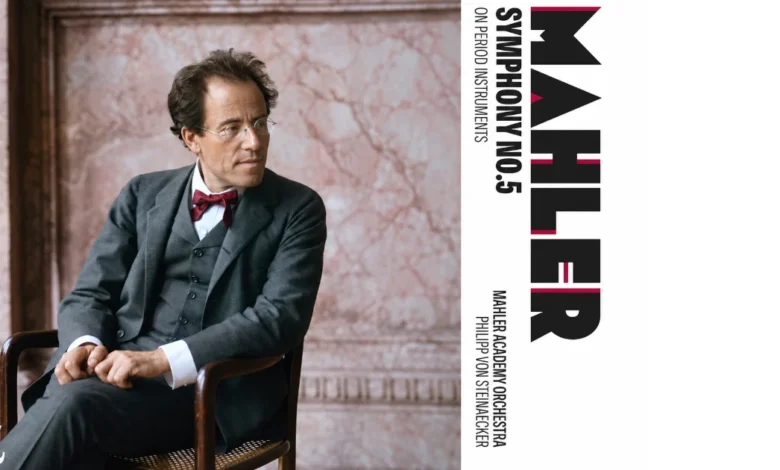
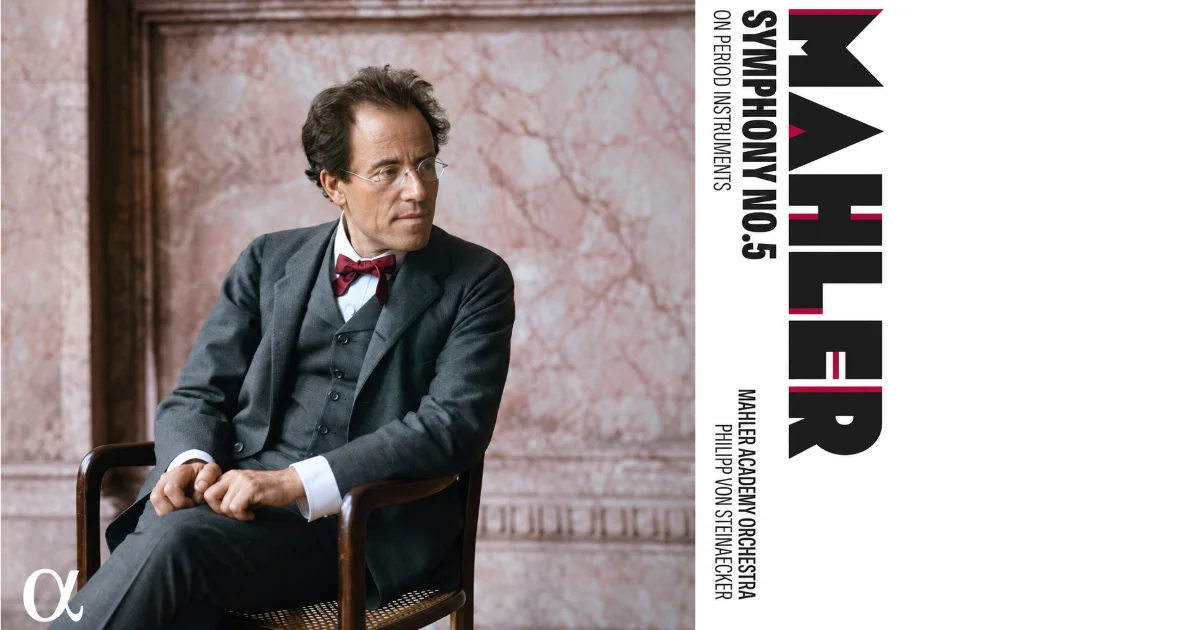
The ongoing movement to recreate historical soundscapes through period-accurate instrumentation has reached another milestone with the release of Gustav Mahler’s Symphony No. 5 by the Mahler Academy Orchestra, under the baton of conductor Philipp von Steinaecker. Released via Alpha Classics (Catalogue No. ALPHA1257), this recording follows the ensemble’s controversial 2024 period-instrument recording of Mahler’s Ninth Symphony. While this latest installment demonstrates meticulous musicological research and refined execution, it continues to spark debate among classical music critics regarding the practical limits and artistic validity of applying historical performance practices to late-romantic orchestral literature.
Background Context of the Period-Mahler Movement
The concept of historical informed performance (HIP) has traditionally been applied to Baroque, Classical, and early Romantic repertoires. Proponents argue that utilizing gut strings, historical bowings, specialized vibrato techniques, and period-appropriate woodwinds and brass instruments allows modern audiences to hear masterworks as their composers originally intended.
In recent years, scholars and musicians have attempted to extend this philosophy to the turn of the 20th century. Gustav Mahler operated in an era of rapid transition in orchestral performance standards. Through extensive archival research into historical seating arrangements, instrument designs, and performance annotations, the Mahler Academy Orchestra seeks to replicate the specific sonic palette available to Mahler during his tenure at the Vienna Court Opera and the New York Philharmonic.
The liner notes accompanying the new release detail the extensive scholarly groundwork undertaken by Steinaecker and his team. Every element—from the frequency and width of string vibrato to portamento slides, articulation styles, and the mechanical specifics of the instruments themselves—is engineered to match the stylistic practices of the early 1900s.
Chronological Analysis of the Performance
The recording opens with the iconic trumpet fanfare of the Trauermarsch, immediately followed by the entry of the strings. In this initial movement, the theoretical underpinnings of the project are laid bare. The strings employ minimal vibrato, shortened bow strokes, heightened articulation, and calculated portamento. However, rather than conveying the profound, numbed grief captured in legendary 20th-century recordings by conductors such as Leonard Bernstein or Klaus Tennstedt, the execution can occasionally feel clinical, resembling a lecture demonstration rather than an organic musical narrative.
Furthermore, historical evidence—such as piano rolls capturing Mahler’s own playing—suggests the composer favored extreme emotional volatility, occasionally pushing tempos and structures to the brink of chaos. Steinaecker maintains a tight grip on the faster middle sections, subverting the sense of imminent derailment that defines Mahler’s turbulent structural design.
As the performance progresses into the second movement, the ensemble demonstrates impressive technical proficiency, yet struggles to balance precision with visceral fury. When the stormy fury subsides, the transition into a dramatically slower tempo sacrifices crucial momentum, muting the expressive potential of the cellos’ subsequent lament. Only near the movement’s conclusion, following the chorale climax, does the playing achieve the unhinged intensity demanded by the score.
The Scherzo introduces interpretive friction regarding tempo relationships. While Steinaecker establishes contrasting speeds intended to heighten the music’s impassioned character, the transitions often result in a significant loss of energy and forward momentum. By comparison, conductors like Bernstein and Tennstedt navigate equally expansive slow tempos without sacrificing underlying tension.
In the renowned Adagietto, the pursuit of historical fidelity meets a notable paradox. Clocking in at 9 minutes and 5 seconds, Steinaecker’s tempo is notably slower than those adopted by early Mahler disciples who worked closely with the composer. Historical recordings by Willem Mengelberg (1926) and Bruno Walter (1938) run approximately seven and eight minutes, respectively. Given that the Mahler Academy Orchestra utilizes less resonant gut strings, a more flowing tempo would logically enhance clarity and projection, making the protracted duration feel counterintuitive.
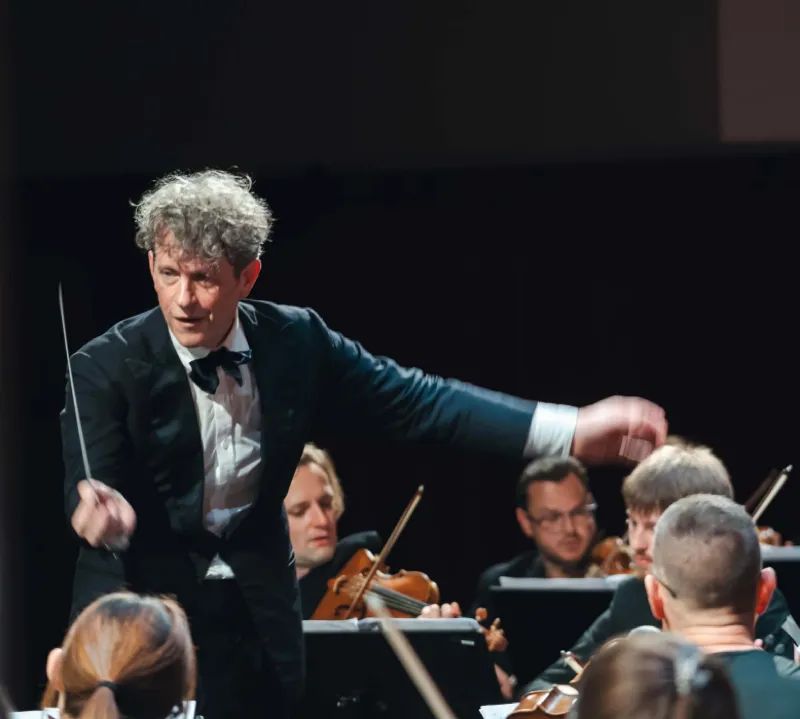
The performance ultimately finds its strongest footing in the Rondo-Finale. Here, the orchestra breaks free from analytical constraints, delivering a driven, energetic reading characterized by unbridled power and a compelling, distinctive Coda that showcases the ensemble’s technical capabilities at their highest level.
Implications and Critical Reception
While this recording of Mahler’s Fifth Symphony represents an artistic evolution and a more cohesive execution compared to the orchestra’s previous Mahler Ninth project, it falls short of eclipsing benchmark interpretations from the broader catalog. Standard-setting recordings by Michael Tilson Thomas (San Francisco Symphony), Riccardo Chailly (Royal Concertgebouw Orchestra), Claudio Abbado (Berlin Philharmonic), Leonard Bernstein (Vienna Philharmonic), and Klaus Tennstedt (London Philharmonic Orchestra) continue to define the expressive boundaries of the work.
Ultimately, the release underscores a fundamental aesthetic dilemma in classical music recording: whether historical authenticity should supersede direct emotional communication. While the Mahler Academy Orchestra provides valuable insight into the mechanical realities of early 20th-century performance, the recording serves primarily as an intriguing musicological study rather than a definitive interpretation of Mahler’s monumental score.