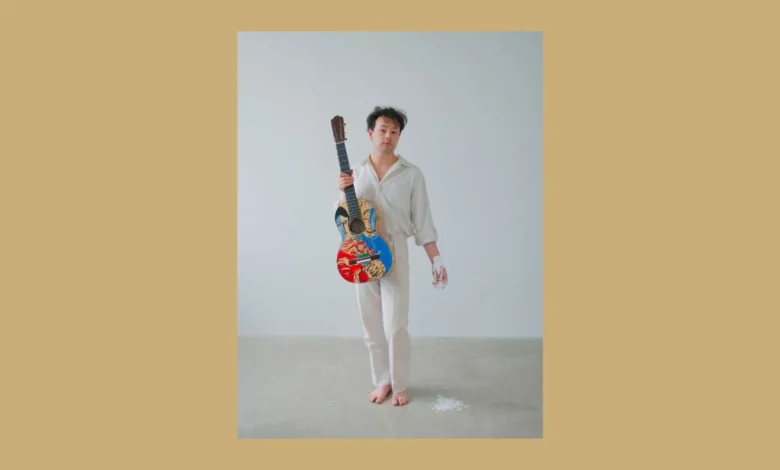
The trajectory of a modern classical music career is often measured by the density of a performer’s schedule, the frequency of their recordings, and the geographic breadth of their tours. For Scottish guitarist Sean Shibe, these metrics have, until recently, trended exclusively upward. However, following a series of personal realizations in early 2024, the acclaimed musician has signaled a necessary shift in his professional velocity. In January, Shibe acknowledged a growing sense of exhaustion, a realization that culminated in a health scare in February. While the medical event was ultimately determined to be a false alarm, the experience served as a catalyst for Shibe to book a period of leave and fundamentally reevaluate the working habits that have defined his meteoric rise over the last decade.
Since 2017, Shibe has operated as an artist in a state of constant motion. He has released nine albums in seven years, a prolific output that includes his most recent project, "Vesper." Alongside this recording schedule, Shibe has maintained a relentless international touring itinerary, held a teaching position at the Guildhall School of Music & Drama, and fulfilled the duties of an artist-in-residence at London’s Southbank Centre. This convergence of high-level responsibilities highlights the mounting pressures faced by elite soloists in an era where artistic success is increasingly tied to constant visibility and multi-hyphenate engagement.
A Chronology of Prolific Output and Rising Pressures
To understand the context of Shibe’s decision to pause, one must look at the unprecedented pace of his career since his debut. Shibe first gained significant international attention as a BBC New Generation Artist (2012–2014) and later as the recipient of the Royal Philharmonic Society Award for Young Artists in 2018. However, it was his recording career that established him as a singular voice in contemporary classical music.
In 2017, Shibe released "Dreams and Fancies" on the Delphian label, an album of English guitar music that earned him a Gramophone Award nomination. He followed this in 2018 with "softLOUD," a radical departure that juxtaposed acoustic lute music with electric guitar arrangements of works by Steve Reich and Julia Wolfe. The album was hailed as a transformative moment for the instrument, proving that the classical guitar could bridge the gap between traditional repertoire and avant-garde experimentation.
The years that followed saw no deceleration. Shibe released "Bach" in 2020, which won the Gramophone Instrumental Award, making him the first guitarist to receive the honor in decades. In 2021, he signed a multi-album deal with the prestigious Pentatone label, leading to the release of "Camino" (2021), "Lost & Found" (2022), and "Broken Branches" (2023). By the time "Vesper" was prepared for release in 2024, Shibe had averaged more than one major recording project per year—a pace that exceeds the industry standard for classical soloists, who typically release albums every 18 to 24 months.
The Institutional Burden: Teaching and Residencies
Beyond the recording studio and the concert hall, Shibe’s professional footprint expanded into academia and institutional curation. His appointment to the faculty of the Guildhall School of Music & Drama added the responsibility of mentoring the next generation of guitarists, a role that requires significant emotional and intellectual labor.
Simultaneously, his residency at the Southbank Centre placed him at the heart of London’s cultural programming. Artist-in-residence positions at major venues like the Southbank Centre are prestigious but demanding; they often involve not just solo recitals, but the curation of entire series, collaborations with other ensembles, and participation in educational outreach programs. For Shibe, these roles were not peripheral but central to his identity as a musician who seeks to redefine the guitar’s place in the modern canon.
The cumulative effect of these commitments—the "relentless touring" cited by observers—created a schedule with little room for the physical or mental recovery necessary for long-term career sustainability. The February health scare, though a false alarm, acted as a physiological "check engine light," forcing a confrontation with the reality of professional burnout.
Supporting Data: The Physical Toll of the Guitar
The physical demands placed on a classical guitarist are unique among instrumentalists. The instrument requires a high degree of fine motor control, often involving repetitive motions that can lead to focal dystonia, carpal tunnel syndrome, or chronic tendonitis. Unlike orchestral musicians who may have structured "off-seasons" or shared workloads, a soloist like Shibe carries the entire weight of a performance.
Data from the British Association for Performing Arts Medicine (BAPAM) indicates that approximately 75% of professional musicians experience performance-related health issues at some point in their careers. For soloists, the risk is compounded by the isolation of travel and the psychological pressure of maintaining a flawless public profile. Shibe’s decision to reevaluate his habits aligns with a growing movement within the classical music community to prioritize "performance wellness" over the traditional "show must go on" ethos.
Broader Implications for the Classical Music Industry
Shibe’s situation is emblematic of a broader systemic issue within the classical music industry: the "hustle culture" that has permeated the arts. In a competitive market, artists are often encouraged to accept every opportunity for fear of losing momentum. The digital age has exacerbated this, with social media demanding constant content and engagement, further blurring the lines between an artist’s private life and their professional persona.
Industry analysts suggest that the post-pandemic landscape has intensified these pressures. As venues sought to recover lost revenue, touring schedules became more compressed, and the expectation for artists to "make up for lost time" became a prevailing narrative. Shibe’s transparency regarding his need for time off serves as a significant counter-narrative. When an artist of his stature—one who is currently at the peak of his creative and commercial powers—chooses to step back, it sends a powerful message to management agencies, promoters, and younger musicians about the necessity of boundaries.
Professional Responses and the Path Forward
While official statements from Shibe’s management have emphasized the preventative nature of his time off, the reaction from the classical music community has been largely supportive. Peers and critics alike have noted that the intensity of Shibe’s artistic inquiry—often involving complex electronics and the commissioning of new, technically demanding works—requires a level of mental acuity that cannot be sustained indefinitely without rest.
The "Vesper" album, which serves as the current bookend to this period of his career, is perhaps a poetic reflection of this need for stillness. The album explores themes of evening prayer and introspection, featuring works by Hildegard von Bingen and Arvo Pärt. It suggests an artist who was already moving toward a more contemplative musical language, even as his external schedule remained frantic.
As Shibe enters this period of reevaluation, the industry will be watching to see how he restructures his career. Experts suggest that a sustainable model for high-level soloists may involve "sabbatical cycles," where periods of intense public activity are followed by mandatory months of withdrawal from the stage. This approach, while challenging for short-term revenue, often leads to greater artistic longevity and deeper creative output in the long run.
Conclusion: Redefining Success in the Arts
The case of Sean Shibe highlights the delicate balance between ambition and well-being. His nine albums and multiple prestigious roles are a testament to his talent and work ethic, but the recent health scare serves as a reminder that the human element of performance has limits. By choosing to pause, Shibe is not merely addressing a personal health concern; he is participating in a necessary dialogue about the future of the classical music profession.
In an industry that often prizes the "prodigy" and the "virtuoso" for their seemingly superhuman capabilities, Shibe’s admission of vulnerability is an act of professional maturity. It suggests that the next phase of his career will be defined not by the quantity of his output, but by a more deliberate and sustainable engagement with his craft. For the audiences who follow his work, this interval may be the most important performance of his career—a demonstration of how to protect the very gift that makes his music possible. As he steps away from the Southbank Centre and the Guildhall classrooms for a time, the silence he creates may well be the prelude to a more resonant and enduring second act.