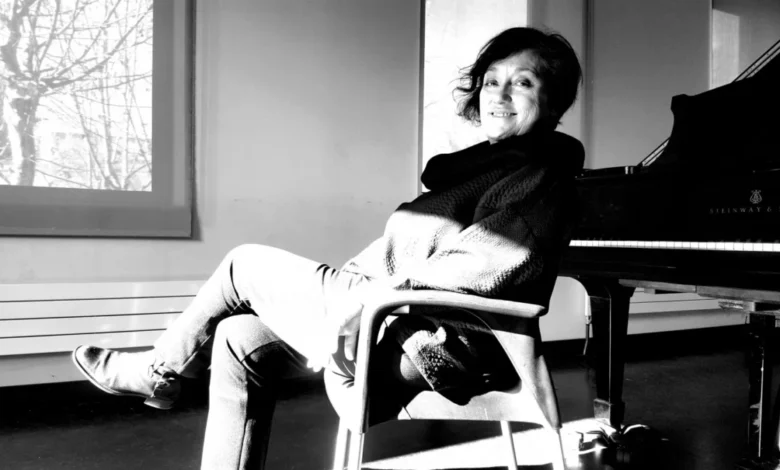
The cultural landscape of Spain and the broader international classical music community are in mourning following the tragic death of acclaimed composer, pianist, teacher, and writer Marisa Manchado. The 70-year-old artist was among the victims of a catastrophic train derailment in Spain on October 28, 2026—an accident that claimed the lives of 69 individuals. Her passing was officially confirmed by her brother, bringing a sudden and devastating end to a brilliant artistic and academic career that spanned several decades.
At the time of the fatal accident, Manchado was traveling to Seville to participate in a high-profile university symposium hosted by the Facultad de Ciencias de la Educación. Her untimely death has sent shockwaves through Spanish cultural institutions, academic circles, and the performing arts community, cutting short active projects, including her fourth opera, Medea.
A Life Dedicated to Music and Scholarship
Born on July 7, 1956, Marisa Manchado built a foundation of academic and artistic excellence from a young age. Her formative education took place at the prestigious Colegio Estilo and the Real Conservatorio Superior de Música de Madrid, where she cultivated a deep, rigorous understanding of classical composition and piano performance.
Never content with confining her intellectual pursuits to a single discipline, Manchado expanded her academic horizons by earning a degree in Psychology from both the Complutense University of Madrid and the Comillas Pontifical University. Her insatiable appetite for learning later led her abroad to France, where she earned a Maîtrise and a Diplôme d’Études Approfondies (DEA) in Music Sciences with a specialization in Computer-Assisted Composition from the Université Paris VIII-Saint Denis. This blend of traditional conservatory training, psychological insight, and modern technological composition laid the groundwork for a deeply innovative and structurally complex musical output.
Manchado’s professional footprint extended far beyond the composition desk; she was deeply invested in the pedagogy and administrative governance of the arts. She served as the Deputy Principal of the Teresa Berganza Conservatory of Madrid until 2017, having taught there since 1994. Her academic reach also included a tenure as an associate professor at the Faculty of Education of the Autonomous University of Madrid from 2001 to 2004. Furthermore, she stepped into the public sector to help shape national cultural policy, serving as the General Deputy Director of Music and Dance for the INAEM-Ministry of Culture from 2007 to 2008.
Prolific Compositional Career and Major Works
As a composer, Manchado was exceptionally prolific, leaving behind a catalog of more than 150 works. Her diverse portfolio spanned pedagogical pieces, intricate chamber music, vocal works, expansive symphonic pieces, opera, and electroacoustic compositions. Her ability to navigate various musical mediums made her a sought-after collaborator for prestigious ensembles, festivals, and theaters globally.
Throughout her career, Manchado received commissions from some of the most esteemed cultural institutions in the world, including the Spanish National Orchestra and Choir, the Teatro Campoamor in Oviedo, the Teatro Real de Madrid, the Teatro de la Zarzuela, the Guanajuato Festival in Mexico, and the Chard Festival in the United Kingdom.
Among her most notable achievements are:
- The Pink Tree: A powerful and expansive work written for choir, symphony orchestra, and soprano.
- La Cité des dames: A sophisticated composition crafted specifically for a female choir and piano.
- Un mar de hielo (A sea of ice): An evocative orchestral suite drawn from her third opera.
- La Regenta: Widely regarded as a crowning achievement of her operatic output, which was produced and premiered to critical acclaim by the Teatro Real in Madrid.
Before her life was cut short, Manchado was deeply immersed in the creation of her fourth opera, Medea, a project anticipated by critics and opera houses eager to see how she would reinterpret the classic mythological sorceress through her unique musical lens.
The Pinnacle of Recognition: The 2024 Premio Nacional de Música
The culmination of Manchado’s lifelong dedication to composition arrived in late 2024, when she was awarded the prestigious Premio Nacional de Música (National Music Prize of Spain) for her monumental opera La Regenta.
The award, granted by the Spanish Ministry of Culture, recognized not only her extraordinary technical craftsmanship but also her profound thematic contributions. When awarding the prize, the national jury highlighted the societal and artistic importance of the work. The jury stated that Manchado’s opera provided “an updated reading of a classic of universal literature, through which she gives voice to an iconic female character, which underlines the composer’s long commitment to equality.”
For decades, Manchado used her platform, her academic positions, and her artistic creations to champion gender equality in the arts, persistently advocating for the visibility of female historical and literary figures. La Regenta stood as a testament to this mission, transforming Leopoldo Alas "Clarín’s" 19th-century literary masterpiece into a modern feminist operatic critique that resonated deeply with contemporary audiences.
Chronology of Events: From the Symposium Journey to Confirmation
The sequence of events surrounding the tragedy on October 28, 2026, unfolded rapidly as news of the catastrophic train crash in Spain broke across national media networks:
- Morning of October 28, 2026: Marisa Manchado boards a train bound for Seville, where she is scheduled to present and participate in an academic symposium at the Facultad de Ciencias de la Educación.
- October 28, 2026 (Later that day): Emergency services report a tragic high-speed train derailment in Spain, resulting in mass casualties. Initial reports indicate dozens of fatalities.
- Late October 28 / October 29, 2026: As rescue and identification operations proceed, family members and close associates attempt to contact passengers. Manchado’s brother receives confirmation that the composer was among the victims on the derailed train.
- October 29, 2026: Cultural institutions, former students, colleagues, and government officials begin releasing statements of condolence, confirming to the public that Manchado was one of the 69 lives lost in the disaster.
Institutional Reactions and Public Grief
The sudden loss of a figure who bridged the worlds of higher education, public administration, and avant-garde composition triggered an immediate outpouring of grief from across Spain’s cultural and political spheres.
Colleagues from the Teresa Berganza Conservatory remembered her not only as a rigorous academic and visionary musician but also as a mentor who transformed the lives of countless young students. Administrators from the Teatro Real and the National Orchestra released joint statements lamenting the loss of an artist whose creative voice was entering its most mature and celebrated phase.
"Marisa Manchado did not merely write music; she interrogated history, she gave sound to the silenced, and she elevated the standard of contemporary Spanish composition," noted a representative from the Ministry of Culture. "Her absence leaves an irreparable void in our classrooms, our concert halls, and our national conscience."
Fellow composers and musicians took to social media and cultural platforms to share memories of her tenacity, her sharp intellect, and her unwavering generosity as a collaborator. Many highlighted how her dual background in psychology and computer-assisted music allowed her to bridge emotional depth with technical innovation in a way few other contemporary artists could manage.
Broader Impact and Implications for the Spanish Arts Community
The death of Marisa Manchado is more than the loss of an individual artist; it represents a significant blow to the continuity of contemporary Spanish opera and symphonic writing. At age 70, Manchado was operating at the absolute peak of her creative powers. Having just secured the Premio Nacional de Música two years prior, she was uniquely positioned to guide the next generation of composers through her writings, her teaching, and her ongoing operatic commissions.
The loss of Medea—an opera left incomplete due to her sudden death—deprives the global classical music community of what promised to be a major contribution to modern lyric theater. Cultural analysts have noted that her death highlights the vulnerability of artists traveling to sustain the rigorous demands of modern academic and public intellectual life.
As Spain and the international music community process the magnitude of the October 28 disaster, tributes are already being planned. Several conservatories and cultural centers have announced memorial concerts and symposia dedicated to celebrating her expansive catalog. Through her 150 works, her advocacy for equality in the arts, and her towering operatic achievement La Regenta, Marisa Manchado’s legacy remains permanently etched into the cultural heritage of Spain and the global classical music canon.