Guitar Journal: Loog P-Bass for Kids, Lovetone’s Boutique Comeback, and Remembering Wah-Wah Inventor Del Casher


The global music products industry spans several distinct product categories, encompassing everything from educational instruments designed for the next generation of players to the high-end boutique effects pedals coveted by professionals, and the foundational hardware that forever changed modern music history. Recent developments highlight this diverse landscape, led by Loog’s latest collaboration with Fender, the highly anticipated revival of 1
990s boutique pedal pioneer Lovetone in partnership with ThorpyFX, and the mourning of Del Casher, the visionary studio guitarist and inventor whose mechanical ingenuity birthed the iconic wah-wah pedal.
Loog Expands Educational Line with Fender 75th Anniversary P-Bass
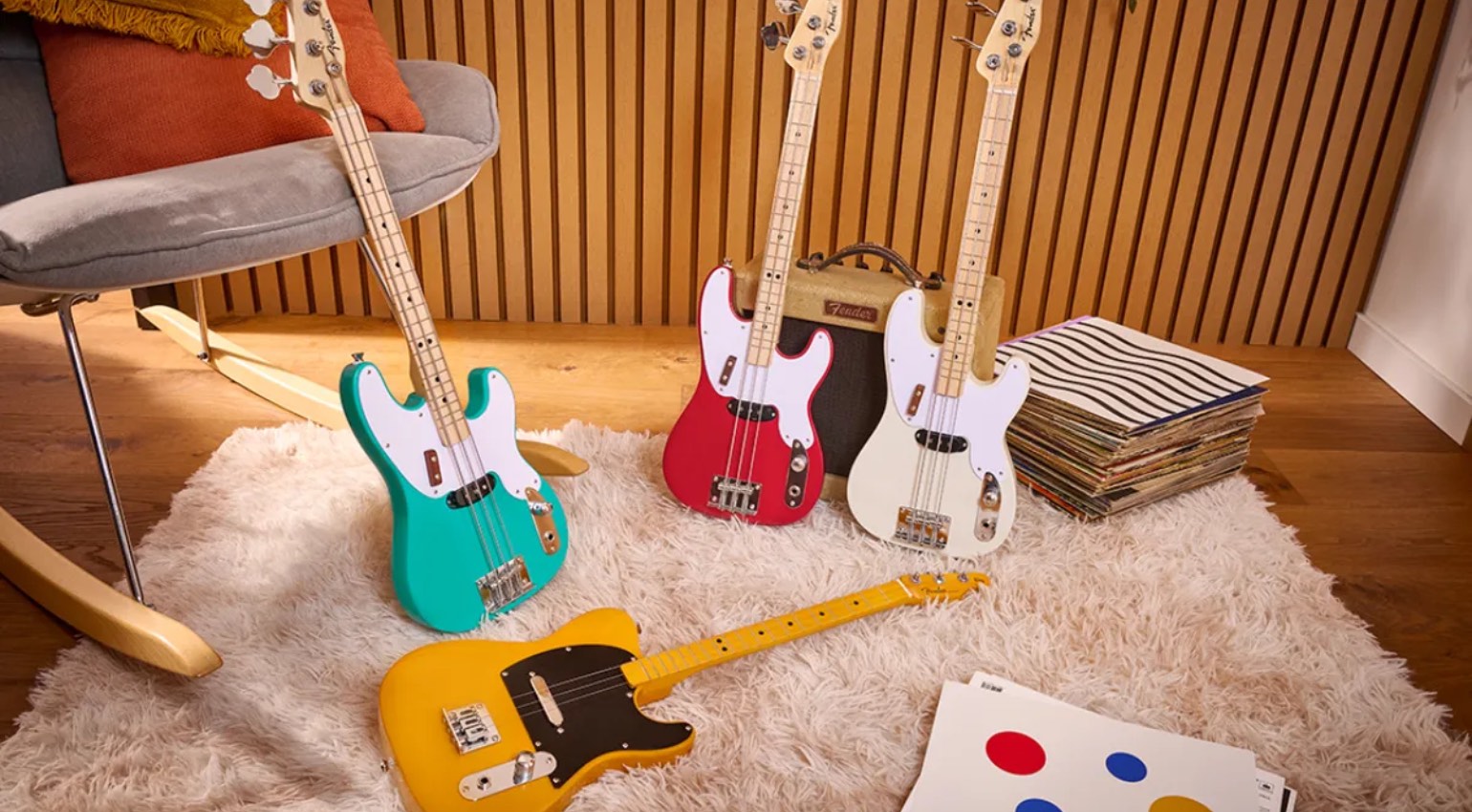
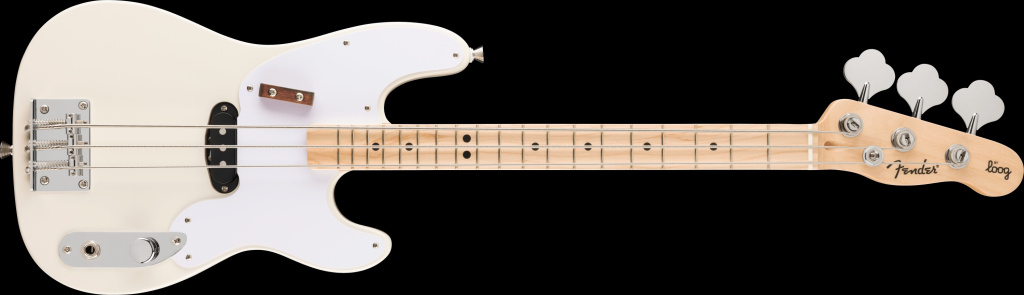
In the realm of music education, accessibility and ergonomics remain critical barriers for young children hoping to learn stringed instruments. Loog, a company widely recognized for its innovative approach to simplifying guitars for younger players through a three-string methodology, has previously partnered with legacy guitar manufacturers such as Gibson and Fender. The latest iteration of this ongoing initiative introduces a specialized, three-string Precision Bass-style instrument developed in celebration of the 75th anniversary of Fender’s iconic P-Bass design.
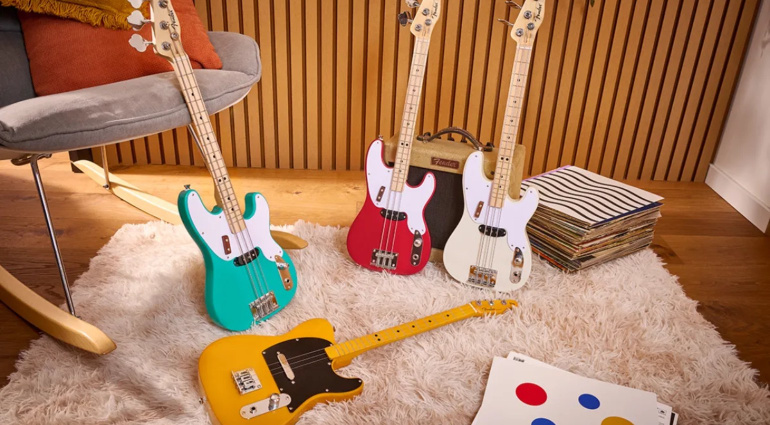
Available in three classic Fender finishes—Candy Apple Red, Sea Foam Green, and White Blonde—the instrument aims to introduce children to the low-end fundamentals of bass playing using a simplified fretboard and a scaled-down body. This release accompanies an existing Loog offering modeled after the Butterscotch Blonde Telecaster.
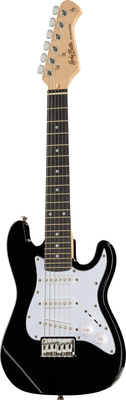
Despite the nostalgic appeal and visual accuracy of these licensed miniatures, the product strategy has sparked debate among industry educators and parents regarding value and longevity. Priced at $229 USD (£199 GBP), these specialized instruments represent a significant financial investment for families, particularly given that children inevitably outgrow specialized three-string configurations. Critics of ultra-short-scale, non-standard instruments often point toward traditional half-scale or three-quarter-scale four-string and six-string models—such as established budget options from brands like Harley Benton—as more economical and sustainable choices. Because young musicians must eventually transition to standard four-string basses or six-string guitars, instruments with non-standard string counts or proprietary formatting can occasionally present a steeper learning curve during the eventual transition phase, raising questions about long-term utility versus initial novelty.
Lovetone Returns: The 90s Boutique Pedal Pioneer Relaunches via ThorpyFX

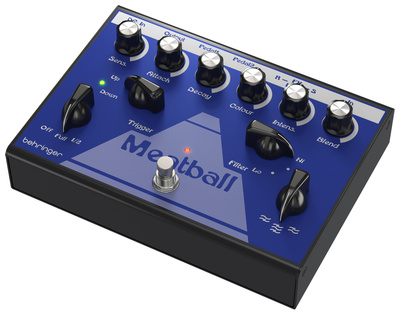
Shifting from educational gear to professional-grade signal processing, the boutique guitar effects market is bracing for a major nostalgic homecoming. Lovetone, a British boutique pedal brand founded by Dan Coggins and Orville Saunders that achieved cult status during the 1990s with unorthodox, oversized, and sonically adventurous stompboxes like the Meatball, Doppelganger, and Ring Stinger, is officially returning to production this month.
The resurrection of the brand has been orchestrated in collaboration with Adrian Thorpe of ThorpyFX. Coggins has spent considerable time working alongside Thorpe to modernize the legacy designs while preserving the sonic identity that made original units prized possessions for professional guitarists and studio engineers worldwide.

Ahead of the official November rollout, Lovetone utilized social media channels, including Instagram and targeted video teasers, to build anticipation for the release of two brand-new effects pedals. Industry insiders note that while the original 1990s units were legendary for their massive physical enclosures and complex dual-footswitch routing, the forthcoming UK-hand-built units will feature a more pedalboard-friendly, compact footprint while retaining expanded control sets and modern routing features.
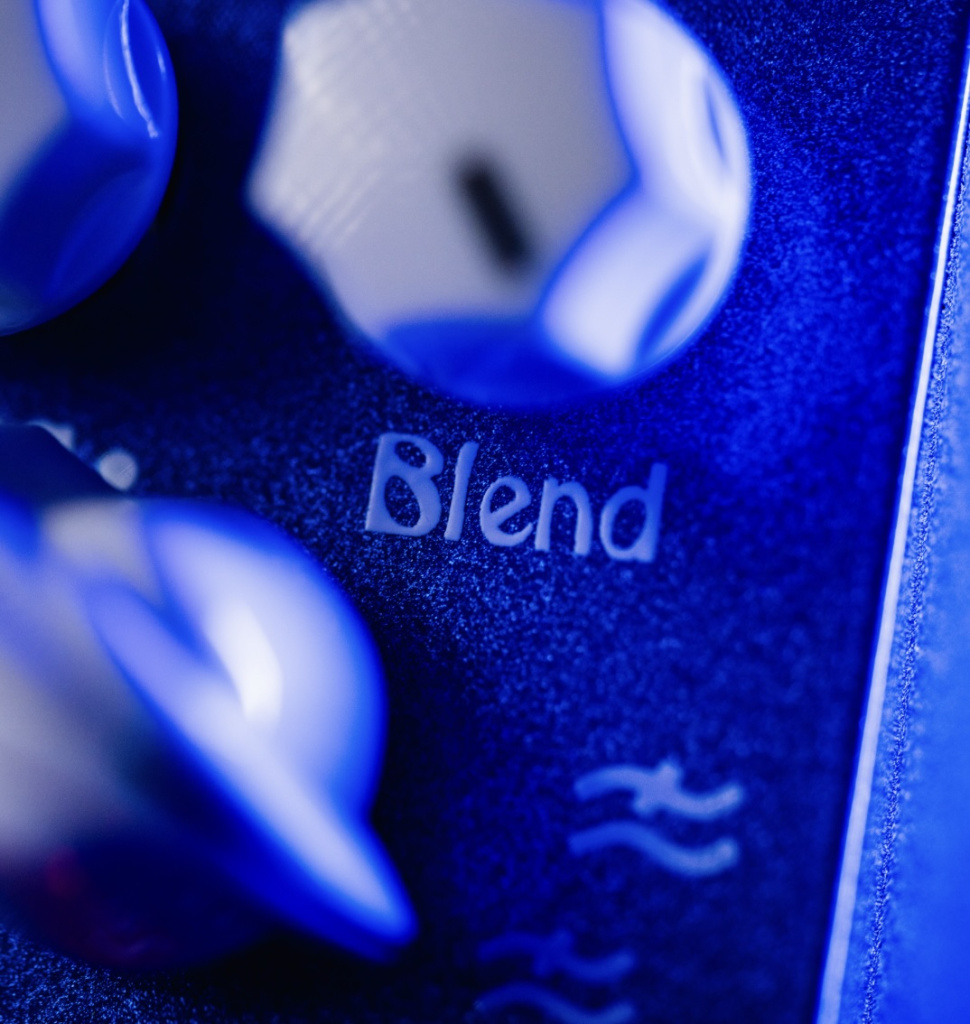
The timing of the relaunch is notable against the backdrop of the secondhand market, where vintage Lovetone units routinely command exorbitant sums. Furthermore, recent commercial developments—such as budget-friendly clone releases by mass-market manufacturers like Behringer utilizing closely matching circuit topologies and nomenclature—have heightened interest in authentic, original-creator-backed hardware. The re-emergence of Lovetone under the craftsmanship of ThorpyFX signals a growing market appetite for authentic boutique engineering, quality control, and historical pedigree over mass-produced replicas.
Remembering Del Casher: The Studio Guitarist Who Invented the Wah-Wah Pedal
While new gear continuously reshapes the contemporary market, the global music community recently lost a foundational figure of electric guitar history. Del Casher, an acclaimed studio guitarist, innovator, and inventor of the wah-wah pedal, passed away from cancer on October 1, 2026, at the age of 88. Casher’s career spanned decades of commercial recording and live performance, most notably performing alongside musical icons such as Elvis Presley and Cher, while establishing an enduring legacy in electronic music hardware.
The genesis of the wah-wah pedal dates back to the mid-1960s in Southern California. Working alongside electronics engineer Brad Plunkett at Thomas Organ Company/Vox, Casher helped adapt circuitry originally intended to create a muted, expressive brass-like effect for electric trumpets. Recognizing its potential for contemporary guitar applications, Casher championed the device, demonstrating how sweeping a resonant filter via a foot-controlled rocker pedal could mimic the human voice and add unprecedented emotional expressiveness to the electric guitar.
Casher recorded the first-ever commercial track utilizing the prototype effect in 1967, preceding the widespread popularization of the technology by artists like Jimi Hendrix, Eric Clapton, and Stevie Ray Vaughan. Despite his pivotal role in creating and naming the effect, historical ironies left Casher without substantial manufacturing royalties from the mass production of the Vox and subsequent Dunlop Cry Baby pedals, a financial reality that contrasted sharply with the ubiquitous global impact of his invention.

Broader Implications and Legacy
The passing of Del Casher has reignited discussions regarding the financial security and historical recognition of early music technology pioneers. In his later years, economic challenges—compounded by the disruptions of the COVID-19 pandemic—forced Casher to part with significant portions of his historic instrument collection. Following his passing, a GoFundMe campaign was established to support his 89-year-old wife, Eiko, drawing attention from musicians and collectors worldwide who benefited from the sonic palette Casher unlocked.
From educational instruments designed to spark early interest in music to high-end boutique pedal revivals and the memorialization of foundational hardware inventors, the recent news cycle underscores the deep interconnectedness of the music products industry. Whether through fostering the next generation of bass players or preserving the pedigree of 90s boutique tone-shaping, the continuous evolution of guitar culture remains firmly anchored to its historical innovations and the creators who brought them to life.