The Definitive Guide to the Best Recordings of Bach’s Six Cello Suites: History, Legacy, and Essential Interpretations.

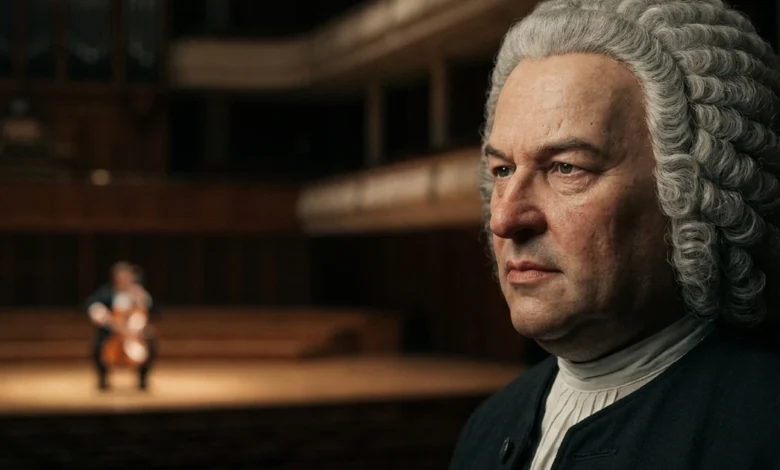
Johann Sebastian Bach’s Six Suites for Unaccompanied Cello, BWV 1007–1012, represent a foundational pillar of Western classical music. Composed during his tenure as Kapellmeister in Köthen between 1717 and 1723, these works were created during a rare period in Bach’s life when he was not required to produce liturgical music for the church. Instead, his focus was directed toward secular chamber music for the court of Prince Leopold, a knowledgeable musical patron who maintained a high-caliber ensemble. For centuries, these suites remained in relative obscurity, viewed primarily as pedagogical exercises rather than concert-hall masterpieces. It was not until the late 19th and early 20th centuries that the suites were elevated to their current status as the "Mount Everest" of the cello repertoire.
Historical Context and the Köthen Period
The Köthen years were among the most productive of Bach’s career for instrumental music. During this time, he also produced the Brandenburg Concertos and the first book of the Well-Tempered Clavier. Unlike his later years in Leipzig, where he was embroiled in the demands of the Thomaskirche, the Köthen court provided the resources for Bach to explore the technical and expressive limits of solo instruments.
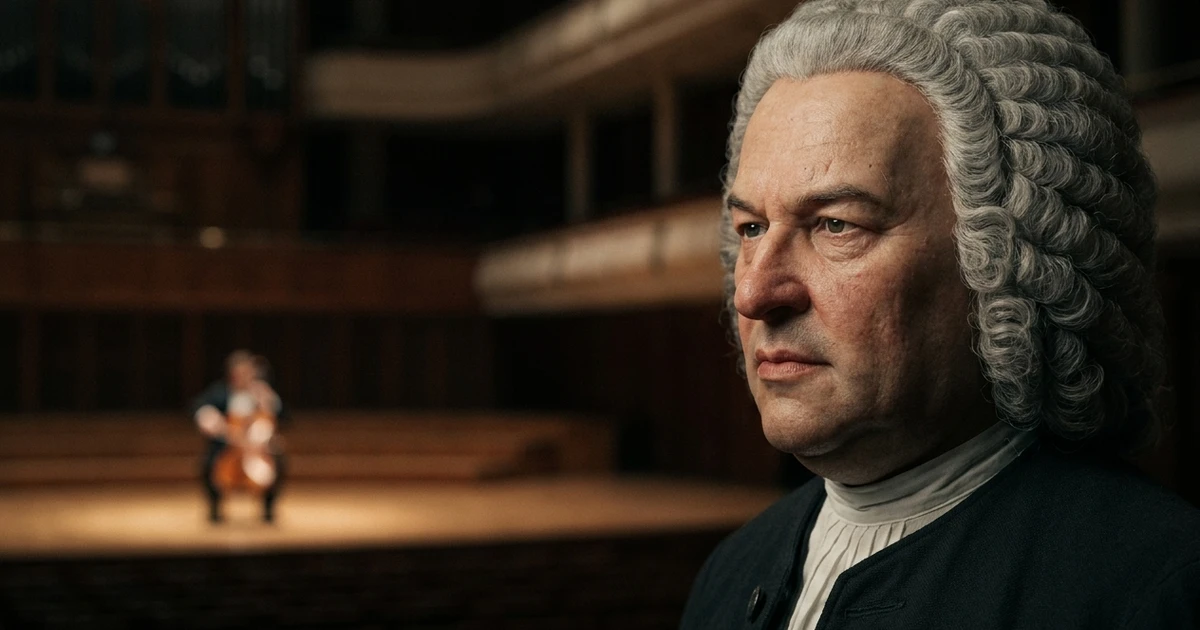
The exact chronology of the suites’ composition remains a subject of musicological debate, as no autograph manuscript in Bach’s own hand has survived. The primary source for the music is a manuscript copy made by his second wife, Anna Magdalena Bach, likely transcribed between 1727 and 1731. The absence of an original manuscript has created a unique challenge for performers, as Anna Magdalena’s copy is notoriously ambiguous regarding slurs, articulations, and dynamics. This "interpretive gap" has allowed generations of cellists to bring their own philosophies to the music, resulting in a recording history that ranges from the deeply romantic to the strictly historical.
Structural Anatomy of the Suites
Each of the six suites follows a standardized Baroque dance suite structure, beginning with an improvisatory Prelude followed by five stylized dances:
- Prelude: A free-form opening that establishes the tonality and mood.
- Allemande: A stately German dance in quadruple meter.
- Courante: A faster, more rhythmic French or Italian dance.
- Sarabande: A slow, expressive Spanish dance, often considered the emotional heart of the suite.
- Galanteries: A pair of shorter dances—Minuets (Suites 1 & 2), Bourrées (Suites 3 & 4), or Gavottes (Suites 5 & 6).
- Gigue: A lively, virtuosic closing dance in compound meter.
Despite this rigid framework, Bach differentiates the suites through technical demands. The Fifth Suite requires scordatura, where the highest string (A) is tuned down a whole tone to G, creating a darker, more somber resonance. The Sixth Suite was originally written for a five-stringed instrument—likely a cello piccolo—which adds an E-string above the standard A, allowing for a more brilliant, quasi-orchestral range.
The 20th-Century Revival: A Chronology of Discovery
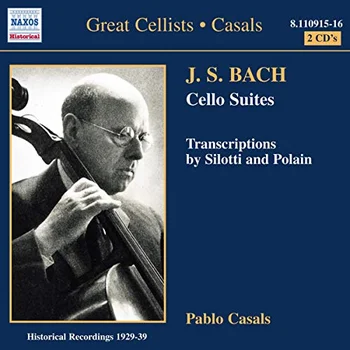
The modern history of the suites began in 1889, when a 13-year-old Catalan cellist named Pablo Casals discovered a tattered edition of the scores in a second-hand music shop in Barcelona. Casals spent twelve years practicing the suites in private before performing them in public, eventually becoming the first person to record the complete cycle. Before Casals, the suites were rarely played in their entirety; they were seen as dry technical studies rather than cohesive works of art.
Casals’ advocacy transformed the cello’s identity. His recordings in the late 1930s proved that a single melodic instrument could sustain complex harmony and profound emotional narratives without accompaniment. This paved the way for the "Golden Age" of cello recordings in the mid-20th century and the subsequent "Period Performance" movement of the 1970s and 80s.
Essential Modern Cello Interpretations
For those seeking the resonance and expressive power of the modern cello, several recordings stand as definitive benchmarks.
Pablo Casals (EMI/Naxos, 1936–1939)
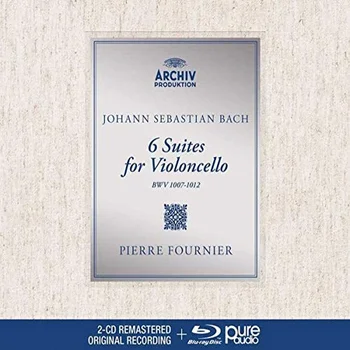
The historical significance of Casals’ cycle cannot be overstated. Recorded as Europe stood on the brink of World War II, his performance is characterized by a "speaking" quality—rhetorical, intense, and deeply human. While the audio quality reflects the limitations of the era, the rhythmic vitality and the singing line of the Sarabandes remain unparalleled. Casals approached the music not as a museum piece, but as living drama.
Pierre Fournier (Deutsche Grammophon, 1960)
Known as the "aristocrat of the cello," Pierre Fournier’s recording is often cited as the perfect entry point for new listeners. His tone is elegant and refined, avoiding the overt ruggedness of Casals in favor of a polished, singing legato. Fournier’s Bach is poised and balanced, representing the pinnacle of the mid-century Franco-Belgian school of playing.
Heinrich Schiff (EMI, 1984)
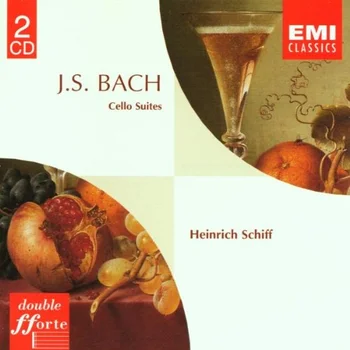
Heinrich Schiff provides a more muscular, vigorous alternative to the refined Fournier. His recording is noted for its clarity of attack and rich, focused sonority. Schiff manages to bridge the gap between the romantic tradition and the emerging historical awareness of the 1980s, offering a reading that is both physically powerful and intellectually rigorous.
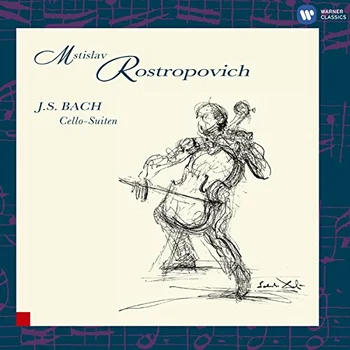
Mstislav Rostropovich (EMI, 1995)
Rostropovich, perhaps the most famous cellist of the late 20th century, famously waited until his sixties to record the suites. Captured in the Basilica of Sainte-Madeleine in Vézelay, France, his performance is grand, idiosyncratic, and deeply spiritual. He treats the suites as a monumental cycle, using a wide dynamic range and vast architectural pacing. While some critics find his tempos overly deliberate, the sheer scale of his vision is undeniable.
Yo-Yo Ma (Six Evolutions – Sony Classical, 2018)
This is Ma’s third and likely final recording of the suites. Unlike his more youthful, exuberant earlier versions, Six Evolutions is an introspective, philosophical journey. The recording is intimate and dry, capturing the grain of the bow on the string. It reflects a lifetime of living with the music, played with the ease of a storyteller who no longer feels the need to prove his virtuosity.
The Period Instrument Revolution
The rise of the Historically Informed Performance (HIP) movement introduced listeners to the soundscapes Bach would have recognized: gut strings, Baroque bows, and a lack of continuous vibrato.
Anner Bylsma (Sony Vivarte, 1979/1992)
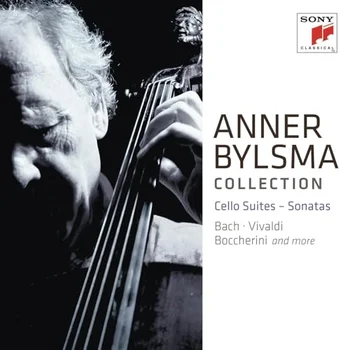
Bylsma was a pioneer in recording the suites on a Baroque cello. Using gut strings, which have a quicker decay and a more textured "crunch" than steel, he emphasized the dance origins of the music. His 1992 recording on the "Servais" Stradivarius is particularly notable for its transparency and nervous energy, proving that Bach could be light, agile, and transparent.
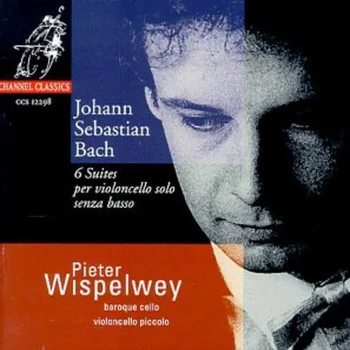
Pieter Wispelwey (Channel Classics, 1998/2012)
Wispelwey has recorded the suites multiple times, but his period-instrument accounts are celebrated for their extroverted, almost improvisational feel. He utilizes the five-string cello for the Sixth Suite, allowing the upper register to ring with a clarity that modern four-string cellos struggle to match. His interpretations are characterized by rhythmic freedom and a palpable sense of joy.
David Watkin (Resonus, 2015)
David Watkin’s recording won numerous awards for its blend of scholarly research and spontaneous musicality. Playing on a variety of period instruments, Watkin emphasizes the rhetorical nature of the music—treating it as a form of "speech in sound." His account is buoyant and breathable, avoiding the heavy-handedness that sometimes plagues modern cello versions.
Contemporary Voices and Nuanced Perspectives
Recent decades have seen performers combine historical awareness with modern expressive sensibilities.
Steven Isserlis (Hyperion, 2007)
Isserlis uses a modern cello but with gut strings, creating a hybrid sound that is both warm and articulate. He famously views the suites as a religious journey, associating each with a different mystery of the faith (though he emphasizes this is a personal framework). His playing is searching and understated, avoiding ego in favor of a pure, direct connection to the score.
Jean-Guihen Queyras (Harmonia Mundi, 2007)
Queyras offers a reading that is remarkably fluid and luminous. His technique is flawless, allowing the complex counterpoint of the suites to emerge with natural ease. It is a "cool" interpretation in the best sense—uncluttered, elegant, and focused on the architectural beauty of Bach’s writing.
Broader Impact and Cultural Implications
The influence of the Cello Suites extends far beyond the classical concert hall. They have become a universal symbol of human resilience and introspection. Casals’ performance of the suites became a silent protest against the Franco regime in Spain, while Rostropovich famously played the suites at the crumbling Berlin Wall in 1989. In cinema, the music has been used by directors from Ingmar Bergman to Peter Weir to evoke themes of solitude and spiritual longing.
From a technical standpoint, the suites revolutionized the cello. Before Bach, the cello was largely a "continuo" instrument, relegated to providing the bass line for other soloists. Bach’s writing proved the instrument could be a polyphonic powerhouse, capable of playing melody, bass, and internal harmony simultaneously through the use of "implied counterpoint."
Today, the Six Cello Suites remain the most-recorded works for the instrument. The ongoing diversity of interpretations—from the gut-stringed intimacy of David Watkin to the grand romanticism of Rostropovich—ensures that Bach’s 300-year-old masterpiece continues to evolve. As cellists continue to grapple with the ambiguities of Anna Magdalena’s manuscript, the suites remain a living testament to the infinite possibilities of a single player and four (or five) strings.