Australian Singer-Songwriter Leah Senior Pays Homage to British Folk Legend Bert Jansch in New Lagniappe Sessions Release

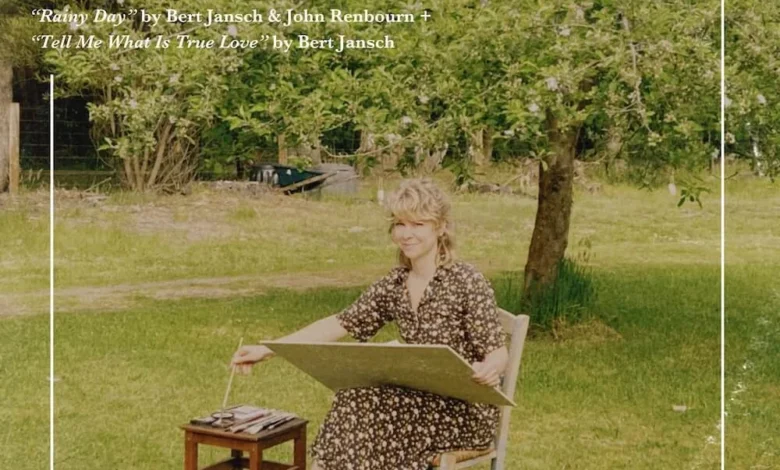
Australian singer-songwriter Leah Senior has released a deeply considered contribution to the ongoing Lagniappe Sessions series, turning her attention to the foundational British folk guitar tradition. Recorded in the comfort of her home alongside collaborator Jesse Williams, Senior’s latest musical endeavor captures two distinct interpretations of compositions originally penned by legendary Scottish folk musician Bert Jansch. The release highlights Senior’s adeptness at translating intricate acoustic guitar arrangements into her own distinct sonic vernacular, blending her established pastoral aesthetic with the enduring blueprint of 1960s and 1970s British folk revivalism.
The project features stripped-back, highly intimate recordings of Jansch’s "Rainy Day" and "Tell Me What Is True Love." By leaning into the organic limitations of a home recording environment, Senior and Williams have crafted interpretations that prioritize space, texture, and emotional resonance over modern production polish. This meticulous approach to covers is a hallmark of the Lagniappe Sessions, a curated platform that invites contemporary artists to step outside their standard repertoire and interpret songs by their direct influences, peers, or historical predecessors.
Decoding the Re-imaginings: Musical Analysis and Arrangement
In her approach to Bert Jansch’s "Rainy Day," Senior fundamentally reshapes the rhythmic architecture of the original recording. While Jansch’s interpretation famously relies on an insistent, driving central riff that dictates the momentum of the piece, Senior and Williams choose to decelerate the tempo. This deliberate slowing down transforms the character of the composition, drawing out its sinuous, unhurried qualities. The modification allows the delicate, cascading melodic descents that follow the primary motif to breathe, highlighting the sophisticated harmonic structures underlying Jansch’s deceptively simple fingerpicking style.
The second selection, Jansch’s "Tell Me What Is True Love," showcases a different facet of Senior’s instrumental capability. The track opens with a lilting, circular picking pattern that immediately establishes a pastoral, reflective atmosphere. Rather than attempting to replicate the rapid-fire precision of Jansch’s lightning-fast alternating bass and melody lines—often considered the gold standard of acoustic folk guitar—Senior adopts an interpretive stance that emphasizes the song’s lyrical vulnerability. The interplay between Senior’s vocal delivery and Williams’ subtle accompaniment creates an expansive sonic landscape, demonstrating how classic folk arrangements can be successfully contextualized within a contemporary framework without losing their historical gravity.
Contextualizing the Lagniappe Sessions
The Lagniappe Sessions—derived from a Louisiana French term meaning "a little something extra"—have long occupied a unique niche within independent music culture. Established as a recurring feature by the culture and music publication Aquarium Drunkard, the series serves as a bridge between contemporary independent artists and the historical canons that shaped them. Over the years, the platform has facilitated hundreds of exclusive recordings, offering artists a rare opportunity to experiment outside the commercial pressures of standard album campaigns.
For Leah Senior, participating in the Lagniappe series aligns neatly with a career trajectory that has consistently honored traditional folk, baroque pop, and classic singer-songwriter tropes. Based in Melbourne, Australia, Senior has steadily built an international following through her releases on flightless and her own independent channels. Her music frequently draws comparisons to the 1960s and 1970s folk booms of the United Kingdom and North America, marked by literary lyricism, analog instrumentation, and a keen attention to acoustic dynamics. By focusing her Lagniappe contribution entirely on Bert Jansch, Senior explicitly acknowledges a lineage that has informed her stylistic development.
The Enduring Legacy of Bert Jansch
To understand the weight of Leah Senior’s latest release, one must examine the monumental stature of Bert Jansch within the history of modern music. Born in Glasgow in 1943, Jansch emerged as a central figure in the London folk revival of the 1960s. Utilizing a complex, jazz-inflected fingerpicking technique influenced by the blues of Big Bill Broonzy and the traditional music of the British Isles, Jansch revolutionized how the acoustic guitar was played.
As a founding member of the influential supergroup Pentangle and a prolific solo artist, Jansch recorded a string of seminal albums that cast a long shadow over generations of musicians. Icons such as Jimmy Page, Neil Young, Johnny Marr, and Bernard Butler have frequently cited Jansch as a primary stylistic influence. Page famously remarked that when he first heard Jansch’s self-titled 1965 debut album, he was so astounded by the guitar work that he refused to play for weeks.
Jansch’s songs—characterized by dark harmonic minor progressions, intricate rhythms, and a stark, unfiltered vocal delivery—frequently addressed themes of melancholy, transience, and the natural world. By selecting "Rainy Day" and "Tell Me What Is True Love," Senior is engaging with material that is both technically demanding and emotionally complex. Jansch’s ability to weave complex instrumental passages without losing the core narrative of a song provides a high bar for any contemporary artist attempting a cover.
Production and Collaboration: The Home-Studio Aesthetic
The recording of these tracks at home with Jesse Williams represents a growing shift toward intimate, low-fi production methodologies within the contemporary folk community. In an era where digital audio workstations allow for infinite layering and clinical precision, Senior and Williams opted for a transparent recording approach that captures the natural resonance of the instruments, the subtle scrape of guitar strings, and the ambient noise of a domestic space.
This methodology not only aligns with the ethos of traditional folk music—which historically developed in domestic, communal, and non-commercial settings—but also serves an artistic purpose. The warmth of a home recording complements the nostalgic, timeless quality of Jansch’s compositions. Williams, a frequent collaborator known for his work across Australia’s independent music circuit, provides understated bass and harmonic support that anchors Senior’s intricate vocal and guitar interplay without overcrowding the mix.
Musicologists and critics have frequently noted that home-recorded sessions often yield performances that are more vulnerable and emotionally direct than those captured in high-budget commercial studios. By removing the time constraints and psychological pressures associated with expensive studio bookings, artists are granted the creative latitude to explore unconventional arrangements, such as the slowed-down tempos and spacious phrasing heard on Senior’s rendition of "Rainy Day."
Broader Impact and Critical Implications
Leah Senior’s contribution to the Lagniappe Sessions arrives at a time of renewed mainstream and underground interest in acoustic folk traditions. As listeners increasingly seek out organic instrumentation and narrative-driven songwriting amidst an increasingly digitized landscape, the practices of the 1960s and 1970s folk revivals are experiencing a significant cultural resurgence.
Releases of this nature perform a vital archival and educational function within the modern music ecosystem. By reinterpreting deep cuts from artists like Bert Jansch, contemporary singer-songwriters help introduce foundational catalog music to younger audiences who might otherwise be unacquainted with the roots of contemporary indie-folk. Furthermore, these recordings challenge the transient nature of modern single releases by anchoring new work in a historical continuum.
From an industry perspective, platforms like the Lagniappe Sessions demonstrate alternative economic and promotional models for independent music journalism and artist collaboration. Powered primarily by patron support and community funding, such initiatives bypass traditional major-label gatekeeping, allowing artists complete creative autonomy over their output. This model ensures that specialized, niche projects—such as a modern Australian folk artist recording acoustic tributes to a Scottish guitar pioneer—can find a receptive global audience.
Conclusion and Future Outlook
Leah Senior’s reading of Bert Jansch for the Lagniappe Sessions is more than a routine covers release; it is a thoughtful, reverent dialogue across decades and continents. By taking two complex compositions and filtering them through her distinct artistic sensibilities, Senior has reaffirmed her status as one of the most dedicated custodians of traditional folk forms working today.
As the full scope of her collaboration with Jesse Williams continues to circulate among folk enthusiasts and critics alike, the project underscores the timelessness of Jansch’s songwriting and the vitality of Senior’s interpretive craft. Whether serving as an entry point for new listeners or a welcome rediscovery for long-time fans of British folk guitar, this home-recorded installment stands as a testament to the enduring power of the acoustic guitar, a finely tuned vocal, and a reverence for musical history.