Gram Parsons Inducted into Rock and Roll Hall of Fame as Country Music Hall of Fame Advocacy Continues

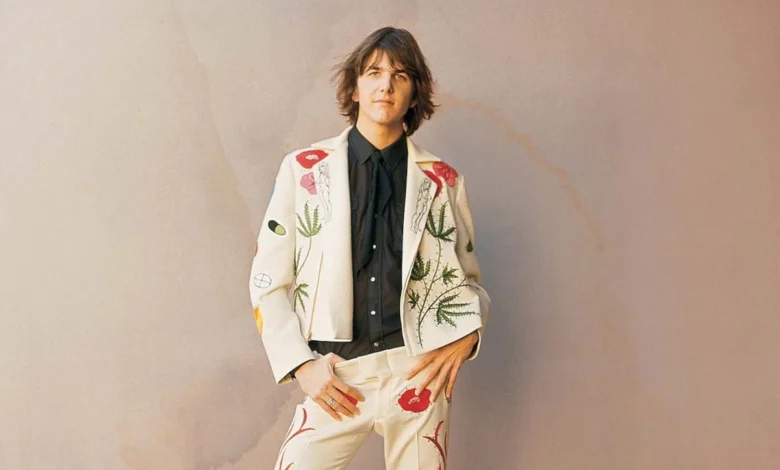
The Rock and Roll Hall of Fame officially announced its class of 2026 on Monday evening, April 13, revealing that Gram Parsons, the architect of "Cosmic American Music," will finally be inducted into the prestigious institution. Parsons, who died in 1973 at the age of 26, is being recognized in the "Early Influence" category, a distinction reserved for artists whose music and instructional style have had a profound impact on the evolution of rock and roll and related genres. The announcement comes at a poignant moment in the artist’s legacy, as November 5, 2026, will mark what would have been his 80th birthday.
While the induction marks a significant victory for historians and fans who have spent decades championing Parsons’ contribution to the musical canon, it also reignites a long-standing debate regarding his absence from the Country Music Hall of Fame. For years, peer advocates including Emmylou Harris and Steve Earle have lobbied for Parsons’ inclusion in the Nashville-based institution, arguing that his synthesis of country, soul, and rock redefined the genre for a new generation.
The 2026 Induction Class and the "Early Influence" Designation
The Rock and Roll Hall of Fame’s 2026 roster features a diverse array of talent, with Parsons joined by high-profile contemporary acts. The primary inductees for the year include Phil Collins, Billy Idol, Iron Maiden, Joy Division/New Order, Oasis, Sade, Luther Vandross, and the Wu-Tang Clan. Because Parsons was inducted via the Early Influence category rather than the primary Performer category, his name was initially overshadowed in mainstream headlines by these multi-platinum sellers.
Parsons enters the Hall alongside fellow Early Influence inductees Celia Cruz, Queen Latifah, MC Lyte, and Fela Kuti. This category has historically been used to honor figures who laid the groundwork for the rock era, including "Father of Bluegrass" Bill Monroe and country legend Hank Williams. The inclusion of Parsons in this specific tier acknowledges that while his commercial success during his lifetime was limited, his DNA is present in nearly every country-rock and Americana act that followed.
The path to this induction was bolstered by formal letters of recommendation from established Hall of Famers. Emmylou Harris, who was discovered by Parsons and served as his singing partner during his solo years, has been a vocal proponent of his legacy. Steve Earle, another towering figure in the alt-country movement, also submitted documentation to the Rock Hall’s nominating committee, emphasizing that Parsons’ work with The Byrds and The Flying Burrito Brothers was foundational to the development of the Southern California sound.
A Legacy of Innovation: From Harvard to Joshua Tree
Gram Parsons’ career was as brief as it was influential. Born into a wealthy but troubled family in Florida, Parsons briefly attended Harvard University before dropping out to pursue music in Los Angeles. His first significant venture, the International Submarine Band, produced the 1968 album Safe at Home, which many historians cite as the first true country-rock record.

However, it was his 1968 tenure with The Byrds that secured his place in history. Despite being hired as a mere sideman, Parsons effectively took the creative reins of the group, steering them away from psychedelic rock and toward traditional country. The result was Sweetheart of the Rodeo, an album recorded in Nashville that remains a touchstone for the genre.
The sessions for Sweetheart of the Rodeo were famously fraught with tension. Parsons insisted the band perform at the Grand Ole Opry, a move that was met with open hostility from the Nashville establishment. On March 15, 1968, the "long-haired" Byrds were booed—or "tweeted" at by audience members making bird sounds—when they took the stage. Despite the cold reception, the album broke down the barriers between the counterculture and conservative country music, though it was a commercial failure upon its initial release.
Following his departure from The Byrds, Parsons formed The Flying Burrito Brothers with Chris Hillman. Their debut, The Gilded Palace of Sin, featured Parsons in a flamboyant Nudie suit adorned with marijuana leaves and poppy flowers, visually representing his "Cosmic American" ethos. After two solo albums, GP and the posthumously released Grievous Angel, Parsons died of an overdose in Joshua Tree, California. His death was followed by a bizarre incident in which his road manager, Phil Kaufman, stole his body from the airport and attempted to cremate it in the desert to fulfill a pact they had made.
Rectifying the 1991 Exclusion
For many, the 2026 induction is seen as a formal apology for Parsons’ exclusion from the Rock Hall in 1991. When The Byrds were inducted that year, the Hall chose to honor only the original five members: Roger McGuinn, Gene Clark, David Crosby, Chris Hillman, and Michael Clarke. Despite Parsons’ pivotal role in Sweetheart of the Rodeo, he was classified as a "hired hand" rather than a permanent member, leaving him off the official roster.
This technicality has long been a point of contention among music critics. Critics argue that Parsons’ influence on The Byrds was more significant than several of the founding members’ later contributions, as he shifted the band’s entire trajectory and, by extension, the trajectory of West Coast rock. By inducting him as an individual under the Early Influence banner, the Rock Hall has finally acknowledged that his impact transcended his brief stint in any single band.
The Country Music Hall of Fame Paradox
While the Rock and Roll Hall of Fame has expanded its definition of "rock" to include country, hip-hop, and R&B, the Country Music Hall of Fame (CMHOF) remains famously restrictive. The CMHOF currently limits its inductions to only three per year: one in the "Modern Era" category, one in the "Veterans Era" category, and a third rotating between "Non-Performer," "Songwriter," and "Recording and/or Touring Musician."
This austerity has created a massive backlog of legendary figures. Parsons is often relegated to the "Veterans Era" category, where he must compete for a single spot against decades of traditional country stars who achieved far greater commercial success. Critics of the CMHOF argue that this system prioritizes chart performance and industry longevity over artistic influence.

The Rock Hall, by contrast, inducted 13 individuals and groups in 2026 alone. This disparity has led to a scenario where country icons are being recognized in Cleveland before they are honored in Nashville. Dolly Parton and Willie Nelson are both members of the Rock and Roll Hall of Fame, yet they were inducted into the CMHOF decades ago. In Parsons’ case, the reverse is happening; the "rock" institution is recognizing a "country" pioneer that Nashville has yet to fully embrace.
Analysis of Broader Implications
The induction of Gram Parsons into the Rock Hall serves as a bellwether for the shifting boundaries of music preservation. As the Rock Hall moves toward a more inclusive "Popular Music Hall of Fame" model, it risks diluting its brand but gains cultural relevancy. Conversely, the Country Music Hall of Fame’s refusal to expand its induction categories risks making the institution appear insular and out of touch with the broader historical narrative of the genre.
Industry analysts suggest that if the CMHOF does not adopt a category similar to the "Early Influence" or "Musical Excellence" designations used by the Rock Hall, it will continue to snub vital architects of the sound. Artists like Dwight Yoakam and the late John Prine—both of whom have deep roots in California country and folk-rock—are frequently mentioned as candidates who might follow Parsons into the Rock Hall while remaining on the outside of the CMHOF.
The "Cosmic American Music" that Parsons championed—a blend of country, rhythm and blues, soul, and folk—is now the standard blueprint for the Americana genre. Modern stars from Chris Stapleton to Sturgill Simpson owe a direct stylistic debt to Parsons’ vision.
Timeline of Recognition and Advocacy
- September 19, 1973: Gram Parsons dies in Joshua Tree, CA.
- 1974: Posthumous release of Grievous Angel solidifies his cult status.
- 1991: The Byrds are inducted into the Rock and Roll Hall of Fame; Parsons is excluded.
- 2003: The "Gram Parsons Petition" is launched by fans, garnering thousands of signatures for his CMHOF induction.
- 2018: The 50th anniversary of Sweetheart of the Rodeo sees a major resurgence in Parsons’ critical standing.
- 2024-2025: Formal advocacy letters from Emmylou Harris and Steve Earle are submitted to the Rock and Roll Hall of Fame.
- April 13, 2026: Official announcement of Parsons’ induction into the Rock and Roll Hall of Fame.
- November 5, 2026: Scheduled 80th birthday of Gram Parsons and expected induction ceremony date.
As the music world prepares to celebrate Parsons in the autumn of 2026, the focus remains on the "wrong being made right." While he may not yet have a plaque in Nashville, his permanent residence in the Rock and Roll Hall of Fame ensures that the "hired hand" who changed the face of country music will no longer be overlooked by history. The pressure now shifts to the Country Music Hall of Fame to determine if they will follow suit or allow one of their most influential pioneers to be claimed primarily by the world of rock.
Related posts: