The Brook and The Bluff Showcase Vocal Precision and Live Synergy During Exclusive Chelsea Studios NYC Session

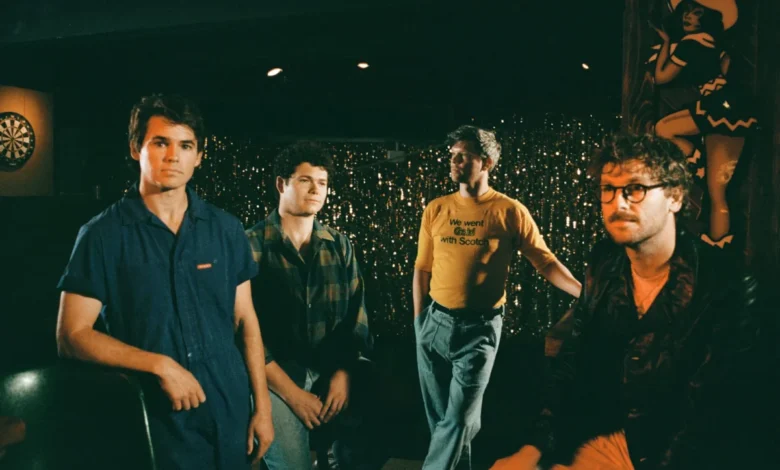
The Birmingham-bred, Nashville-based ensemble The Brook & The Bluff recently transitioned from the rigorous demands of the touring circuit to the intimate environment of Chelsea Studios NYC for a featured No Depression Session. Appearing as a trio, the group—comprising Joseph Settine on vocals and guitar, Alec Bolton on guitar and vocals, and John Canada on vocals—demonstrated a level of sonic cohesion that serves as a testament to over a decade of collaborative performance. This session highlighted the band’s technical proficiency and their commitment to a "live-first" recording philosophy, a hallmark of their most recent creative output.
The trio’s appearance in New York City comes at a pivotal moment in their career, following the release of their latest album, Werewolf. The session’s setlist consisted of three tracks from the new record: “Can’t Figure It Out,” “105,” and “Gone For The Weekend.” Each performance underscored the group’s signature vocal harmonies, which have become their primary stylistic identifier within the competitive Nashville indie-folk and soul landscape. By stripping away the auxiliary layers of a full touring band, the trio format at Chelsea Studios allowed for a transparent look at the foundational elements of their songwriting and the instinctive musical communication developed through ten years of daily rehearsal and performance.
Origins and the Birmingham-to-Nashville Pipeline
The Brook & The Bluff’s trajectory reflects a broader trend in the American Southeast, where burgeoning artists often cut their teeth in the vibrant but localized scene of Birmingham, Alabama, before migrating to the industrial music hub of Nashville, Tennessee. Formed originally as an acoustic duo by Joseph Settine and Alec Bolton, the group eventually expanded to include John Canada and other members, evolving from a college-town favorite into a nationally recognized act.
The move to Nashville served as a catalyst for professional growth, placing the band within a dense ecosystem of world-class engineers, producers, and fellow musicians. However, unlike many acts that adopt the high-gloss production standards often associated with modern Nashville studios, The Brook & The Bluff have maintained a distinct emphasis on organic instrumentation and vocal-centric arrangements. This commitment to their roots is evident in their decision to prioritize live takes and minimal digital intervention during their recording sessions, a strategy that was on full display during the No Depression Session.
The Philosophy of ‘Werewolf’: A Stage-to-Studio Approach
The core of the band’s current artistic direction is defined by the methodology used to create their latest album, Werewolf. In an industry where studio technology often allows artists to manufacture "perfection" through extensive overdubbing and pitch correction, The Brook & The Bluff have opted for a more traditional, performance-based approach. Lead guitarist Alec Bolton articulated this shift in philosophy during the session, noting the band’s desire to ensure that a song is fully realized in a live setting before it ever reaches the studio environment.
“What if we don’t take a song into the studio unless it already sounds great and is really fun to play?” Bolton remarked. This perspective suggests a reversal of the standard modern production cycle, where songs are often written and polished in the studio and then adapted for the stage. By focusing on the "fun" and the "feel" of a live performance first, the band ensures that their recordings capture the kinetic energy of a room full of musicians reacting to one another in real-time.
During the recording of Werewolf, the band spent their studio hours playing together in a single room with minimal overdubs or studio tricks. This process requires a high degree of technical skill and mutual trust, as errors cannot be easily hidden in post-production. The result is a record that sounds remarkably close to the band’s live show—a quality that has resonated with fans and critics alike who value authenticity in a digital age.
Technical Analysis of the Chelsea Studios Performance
The session at Chelsea Studios NYC provided a controlled environment to observe this "live-first" philosophy in action. The setlist was carefully chosen to showcase different facets of the band’s sound:
“Can’t Figure It Out”
This track serves as a masterclass in the band’s ability to blend complex vocal arrangements with a driving, rhythmic guitar foundation. Settine’s lead vocals are characterized by a soulful elasticity, while Bolton and Canada provide a harmonic bed that feels both lush and precise. The song’s structure allows for dynamic shifts that mimic the ebb and flow of a live performance, avoiding the static nature of many studio-bound tracks.
“105”
Named after a specific highway or perhaps a psychological state of transit, “105” highlights the band’s knack for melodic hooks and nostalgic lyricism. In the trio format, the song’s intricate guitar work is brought to the forefront, revealing the subtle interplay between Settine’s rhythm playing and Bolton’s lead flourishes. The vocal blend on this track is particularly noteworthy, showing no signs of the "vocal fatigue" often associated with long tours; instead, the harmonies remain "locked in tight," as observed by session witnesses.
“Gone For The Weekend”
This performance concluded the session on an upbeat note, emphasizing the band’s pop sensibilities without sacrificing their indie-folk integrity. The track’s infectious energy and relatable themes of escapism and travel align with the band’s own history of life on the road. The lack of studio artifice in this rendition allowed the raw talent of the three musicians to shine, reinforcing the idea that The Brook & The Bluff are, at their core, a performance-based entity.
The Role of Vocal Harmonies and Long-Term Collaboration
One of the most striking aspects of the Chelsea Studios session was the seamless integration of the trio’s voices. In the context of contemporary music, such precision is often the result of digital alignment; however, for The Brook & The Bluff, it is the result of a decade of daily use. This longevity is a rarity in the modern independent music scene, where bands frequently shuffle members or dissolve after a few years.
The vocal chemistry between Settine, Bolton, and Canada is not merely a technical achievement but a foundational element of their brand. This "locked-in" quality allows them to navigate complex interval changes and rhythmic syncopations that would be difficult for less experienced groups to execute live. The session demonstrated that their harmonies are not just a studio embellishment but a primary instrument in their own right, capable of carrying the weight of a performance even in a stripped-back setting.
Broader Implications for the Independent Music Industry
The success of The Brook & The Bluff’s "live-first" approach carries significant implications for the independent music industry. As the cost of high-end studio time remains prohibitive for many emerging artists, the move toward "live-in-room" recording offers a sustainable and artistically honest alternative. It prioritizes the development of musical chemistry and performance skills over the mastery of production software.
Furthermore, platforms like the No Depression Sessions play a crucial role in documenting this shift. By providing a space for artists to perform in a high-quality, intimate setting, these sessions offer audiences a "behind-the-scenes" look at the craftsmanship involved in music creation. For The Brook & The Bluff, the session at Chelsea Studios serves as a definitive statement of their current capabilities and a validation of their decision to prioritize the stage over the studio trickery.
Chronology of Development and Future Outlook
The journey from Birmingham to Chelsea Studios is marked by several key milestones:
- Early 2010s: Formation of the core duo in Birmingham, Alabama, focusing on acoustic arrangements and vocal blending.
- Mid-2010s: Expansion into a full band and the release of early EPs that garnered regional attention and millions of streams on independent platforms.
- The Nashville Transition: Relocation to Tennessee, which facilitated more extensive national touring and access to a broader professional network.
- The Werewolf Era: A conscious decision to shift recording philosophies, culminating in the release of an album designed to be performed live.
- 2024 NYC Sessions: The recent Chelsea Studios performance, showcasing the band as a matured, technically proficient trio capable of delivering high-stakes performances in any environment.
Looking forward, The Brook & The Bluff appear poised to continue their upward trajectory. Their commitment to authentic, performance-based music positions them well in a market that increasingly values "human" elements in art. As they continue to tour in support of Werewolf, the lessons learned from their decade of collaboration will likely remain the bedrock of their sound.
The session at Chelsea Studios NYC was more than just a promotional stop; it was a demonstration of a band that has mastered the art of the live performance. By focusing on the strength of their vocal harmonies and the clarity of their instrumentation, Joseph Settine, Alec Bolton, and John Canada have carved out a unique space for themselves. In an era of increasing automation, The Brook & The Bluff remain a compelling argument for the enduring power of musicians playing together in a room, listening to one another, and letting the music speak for itself.
Related posts: