Michael Smith sentenced to 18 months in prison for pioneering AI music streaming fraud scheme

In a landmark decision that establishes a major legal precedent for the digital music industry, Manhattan federal judge John G. Koeltl sentenced 54-year-old Michael Smith to 18 months in prison on October 6. Smith, a North Carolina resident, became the first individual to face criminal charges—and subsequently a custodial sentence—for executing a sophisticated, large-scale streaming fraud scheme. By leveraging artificial intelligence to generate thousands of low-quality, non-human-made tracks and utilizing automated bot networks to inflate their play counts, Smith siphoned over $8 million in royalty payments from streaming platforms over the course of several years.
This sentence marks the conclusion of a high-profile case that has sent shockwaves through the music sector, highlighting the vulnerabilities of modern digital music distribution models to synthetic content and automated manipulation.
The Anatomy of a Digital Heist: A Chronology
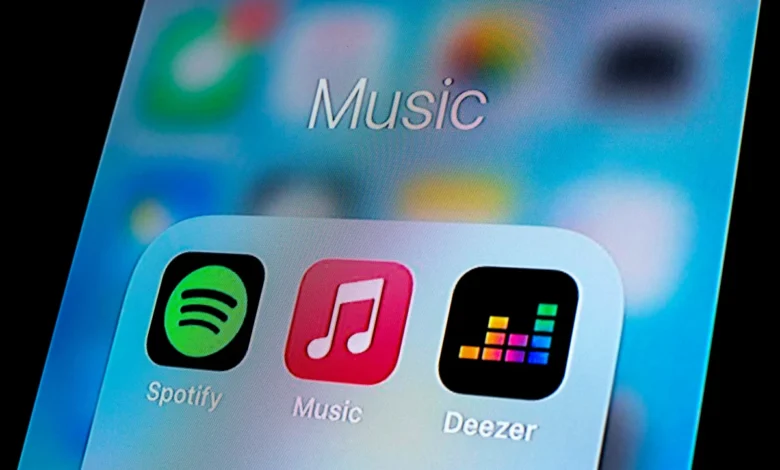
The criminal activity spearheaded by Smith dates back to 2017, a period during which the rapid proliferation of streaming services like Spotify, Apple Music, and Amazon Music created new avenues for monetization. Prosecutors established that Smith’s operations evolved through three distinct phases.
Initially, Smith reportedly began by using automated scripts to boost the streaming numbers of his own original music, an early iteration of the "streaming farm" model. However, realizing the potential for greater profit, he pivoted to mass-producing synthetic audio. Between 2018 and 2024, Smith employed AI software to generate thousands of short, rudimentary musical compositions. He then uploaded these tracks to various streaming platforms using hundreds of thousands of fake, automated accounts.
The "bots" were programmed to stream these songs on a continuous loop, ensuring that each track garnered the minimum number of plays required to trigger royalty payments. By 2024, the scope of the operation had become so vast that Smith was generating billions of fraudulent streams annually. The scheme was finally dismantled following a federal investigation that led to his arrest on a three-count indictment, charging him with wire fraud conspiracy, wire fraud, and money laundering. In March 2025, Smith entered a guilty plea, acknowledging his role in the multi-million dollar conspiracy.
Quantitative Impact and Financial Distortions
The scale of Smith’s operation provides a stark look at how synthetic content can dilute the revenue pool for legitimate artists. According to federal prosecutors, the $8 million in royalties collected by Smith was not merely "extra" money generated by the platforms; it was money diverted from the royalty pools that are shared among legitimate songwriters, performers, and labels.
Industry analysts note that streaming platforms operate on a "pro-rata" model, where all subscription and ad-supported revenue is pooled and distributed based on the percentage of total streams a particular artist commands. By injecting billions of artificial, bot-driven streams into the system, Smith effectively lowered the "per-stream" payout for every genuine human creator in the industry. While individual losses for a single artist may appear minor—a fraction of a cent per stream—the cumulative effect of billions of fake streams represents a significant financial hemorrhage for the creative community.

Arguments in the Courtroom
The sentencing hearing highlighted a profound disconnect between the defendant’s perception of the crime and the judicial system’s view of its impact. Smith’s defense counsel urged the court to impose a sentence of zero prison time, characterizing the fraud as a "victimless" or "insignificant" offense. They argued that because the financial loss was spread across such a vast number of creators, the impact on any one individual was effectively non-existent—a "drop in the ocean," as described in their court filings.
However, the prosecution, led by Manhattan federal prosecutor Jamie McDonald, took a drastically different stance. They emphasized that the law does not measure the severity of fraud solely by the impact on a single victim, but by the systemic damage caused to the integrity of the marketplace. The prosecution argued that allowing a lenient sentence would essentially greenlight future fraud, signaling to other bad actors that the theft of millions via AI automation carries little risk of incarceration. Ultimately, the judge sided with the prosecution’s assessment of the harm, noting that the systematic nature of the crime required a deterrent that went beyond mere financial forfeiture.
Industry and Institutional Responses
The sentencing has been met with widespread approval from major industry trade organizations. The Recording Industry Association of America (RIAA) issued a statement following the hearing, praising the court for recognizing that streaming fraud is not a technical glitch or a "victimless" crime, but a deliberate act of theft.
"Streaming fraud harms creators and deceives fans," the RIAA stated. "We appreciate the Court recognizing the significance of this harmful conduct and the ill-gotten gains that come from the pockets of real artists, songwriters and their label partners."
Similarly, the Music Fights Fraud Alliance, an advocacy group formed specifically to combat the rise of synthetic streaming manipulation, framed the sentencing as a vital first step. While the organization acknowledged that one conviction will not eradicate the problem, it serves as a critical deterrent. The alliance emphasized that the industry now faces a "cat-and-mouse" game; as platforms improve their bot-detection algorithms, scammers are increasingly turning to more advanced generative AI tools to make their bot traffic appear indistinguishable from human listening habits.
Broader Implications for the Future of Music
The Smith case arrives at a pivotal moment for the music industry. As generative AI becomes more accessible, the barriers to entry for such schemes have been effectively erased. The ability to generate infinite, royalty-eligible content at zero cost is a structural issue that platforms are still struggling to resolve.
The implications of this sentencing are three-fold:
- Increased Regulatory Scrutiny: This case provides a roadmap for federal prosecutors to handle future instances of digital fraud. It demonstrates that prosecutors are now well-versed in the mechanics of streaming platforms and are prepared to pursue criminal charges rather than relying solely on civil litigation.
- Platform Accountability: Streaming services will likely face increased pressure from labels and artist unions to implement more robust "Know Your Creator" protocols and more sophisticated AI-based detection systems to verify the authenticity of incoming audio files.
- The Erosion of Trust: Beyond the financial loss, the case underscores the erosion of trust between listeners and platforms. As fans become more aware that a portion of the music they consume may be "fake" or machine-generated for profit, the value proposition of human-curated, artist-driven music becomes a point of contention.
As the industry moves forward, the sentencing of Michael Smith stands as a definitive marker. It serves as a reminder that while the digital landscape has changed, the legal definition of fraud—the intentional deception for financial gain—remains constant. The question remains whether this 18-month sentence will be enough to quell the tide of synthetic streaming schemes, or if the sheer profitability of the practice will continue to invite new, more sophisticated attempts to exploit the system. For now, the music industry has a clear legal precedent that the era of "consequence-free" streaming fraud has officially come to an end.