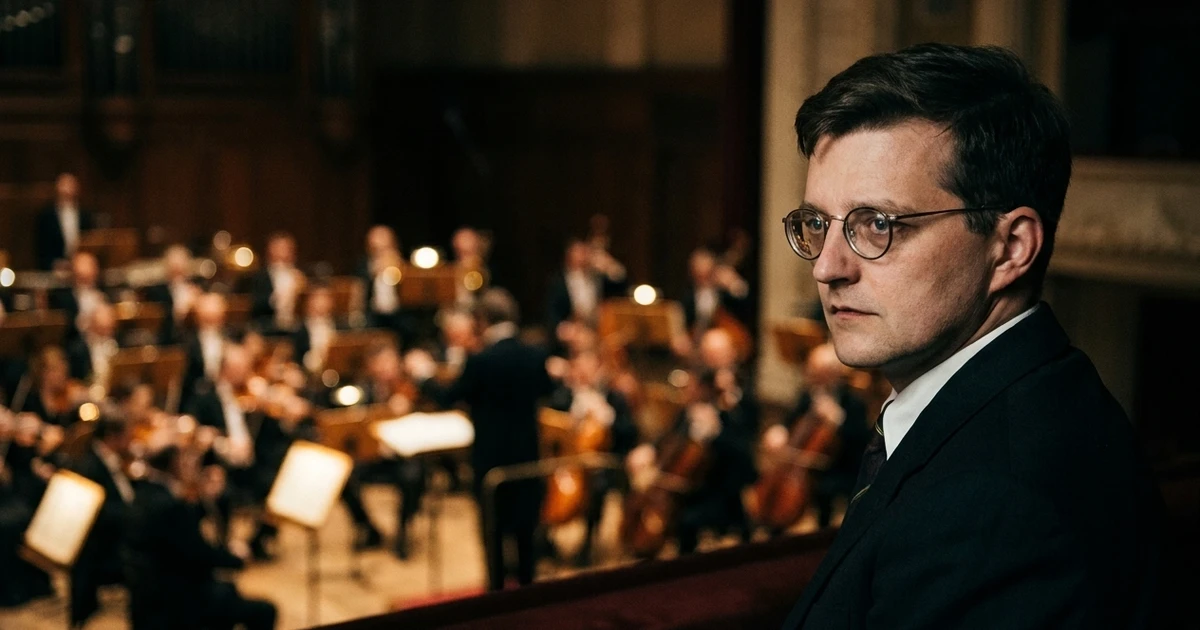
Dmitri Shostakovich was just thirty years old when the world premiere of his Symphony No. 5 in D minor, Op. 47, took place in Leningrad on November 21, 1937. Written under the harrowing shadow of Soviet political oppression, the work has since cemented its status as one of the most frequently performed, analyzed, and debated orchestral compositions of the twentieth century. To navigate the vast discography of this monumental piece, The Classic Review editorial team has curated a comprehensive guide to the ten finest recordings ever committed to tape.
Historical Context and Political Background
The genesis of Shostakovich’s Fifth Symphony cannot be separated from the ideological terror of the Great Purge and the composer’s dramatic fall from grace in early 1936. Following an editorial attack in the Communist Party newspaper Pravda regarding his avant-garde opera Lady Macbeth of the Mtsensk District, Shostakovich found himself branded an "enemy of the people." Simultaneously, his deeply introspective Fourth Symphony was abruptly withdrawn during rehearsals—officially at the composer’s discretion, though the threat of arrest and exile hung heavy over the decision.
In response to this existential crisis, Shostakovich approached the Fifth Symphony as an artistic and literal act of self-preservation. Upon its Leningrad premiere under the baton of Yevgeny Mravinsky, the piece elicited a rapturous, forty-minute ovation that brought audiences to tears. Shortly thereafter, an anonymous review in an official Soviet journal famously dubbed the symphony "a Soviet artist’s creative reply to just criticism"—a phrase Shostakovich neither authored nor publicly repudiated, but which successfully rehabilitated his standing with the regime.
Structural Analysis and the Perennial Debate
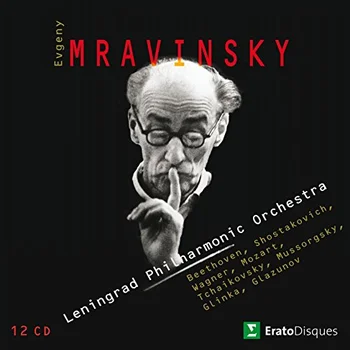
Scored for a massive orchestra featuring a full percussion section, harps, celesta, and piano, the symphony spans four movements: a broad opening Moderato, a concise Scherzo, a deeply mourning Largo, and a triumphant, driving Allegro non troppo.
The central interpretive controversy of the work lies in its famous conclusion. The transition from the despair of the minor mode into a blaring, fortissimo D major has divided musicologists and conductors for decades. Does the finale represent genuine, state-sanctioned rejoicing, or is it a forced, hollow, and ironic parody of triumph—a "rejoicing under duress"? While memoirs such as the disputed Testimony suggest the latter, conductors ultimately resolve this artistic dilemma through performance choices, most notably in their handling of the tempo and weight of the final coda.
The Definitive Recordings: A Critical Survey
1. Leningrad Philharmonic Orchestra, Yevgeny Mravinsky (1983 Live Recording)
As the conductor who led the historic 1937 premiere, Yevgeny Mravinsky held an unrivaled authority over Shostakovich’s idiom. Captured live forty-six years later, this recording showcases a fierce, uncompromising intensity. Mravinsky pays little heed to traditional tempo markings in the closing pages, driving the finale at a breathtaking pace before broadening it into an implacable, monolithic statement. Despite minor audience noises and raw orchestral blemishes, this performance remains an essential historical document.
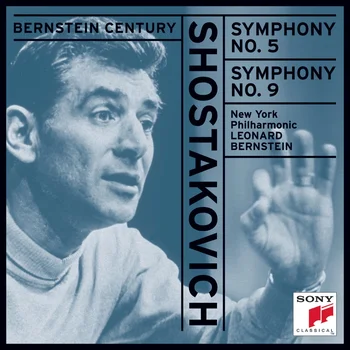
2. New York Philharmonic, Leonard Bernstein (1959)
Leonard Bernstein famously championed the work during the New York Philharmonic’s 1959 Soviet tour, a performance that reportedly moved Shostakovich himself to tears of joy in the auditorium. Recorded shortly after in New York, Bernstein treats the symphony as an explosive virtuoso showpiece. The finale races forward at a blistering speed, projecting unmitigated triumph. While purists debate whether this reading bypasses the work’s inherent irony, its kinetic energy is undeniable.
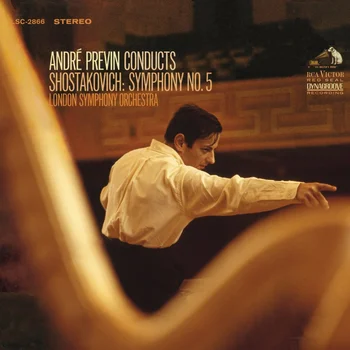
3. London Symphony Orchestra, André Previn (1965)
André Previn’s mid-sixties traversal with the London Symphony Orchestra achieves a rare synthesis of rich orchestral texture and relentless forward drive. Previn focuses heavily on the structural architecture of the slow movement, allowing it to recede into a haunting whisper, while the Scherzo bites with rhythmic acuity. Although historical mastertapes yield minor acoustic limitations in the dynamic climaxes, Previn’s account remains a benchmark of mid-century British Shostakovich interpretation.
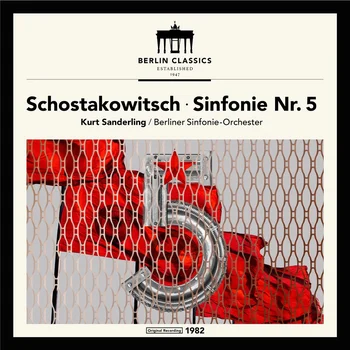
4. Berlin Symphony Orchestra, Kurt Sanderling (1982)
Kurt Sanderling offered a rare perspective, having witnessed rehearsals and performances in Moscow shortly after the work’s 1937 premiere. Sanderling’s 1982 recording is a masterclass in transparency and structural clarity. Eschewing cheap theatricality or exaggerated bombast, he balances the orchestral voices so meticulously that inner counterpoint, normally lost in heavy fortissimos, emerges with stark immediacy. It is perhaps the most intellectually honest reading on record.
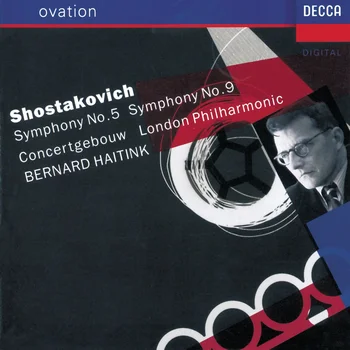
5. Royal Concertgebouw Orchestra, Bernard Haitink (1981)
Bernard Haitink brings Olympian poise and luxurious orchestral execution to the score. Backed by the sumptuous acoustics of the Concertgebouw, Haitink avoids the overt terror and panic favored by Soviet-schooled maestros, favoring a measured, highly civil discourse. While some listeners miss the visceral edge of Eastern European traditions, the sheer beauty of the woodwind playing and the noble restraint of the coda make this a compelling alternative.
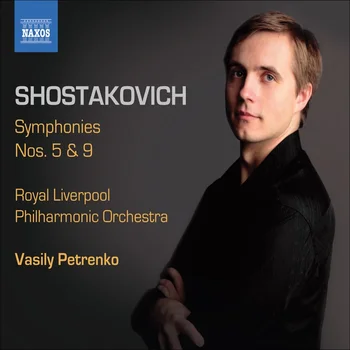
6. Royal Liverpool Philharmonic Orchestra, Vasily Petrenko (2008)
Vasily Petrenko’s 2008 performance is framed entirely by its devastating conclusion. Petrenko utilizes extreme dynamic contrasts, whispering the quietest passages into near-silence before unleashing earth-shattering climaxes. The final movement crawls toward its conclusion in a display of hollow defiance and profound grief. It is an intentionally uncomfortable listening experience that makes a powerful case for the irony interpretation.
7. Pittsburgh Symphony Orchestra, Manfred Honeck (2013)
Conductor Manfred Honeck approaches the score with strict adherence to Shostakovich’s dynamic and instrumental balances. Details that frequently disappear—such as the delicate harp lines in the first movement and the striking piano interjections in the Largo—are brought into sharp relief. Honeck’s unhurried pacing lends the slow movement a profound, dignified sorrow, offering listeners a pristine view of the composer’s orchestration.
8. Boston Symphony Orchestra, Andris Nelsons (2015)
Andris Nelsons and the Boston Symphony Orchestra present a massive, wide-screen sonic canvas. Anchored by peerless brass playing, Nelsons maintains an undercurrent of existential unease that permeates even the more lyrical episodes. The spatial depth of the recording captures the immense scale of the Boston acoustic, presenting the symphony as a grand architectural tragedy.
9. London Symphony Orchestra, Maxim Shostakovich (Discs)
Led by the composer’s own son, Maxim Shostakovich, this interpretation is defined by its expansive, deliberate tempos—clocking in significantly longer than Mravinsky’s taut reading. This unhurried approach allows the music to breathe without ever losing its structural pulse. The resulting performance avoids overt pleading, instead letting the sheer weight of the march rhythms and the warmth of the central episodes speak for themselves.
10. Moscow Philharmonic Orchestra, Kirill Kondrashin (1964)
For sheer danger and adrenaline, Kirill Kondrashin’s 1964 Soviet recording remains peerless. Kondrashin, who worked closely with the composer and premiered several of his symphonies, drives the outer movements with reckless, white-hot urgency. Refusing polish in favor of raw emotional truth, Kondrashin delivers a coda that strikes with a brutal, terrifying force unmatched by modern digital iterations.

Conclusion and Streaming Availability
Shostakovich’s Fifth Symphony continues to serve as a mirror for the anxieties of the modern era, interpreted variously as a document of Soviet trauma, a coded cry for freedom, or a masterwork of absolute music. For classical music enthusiasts looking to explore these landmark interpretations, selections from this survey are readily available for streaming via Apple Classical or for purchase through Presto Music.