The Paradox of Attention: Richard Wagner, the Bayreuth Festival, and the Modern Era of Artificial Intelligence

In the late 19th century, the intellectual preoccupation with the concept of "attention" served as a central pillar of aesthetic theory, and among the era’s most complex figures, Richard Wagner occupied a singular position regarding the tension between the production and consumption of art. As the Bayreuth Festival continues to evolve in the 21st century, its current intersection with artificial intelligence and digital curation forces a reconsideration of Wagner’s own volatile philosophy. Throughout his career, Wagner’s views on artistic ownership oscillated wildly; he simultaneously decried the commercialization of creative rights—arguing that works should belong to the public or the nation—while later harboring authoritarian fantasies about a benevolent, indolent aristocracy. This duality remains the ghost in the machine of the modern Bayreuth experience, where the preservation of the "Wagnerian cult" meets the algorithmic demands of contemporary digital consumption.
A Chronology of Wagnerian Control and Commercialism
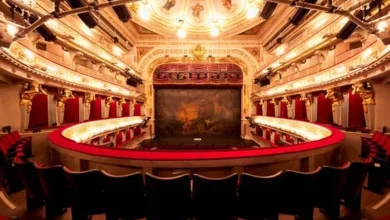
The historical trajectory of the Bayreuth Festival, established by Wagner himself in 1876, is defined by an obsession with absolute control over the audience’s attention. Wagner’s decision to hide the orchestra in a covered pit—the "mystic gulf"—was a radical intervention designed to force the spectator into a state of total, uninterrupted immersion. This was not merely an architectural choice; it was an ideological one.
In the 1880s, following the inaugural cycle of Der Ring des Nibelungen, Wagner became increasingly preoccupied with the funding models of his theater. His shift from revolutionary socialism—which viewed art as a collective, non-market good—to a reliance on royal patronage under King Ludwig II of Bavaria marked a pivotal moment in his legacy. He sought to insulate his work from the "vulgar" influences of bourgeois capitalism, believing that only a detached elite could provide the sustained attention his Gesamtkunstwerk required.
This tension persisted through the 20th century, notably under the directorship of Winifred Wagner, whose embrace of state patronage during the National Socialist era turned the festival into a political tool. The post-war "New Bayreuth" era, spearheaded by Wieland and Wolfgang Wagner, attempted to strip away the hyper-realistic sets of the past in favor of abstract symbolism, yet the underlying quest to dictate the audience’s gaze remained. Today, as the festival navigates the digital age, the integration of AI-driven marketing and archival management represents the latest, most complex chapter in this long history of curation.
The Modern Synthesis: AI and the Digital Archival Shift
In 2026, the Bayreuth Festival is increasingly leveraging artificial intelligence to manage its massive digital archives and personalize the visitor experience. According to technical documentation released by the festival’s administration, AI tools are now being used to analyze decades of performance data to optimize seating, digital program accessibility, and even the "predictive engagement" of international audiences.
The integration of these systems is not without controversy. Critics argue that by employing algorithms to anticipate audience preferences, the festival risks falling into the exact "bourgeois productive forces" trap that Wagner feared. If the algorithm dictates what the listener sees and hears—or how they are marketed to—the "mystic gulf" between the creator and the consumer is no longer a void for artistic reflection, but a feedback loop of optimized consumption.
Data from recent festival seasons indicates a significant shift in audience demographics. In 2024, the average age of a Bayreuth attendee was 56, a statistic the administration is actively attempting to lower through aggressive social media campaigns and streaming initiatives. By using machine learning to parse viewer habits on the festival’s streaming platform, organizers are identifying "gateway" operas, using predictive modeling to suggest specific productions to younger, digital-native demographics.
Reactions from the Artistic Community
The response from the broader classical music community has been mixed. Supporters of the AI-integrated approach, such as digital archivists working with the Richard Wagner Foundation, suggest that these tools are essential for the survival of the festival. "The archive is not a static object," noted a spokesperson for the foundation during a press briefing earlier this year. "To treat it as such is to let it die. By using AI to cross-reference scores, historical reviews, and audio recordings, we are providing a more immersive, multi-layered experience that honors the depth of Wagner’s original intentions."
Conversely, scholars of Wagnerian aesthetics express concern over the commodification of the "Wagnerian trance." They argue that the very nature of Wagner’s work—which demands long, unbroken periods of focus—is antithetical to the fractured attention spans encouraged by the platforms through which the festival now distributes its content. The paradox is clear: to remain relevant to a digital-first audience, the festival must deploy tools that, by their nature, threaten the contemplative environment Wagner built his theater to protect.
Fact-Based Analysis of Future Implications
The implications for the future of Bayreuth are manifold. First, the move toward digital personalization suggests a transition from a "universal" festival experience to a "curated" one. If an audience member is served an AI-tailored path through the Ring cycle, the collective experience—the "public" aspect Wagner once championed—may be diluted.
Second, the question of artistic autonomy remains critical. If the AI is trained on the historical performances of the 20th century, there is a risk that the algorithm will reinforce traditionalist interpretations, potentially stifling the avant-garde, provocative stagings that have characterized the festival since the 1970s. For a festival that prides itself on being at the cutting edge of theatrical innovation, an AI that prioritizes "average" audience preference could lead to a stagnation of artistic risk-taking.
Finally, the economic model of the festival is shifting. As the cost of mounting productions rises, the dependency on high-tech engagement tools to secure funding and ticket sales creates a new form of "patronage." Where Wagner once sought the support of a single monarch, the festival now seeks the support of a global, digital-savvy donor base. The "indolent aristocracy" Wagner dreamed of has been replaced by the "global data-consumer."
Conclusion
As the Bayreuth Festival looks toward the latter half of the decade, it remains trapped in the same loop that governed its founder’s life: the struggle to maintain artistic purity in a world that demands commodification. Whether artificial intelligence will serve as a tool to expand the reach of the Gesamtkunstwerk or as a mechanism that ultimately reduces it to a series of optimized data points remains to be seen.
What is certain, however, is that the question of "attention" has shifted from the theater floor to the screen. Wagner’s original vision for Bayreuth was to create a place where the world outside ceased to exist. In an era of constant connectivity, the festival’s greatest challenge may no longer be the technical execution of a leitmotif, but the ability to protect the sanctity of the spectator’s focus against the very technology now being used to sustain it. The legacy of the "mystic gulf" is now a digital one, and the success of the festival in the coming years will depend on whether it can use these new tools to foster deep listening, or whether it will succumb to the relentless, fragmented noise of the modern digital landscape.