Maestro Gianandrea Noseda Awarded Prestigious Grande Ufficiale of the Order of Merit of the Italian Republic in Zurich

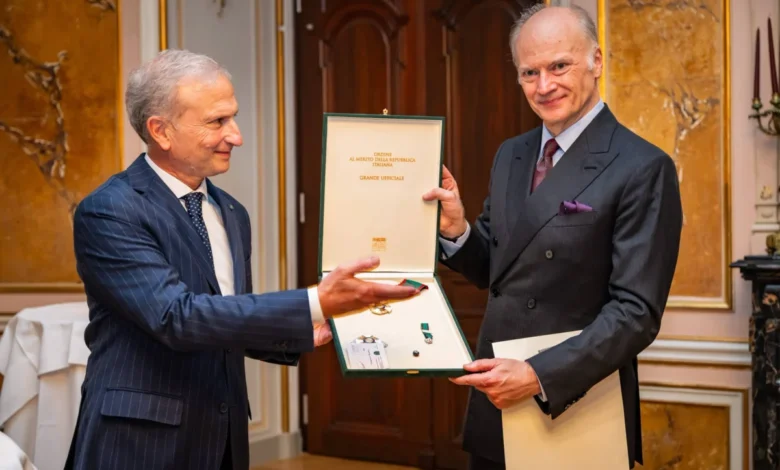
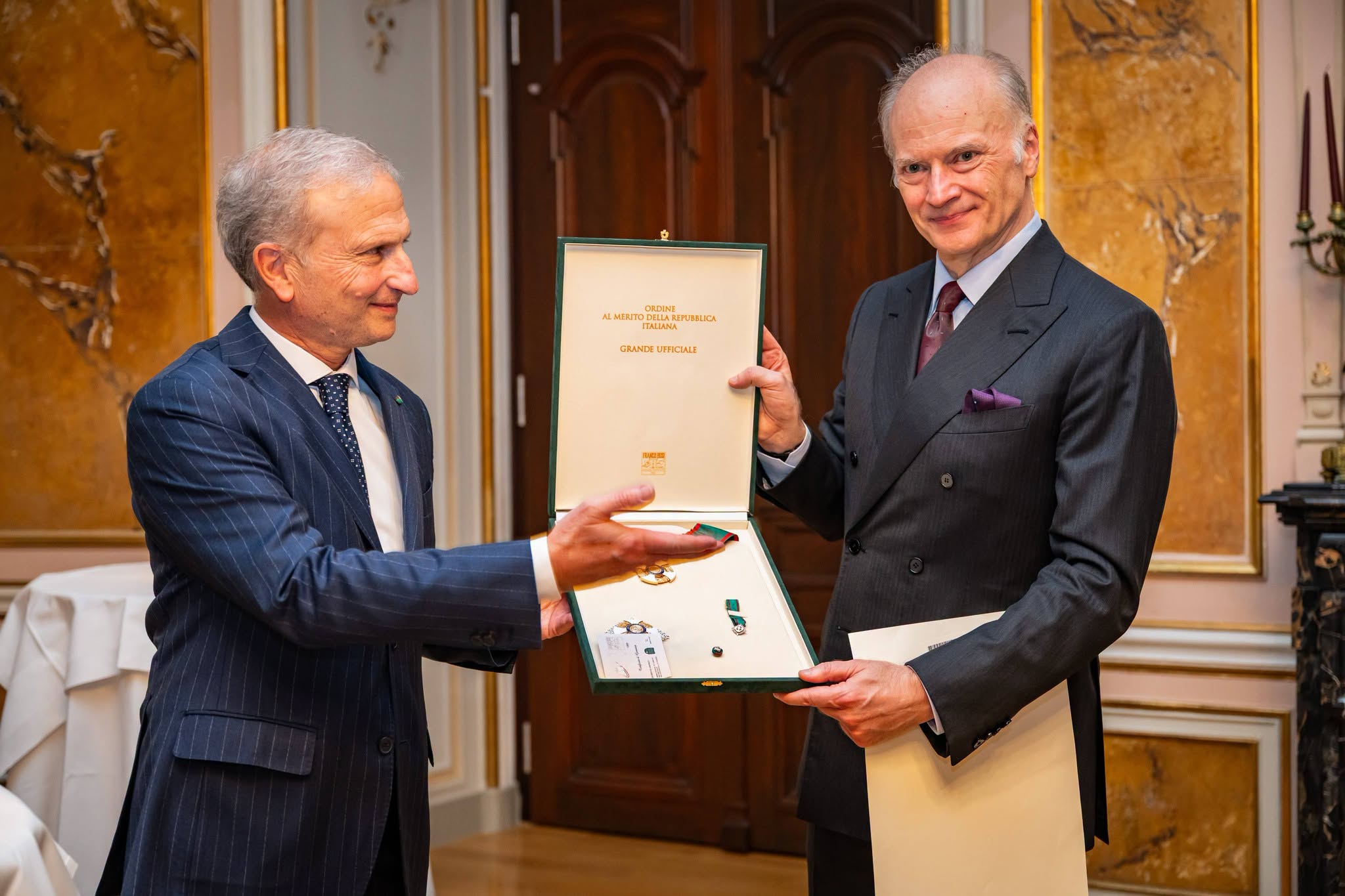
Renowned Italian conductor Gianandrea Noseda has received one of his home nation’s most distinguished civilian accolades, being named a Grand’Ufficiale (Grand Officer) of the Order of Merit of the Italian Republic. The honor was formally conferred upon the internationally celebrated maestro following a critically acclaimed performance at the prestigious Opernhaus Zürich in Switzerland.
The decoration was presented by His Excellency Luca Sabbatucci, the Ambassador of Italy to Switzerland, in a ceremony designed to highlight Noseda’s exceptional contributions to the arts, his promotion of Italian culture abroad, and his stellar career spanning the world’s most elite concert halls and opera houses.
The recognition places Noseda among a select group of cultural ambassadors whose life’s work elevates the global standing of Italian artistry. As the music director of both the Opernhaus Zürich and the National Symphony Orchestra in Washington, D.C., Noseda occupies a towering position in contemporary classical music, bridging continents and repertoires with a distinctive interpretive vigor.
A Night of Celebration at the Opernhaus Zürich
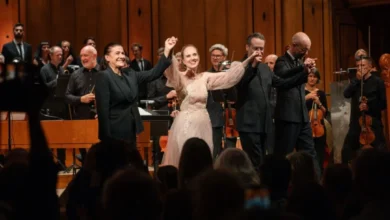
The formal presentation took place backstage at the historic Opernhaus Zürich, immediately following a performance that underscored Noseda’s rigorous artistic standards and deep connection with the Swiss institution. The venue, known for its vibrant opera and ballet seasons, has served as a primary artistic home for the conductor since he assumed the role of general music director.
Surrounded by members of the orchestra, administrative staff, and diplomatic dignitaries, Ambassador Sabbatucci stepped forward to bestow the honor. The award—Ordine al Merito della Repubblica Italiana—is the highest-ranking civilian honor in Italy, bestowed upon individuals who have rendered conspicuous service to the nation across the fields of literature, the arts, economy, public service, and social, philanthropic, and humanitarian activities. Within this overarching order, the rank of Grand’Ufficiale is a particularly high tier, reserved for those who have achieved extraordinary distinction.
Speaking at the ceremony, Ambassador Sabbatucci emphasized the cultural diplomacy inherent in Noseda’s life and career. “It is with great pleasure that I present Maestro Gianandrea Noseda with the honor of Grande Ufficiale dell’Ordine al Merito della Repubblica Italiana,” Sabbatucci stated, “in recognition of his extraordinary talent and his profound contribution to the international music scene. Maestro Noseda does not merely conduct music; he acts as a cultural bridge, carrying the heritage, passion, and excellence of Italy to the greatest stages of the world.”
Visibly moved by the distinction, Maestro Noseda accepted the honor with characteristic humility and a keen sense of duty toward his art form and his country of birth. “I am deeply grateful to receive the honor of Grand Officer of the Order of Merit of the Italian Republic,” Noseda remarked in his acceptance statement. He added that he remains “fully aware of its significance and the responsibility that comes with such recognition.”
Chronology of an Illustrious Career
To understand the weight of the honor bestowed upon Gianandrea Noseda, one must examine a career marked by relentless dedication, institutional leadership, and groundbreaking artistic milestones. Born in Milan in 1964, Noseda’s musical education was shaped in Italy, where he studied piano, composition, and conducting, notably under the tutelage of legendary maestros such as Donato Renzetti and Myung-Whun Chung. His early promise quickly blossomed into an international career that has spanned over three decades.
The timeline of Noseda’s professional ascent highlights a series of high-profile appointments that cemented his status as a titan of the podium:
- 1997–2007: Noseda served as the principal guest conductor of the Mariinsky Theatre in Saint Petersburg, becoming the first-ever Western conductor to hold a senior leadership position in that legendary Russian institution. This decade-long tenure profoundly shaped his affinity for Russian repertoire and large-scale symphonic works.
- 2002–2011: He assumed the role of music director of the BBC Philharmonic, elevating the orchestra’s profile through critically acclaimed recordings and dynamic concert series, particularly at the BBC Proms.
- 2007–2018: Noseda served as music director of the Teatro Regio di Torino. During his tenure, he revitalized the historic Italian opera house, leading it to international acclaim, spearheading major international tours, and establishing the theater as a vital hub for innovative operatic productions. Under his leadership, the Teatro Regio was named Opera Company of the Year at the 2015 International Opera Awards.
- 2016–Present: Noseda took the helm as the music director of the National Symphony Orchestra (NSO) in Washington, D.C. His contract with the NSO has been repeatedly extended, reflecting the deep artistic synergy between the maestro and the American orchestra.
- 2021–Present: He stepped into the role of general music director of the Opernhaus Zürich, further expanding his European footprint and guiding one of the continent’s most prestigious lyric theaters through a modern era of artistic excellence.
In addition to these permanent posts, Noseda’s guest-conducting resume reads like a directory of the world’s finest musical institutions. He has regularly led the Vienna Philharmonic, the Berlin Philharmonic, the London Symphony Orchestra, the New York Philharmonic, the Chicago Symphony Orchestra, and the Orchestre National de France, alongside frequent appearances at the Metropolitan Opera, Milan’s Teatro alla Scala, the Royal Opera House Covent Garden, and the Salzburg Festival.
Supporting Data and Discography
Noseda’s impact on classical music is not confined to the concert hall; it is extensively documented in a vast and critically lauded discography. He has recorded over 80 compact discs and DVDs, many of which have garnered prestigious international accolades, including Gramophone Awards, Diapason d’Or honors, and Grammy nominations.
His recorded output with the BBC Philharmonic, the Teatro Regio di Torino, and the London Symphony Orchestra features definitive interpretations of works by Verdi, Puccini, Casella, Respighi, Tchaikovsky, Shostakovich, and Prokofiev. Notably, his multi-year project with the London Symphony Orchestra—capturing the symphonies of Sergei Rachmaninoff—has been praised by critics globally for its blistering intensity, structural clarity, and emotional depth.
Furthermore, Noseda has been a passionate advocate for neglected or underperformed Italian orchestral repertoire from the 20th century. Through recordings of works by composers such as Alfredo Casella and Gian Francesco Malipiero, he has systematically worked to correct the historical narrative that modern Italian music begins and ends with opera, showcasing a vibrant, symphonic tradition that runs parallel to Italy’s rich operatic history.
Broader Impact and Implications of the Honor
The conferring of the Grand’Ufficiale title on Maestro Noseda carries implications that extend far beyond a personal career milestone. In an era where cultural diplomacy faces shifting geopolitical and economic landscapes, the recognition of artists who project national identity through high culture remains a vital instrument of soft power for the Italian state.
By honoring Noseda, the Italian Republic underscores the enduring global currency of Italian artistic excellence. While Italy is historically celebrated as the birthplace of opera and Renaissance visual arts, contemporary Italian contributions to the global orchestral landscape require champions of Noseda’s caliber to maintain their visibility on the world stage. Through his high-profile leadership roles in Washington, D.C., and Zürich—as well as his frequent guest appearances in Tokyo, London, Paris, and New York—Noseda serves as a living ambassador for Italian culture, embodying values of discipline, creativity, passion, and international collaboration.
Moreover, the recognition highlights the evolving role of the modern conductor. Today’s maestro is not merely an interpreter of notes on a page, but an institutional leader, a community builder, and a cultural strategist. Noseda’s ability to successfully manage the complex administrative and artistic demands of two major musical institutions simultaneously—the NSO in the United States and the Opernhaus Zürich in Switzerland—while maintaining a rigorous international guest-conducting schedule, demonstrates a rare administrative and artistic stamina.
For the Opernhaus Zürich, the honor bestowed upon its music director is a validation of its own artistic trajectory. Institutions of this caliber rely heavily on the gravitational pull of visionary leadership to attract top-tier vocalists, instrumentalists, and creative production teams. Noseda’s continued international accolades enhance the prestige of the Zürich house, ensuring it remains at the forefront of the European cultural conversation.
Similarly, the National Symphony Orchestra in the United States benefits from the global prestige of its music director. When a foreign government honors an American-based arts leader of Noseda’s stature, it deepens the transatlantic cultural ties that bind the North American and European classical music ecosystems.
Conclusion
As Gianandrea Noseda returns to his demanding schedule of rehearsals, performances, and recording sessions, the title of Grand’Ufficiale of the Order of Merit of the Italian Republic stands as a permanent testament to a life dedicated to the pursuit of musical perfection.
From his formative years in Milan to the podiums of the world’s most venerated music capitals, Noseda has consistently demonstrated that classical music, at its highest level, is a universal language capable of transcending borders and enriching the human spirit. With this latest recognition from his homeland, the maestro’s legacy is further secured, not only as a master of the baton, but as a defining cultural figure of the twenty-first century.