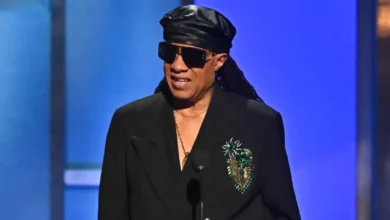
George Benson Honored With Tommy LiPuma Award for Recording Excellence at Jazz Foundation of America Gala


Ten-time Grammy Award winner George Benson was celebrated as the 2026 recipient of the Tommy LiPuma Award for Recording Excellence during the Jazz Foundation of America’s (JFA) annual fundraising gala. The event, held on Sunday, Nov. 1, at the prestigious Vibrato Grill Jazz in Los Angeles, served as a significant milestone in the organization’s 37-year history, bringing together industry luminaries to support the essential mission of providing healthcare, housing, and emergency financial assistance to veteran musicians.
A Legacy of Excellence
The selection of George Benson for the Tommy LiPuma Award reflects his profound influence on the evolution of modern music. A virtuoso guitarist whose career spans over six decades, Benson has successfully navigated the worlds of jazz, R&B, and pop, consistently challenging the boundaries of genre. The award is named in honor of the late Tommy LiPuma, the legendary producer whose creative partnership with Benson on the 1976 seminal album Breezin’ fundamentally altered the trajectory of the artist’s career. That record, which showcased a seamless blend of jazz improvisation and smooth pop sensibilities, remains one of the most successful instrumental albums in the history of the jazz genre.
During the ceremony, the award was presented by acclaimed songwriter Mike Stoller, of the iconic Leiber & Stoller duo. Stoller provided a poignant retrospective on his professional relationship with Benson, specifically highlighting the artist’s transformative cover of "On Broadway." According to Stoller, Benson’s rendition possessed an interpretive power that redefined the song, leaving its composers—Barry Mann, Cynthia Weil, Jerry Leiber, and Stoller himself—deeply impressed by his technical prowess and emotional depth.

Celebrating the Titans of Jazz
While Benson stood as the evening’s headline honoree, the JFA used the occasion to pay tribute to a group of musicians collectively designated as the "Titans of Jazz." This lifetime achievement recognition highlighted the enduring contributions of four instrumentalists who have defined the sound of jazz for generations:
- Patrice Rushen: An accomplished pianist and NEA Jazz Master, Rushen is widely recognized for her mastery of jazz composition and her 1982 crossover R&B/dance anthem, "Forget Me Nots." Her career represents a bridge between traditional jazz education and the modern funk and soul movements.
- Azar Lawrence: A tenor saxophonist of considerable pedigree, Lawrence gained prominence for his work with jazz giants Elvin Jones and Miles Davis, establishing himself as a formidable force in the post-bop era.
- Henry “The Skipper” Franklin: A bassist known for his foundational work with Roy Ayers and Hugh Masekela, Franklin has been a fixture in the Los Angeles jazz community for decades.
- Roy McCurdy: A drummer whose extensive resume includes collaborations with Cannonball Adderley and Ella Fitzgerald, McCurdy remains one of the most respected percussionists in the history of the art form.
Philanthropy and the Quincy Jones Legacy
The evening also recognized the humanitarian efforts of Eden Alpert, managing partner of the Vibrato Grill Jazz. Alpert was the recipient of the Quincy Jones Love & Peace Humanitarian Award, presented by Martina Jones, the daughter of the late music icon and JFA honorary founder Quincy Jones.
Joe Petrucelli, executive director of the JFA, emphasized that Alpert’s contributions extend far beyond her role as a venue operator. "Through her philanthropic work and leadership, Eden has provided opportunities for veteran and emerging musicians alike while contributing to the vitality of the live music community in Los Angeles," Petrucelli stated. The award serves as a testament to the importance of sustainable venues in preserving the livelihoods of working musicians, a core pillar of the JFA’s advocacy.
Artistic Direction and Musical Tributes
The gala’s musical program was curated by Grammy-winning drummer Steve Jordan, currently a member of The Rolling Stones. Jordan’s role as artistic director ensured that the evening remained rooted in high-caliber performance. A backing band comprised of industry-leading session musicians delivered a series of tributes to Benson, including performances of his signature tracks "Breezin’," "This Masquerade," "Turn Your Love Around," and "Give Me the Night." Vocalists Aloe Blacc and Wyclef Jean, along with guitarist Isaiah Sharkey, provided dynamic interpretations of the material, while NEA Jazz Master Carmen Lundy opened the evening with a set that set a high bar for the subsequent performances.

Financial Impact and Mission
Beyond the awards and performances, the primary objective of the gala was to bolster the JFA’s Musicians’ Emergency Fund. The organization, which has operated for nearly four decades, utilizes these funds to provide direct support for musicians facing crises, including medical emergencies, housing instability, and the aftermath of natural disasters.
The live auction held during the gala underscored the commitment of attendees to this mission. A signature Ibanez George Benson model guitar, autographed by the artist, fetched $6,500, while a piece of original sheet music for "On Broadway," signed by Mike Stoller, sold for $2,000. These figures demonstrate a robust engagement from the philanthropic community, ensuring the continuation of the JFA’s programs.
Broader Context and Industry Implications
The success of the 2026 JFA gala arrives at a time when the music industry is re-evaluating the sustainability of its most vulnerable contributors. As streaming platforms and shifting market trends complicate income streams for veteran performers, organizations like the Jazz Foundation of America play an increasingly vital role in providing a safety net.
George Benson’s reflections during his acceptance speech highlighted this necessity. He noted that the fundraising efforts were not merely about accolades, but about a collective responsibility to support the artists whose creative output has enriched global culture for decades. His acknowledgment of figures like Herb Alpert—who helped him early in his career—and Tommy LiPuma served as a reminder that the ecosystem of jazz is built on mentorship and mutual support.

The inclusion of the "Titans of Jazz" alongside a contemporary icon like Benson serves a dual purpose: it honors the historical preservation of the genre while highlighting the ongoing relevance of jazz musicians in today’s diverse musical landscape. By connecting the history of the genre—represented by the likes of McCurdy and Lawrence—with the enduring commercial and artistic success of Benson, the JFA effectively communicates the continuity of the jazz tradition.
Conclusion
As the evening concluded, the sentiment expressed by attendees and organizers alike was one of solidarity. The 2026 JFA event at Vibrato Grill Jazz reaffirmed the organization’s status as a cornerstone of the music community. By honoring figures who have achieved global acclaim alongside those who have provided the backbone of the industry, the Jazz Foundation of America continues to uphold its mission: to honor jazz, blues, and roots music, one musician at a time. The event not only celebrated the past achievements of musical icons but also secured the necessary resources to protect the future of the artists who continue to carry the torch of these foundational American art forms.