Gran Teatre del Liceu Stages a Vocal Triumph with Bellini’s I Capuleti e i Montecchi Despite Staging Hurdles

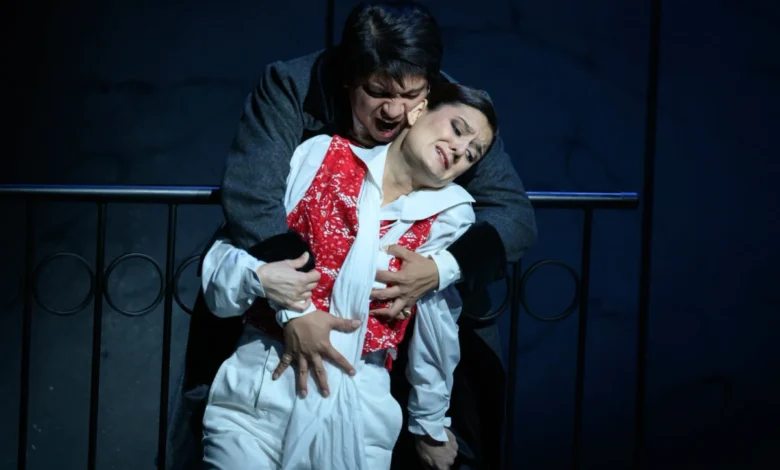
The iconic Gran Teatre del Liceu in Barcelona recently served as the epicenter for bel canto mastery, mounting a production of Vincenzo Bellini’s tragic masterpiece, I Capuleti e i Montecchi. Written under immense time constraints during the winter of 1830, the opera has long fascinated musicologists and performers alike for its rapid genesis, recycled thematic material, and departure from Shakespearean norms in favor of older Italian literary traditions. While the imported staging from the Opéra Royal de Wallonie-Liège, directed by Allex Aguilera, elicited mixed responses for its stark minimalism and questionable temporal shifts, the musical execution—spearheaded by conductor Riccardo Frizza and anchored by stellar performances from Lisette Oropesa and Raffaella Lupinacci—ultimately secured an enthusiastic triumph.
The Genesis and Literary Roots of Bellini’s Masterpiece
To fully appreciate the musical landscape presented at the Liceu, one must examine the frantic origins of the work. Vincenzo Bellini composed I Capuleti e i Montecchi in little over a month, racing against the clock to deliver a new opera just in time for the prestigious Venice carnival season of 1830. To manage this staggering feat under severe pressure, the composer recycled a considerable amount of music from his recent, ill-fated production of Zaira in Parma. He paired these repurposed melodies with a ready-made libretto that Felice Romani had originally crafted for Nicola Vaccai’s opera Giulietta e Romeo.
This rushed tour de force inevitably accounts for some of the structural unevenness found within the score. While Giulietta’s music achieves moments of sublime, breathtaking melodic beauty, other sections can sound somewhat formulaic or conventional. Furthermore, the libretto does not take its cues from William Shakespeare’s universally recognized tragedy. Instead, Romani drew from an older Italian literary tradition that retold the classic star-crossed romance by placing the bloody, socio-political feud between rival noble families front and center—hence the opera’s title.
Within this dramatic framework, the familial feud is elevated to the status of an all-out civil war. Romeo is presented not merely as a lovesick youth, but almost as a battle-hardened military hero. The opera opens in media res, with the two young lovers already deeply entangled. They alternate between passionate declarations of affection and emotional brinkmanship as they frantically seek a way to secure their union against overwhelming odds.
Giulietta, in particular, cuts a much timider figure than Shakespeare’s iconic heroine. She is paralyzed by a deep-seated fear of social convention, unable to fathom the audacity of defying her father to run away with Romeo. Preferring the specter of death as a desperate shield against her forced wedding to Tebaldo, she embodies the spirit of a 19th-century feuilleton melodrama rather than a timeless classical tragedy. Even the iconic final scene deviates from Shakespeare’s bleak finality. Driven by the operatic imperative of the era—much like Charles Gounod would do a few decades later with his own adaptation—Bellini could not resist writing a soaring death duet where the lovers pass away together in each other’s arms.
Production Analysis: Minimalism Meets Temporal Confusion
For its Barcelona run, the Liceu imported a production originally mounted by the Opéra Royal de Wallonie-Liège under the direction of Allex Aguilera. Visually, the staging relied heavily on stark, stylized sets, featuring monolithic castle walls flanking both sides of the stage and a massive, rotating cube at the center. Hollowed out on one side, this architectural box was ostensibly designed to symbolize the crushing weight of societal conventions pressing down on the vulnerable young lovers.
However, the production choices frequently sparked debate among critics and audience members alike. The action was awkwardly shifted from the 14th century to 1830—the exact year of the opera’s world premiere. Unfortunately, this temporal displacement was readable only through the men’s tailored costumes, while Giulietta sported distinctly more modern, timeless gowns. As is frequently the case with conceptual overlays of this nature, the time shift served no discernible dramatic purpose, leaving the visual landscape uniformly gloomy, sparse, and largely devoid of props.
While the production was undeniably bland and uninspired, it possessed the saving grace of being completely harmless. By avoiding overly intrusive directorial concepts, the staging ultimately allowed the musical forces to take center stage unhindered, creating space for the orchestra and vocalists to shine.
Orchestral Precision and Bel Canto Elegance in the Pit
In the orchestra pit, Maestro Riccardo Frizza led the Liceu orchestra with admirable elegance, demonstrating a profound, idiomatic understanding of the delicate bel canto style. Frizza’s interpretation was refreshingly understated—bordering on cool at times—yet it was executed with meticulous attention to detail, a relentless forward drive, and a constant, sensitive support for the vocalists on stage.
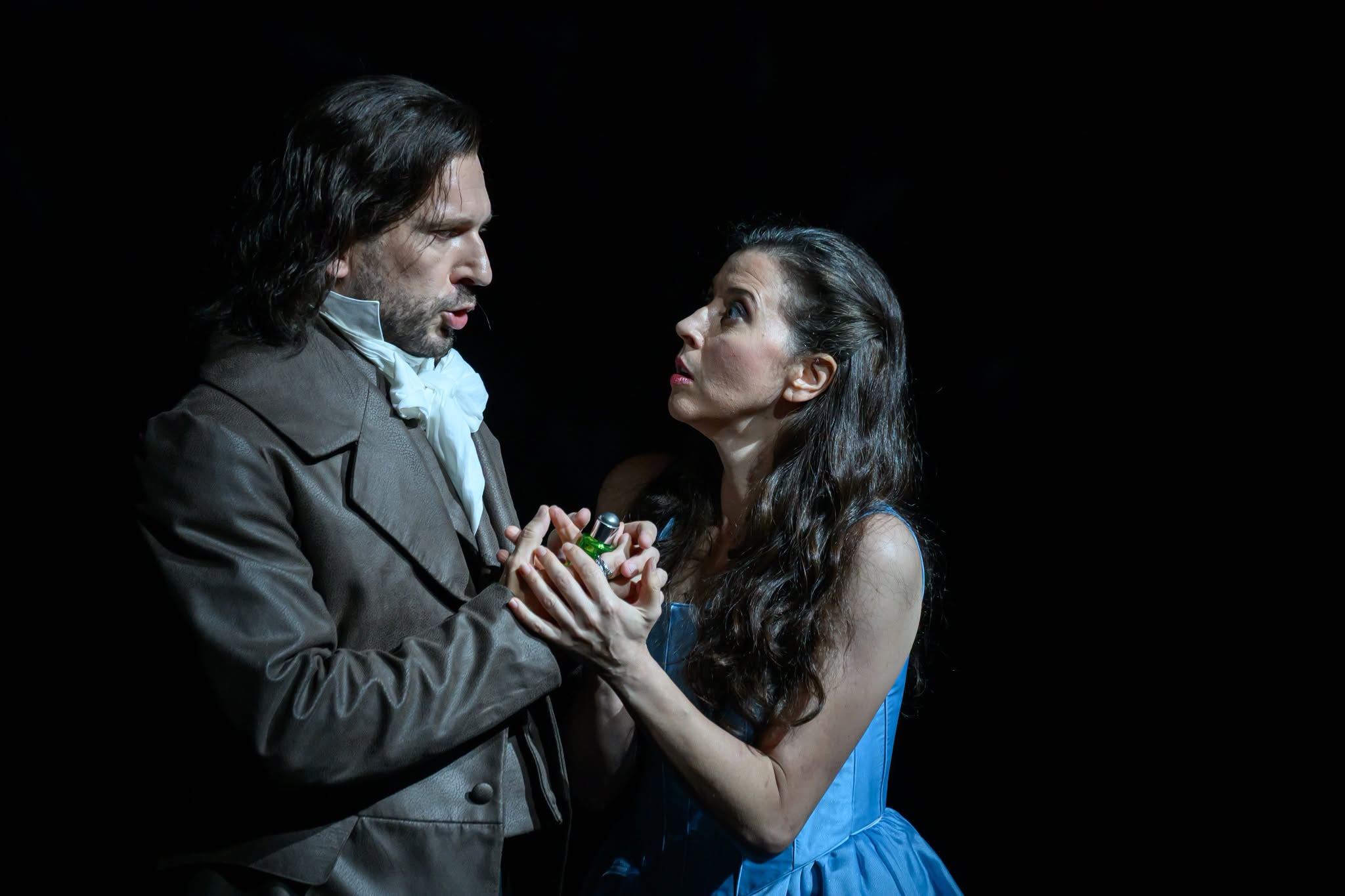
Orchestral textures were carefully balanced, with individual solos delicately illuminated. Notably, the harp cut through the orchestral fabric with crystalline beauty during Giulietta’s opening aria, establishing an ethereal atmosphere. Meanwhile, the Liceu male chorus performed with exemplary precision and a wide dynamic variety, driving the dramatic momentum forward with thrilling authority and anchoring the turbulent sociopolitical backdrop of the narrative.
Vocal Triumphs: Lisette Oropesa and Raffaella Lupinacci
The evening’s greatest triumphs belonged undeniably to its leading ladies, whose vocalism and dramatic commitment held the Barcelona house spellbound.
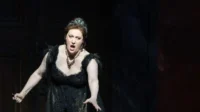
As has become her trademark, soprano Lisette Oropesa threw herself heart and soul into the demanding role of Giulietta. Her liquid, silvery soprano dazzled the audience with an uncommonly luminous timbre, effortlessly navigating the treacherous technical hurdles of Bellini’s writing with breathtaking grace and ease. Oropesa’s trills were astonishingly fast and brilliant, her coloratura crisp, and her chromatic scales flawless, while her stratospheric high notes rang out with natural brilliance. Beyond mere vocalism, her psychological portrayal of the tormented young girl was profoundly moving. Her delivery of the aria "No, non poss’io partire" in Act Two was imbued with a heartbreaking pathos and melancholy that left the auditorium utterly silent.
Mezzo-soprano Raffaella Lupinacci stepped into the trouser role of Romeo, brilliantly bringing the lovestruck teenage hero to life through an alluring vocal palette and a commanding stage presence. Lupinacci’s voice boasted a beautiful, bronzed low register that, as it ascended the staff, acquired a metallic, slightly edgy intensity before blossoming into radiant, powerful high notes at the top. While she delivered a stirring account of her initial entrance aria, "Se Romeo t’uccise un figlio," her absolute highlight came in the Act One duet "Sì, fuggire." Here, she demonstrated a magnificent, expressive legato during the languid slow section, forging an electric dramatic and musical chemistry with Oropesa that served as the emotional core of the evening.
Variable Quality in the Male Ranks
While the female principals reached stellar artistic heights, the male supporting cast exhibited a more variable quality of performance.
Tenor Iván Ayón-Rivas portrayed Tebaldo, Romeo’s fierce rival who enjoys the backing of Giulietta’s father. While his voice was healthily projected, boasting powerful high notes packed with plenty of Italian squillo, his vocal approach sat rather uncomfortably within the delicate ecosystem of the bel canto repertoire. At times, Ayón-Rivas lacked the requisite elegance and stylistic refinement, favoring a muscular, aggressive delivery over a truly lyrical line. Nevertheless, his confrontation with Lupinacci during their duel scene proved dramatically effective, successfully capturing both raw, blinding rage toward his rival and utter devastation upon hearing the false news of Giulietta’s death.
Bass Marko Mimica took on the role of Lorenzo, Giulietta’s loyal confidant and the architect of the tragic sleeping-potion scheme. Although Mimica has built much of his career around bel canto masterpieces and is widely regarded as a specialist in the idiom, he occasionally seemed out of focus and stylistically wayward during this performance. Despite these interpretive shortcomings, his bass instrument remained richly projected, mellow, and fundamentally beautiful in quality.
Rounding out the principal cast, bass Alejandro López portrayed Giulietta’s authoritarian father, Capellio. López appeared somewhat out of his depth within Bellini’s specific musical landscape; while his voice possessed a solid projection that lent a much-needed anchor to the choral ensembles, his overall contribution lacked refinement and occasionally deteriorated into unappealing forcefulness.
Audience Reception and Broader Implications
Despite the unevenness of the imported staging and the vocal disparities within the supporting male cast, the Liceu audience responded with roaring enthusiasm at the final curtain. The house erupted in cheers, showering a well-deserved, overwhelming warmth upon Lisette Oropesa and Raffaella Lupinacci for their transcendent anchor performances.
The production’s reception offers a clear reflection of current operatic trends: modern audiences remain willing to forgive lackluster or uninspired directorial concepts provided that the musical and vocal execution reaches world-class standards. By prioritizing vocal excellence and stylistic integrity in the pit and on the stage, the Gran Teatre del Liceu successfully honored Bellini’s 19th-century creation, ensuring that I Capuleti e i Montecchi remains a vibrant, emotionally resonant pillar of the contemporary lyric theater repertoire.
Related posts: