The World On Fire Theatre Collective has officially launched its inaugural production with the premiere of World On Fire, a gritty and unflinching new drama written and directed by the legendary Canadian playwright George F. Walker. Opening on May 28, 2026, at The Assembly Theatre in Toronto, the production marks a significant moment in the city’s independent theatre scene, signaling the formation of a collective specifically dedicated to showcasing Walker’s distinctive brand of dark, urban realism. The play, which runs until June 7, 2026, explores the lives of those existing on the periphery of society and the systemic failures that keep them there.
George F. Walker, a cornerstone of Canadian drama for over five decades, continues his career-long exploration of the disenfranchised with this latest work. Known for his "East End Plays" and the "Suburban Motel" series, Walker’s writing has historically balanced bleak social commentary with a razor-sharp, often absurdist wit. World On Fire fits squarely within this tradition, presenting a narrative that is as much a character study as it is a searing indictment of the social safety net.
The Narrative Framework and Character Dynamics
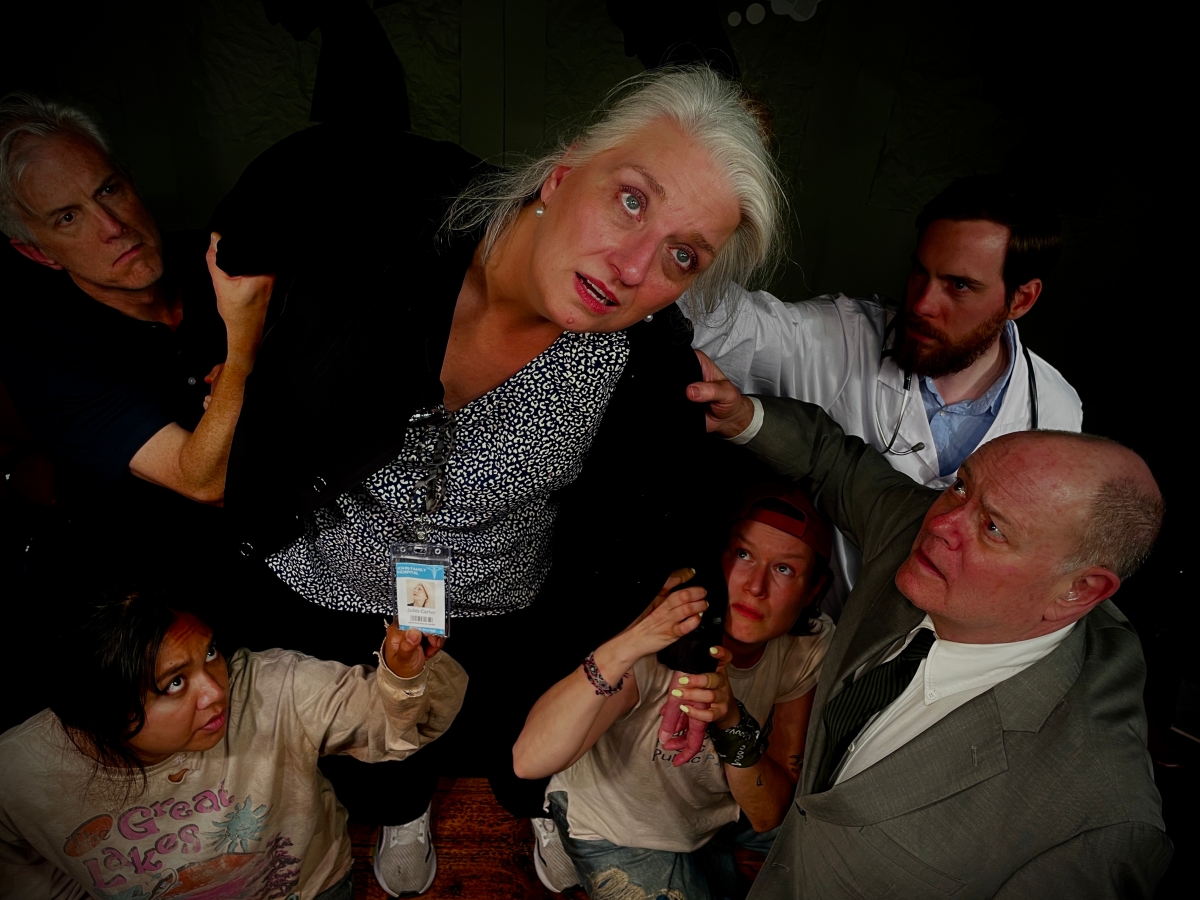
The central figure of the play is Jules, portrayed by Elizabeth Friesen, a social worker whose professional exterior is rapidly eroding under the weight of her caseload. Jules serves as the audience’s primary point of contact, often breaking the fourth wall to share her frustrations and reflections. Her role is to manage a group of clients who have been discarded by traditional institutions, each representing a different facet of the modern urban crisis.
Among these clients is Annie (Marline Yan), a young woman who has survived on the streets since the age of 13. Annie’s character serves as a reminder of the generational cycles of poverty and the vulnerability of youth within the shelter system. In contrast, Casey (Anne van Leeuwen) provides the play’s most visceral emotional energy. A formerly married mother whose life spiraled into homelessness following the collapse of her marriage and the subsequent loss of her children, Casey is depicted as a "jittery, troubled" woman who frequents shopping mall entrances to scream about social justice. Van Leeuwen’s performance is noted for its "brittle vulnerability," capturing a woman who has physically and mentally broken under the strain of systemic neglect.

The male clients offer further complexity to the group dynamic. David (David Huband) is an older man, the child of Holocaust survivors, who struggles with suicidal ideation and a pervasive sense of irritability. Marius (Chris Peterson) rounds out the group as a man paralyzed by an all-encompassing fear of the world, despite possessing the theoretical resources to improve his situation. The cast is completed by Alex Clay, who plays Dr. Emilio, a character who serves as an antagonist and a foil to Jules’s empathetic, if exhausted, approach.
Chronology of the Production and the New Collective
The development of World On Fire represents a strategic move within the Toronto theatre community. The World On Fire Theatre Collective was established in early 2026 with the explicit goal of providing a permanent platform for Walker’s new and existing works. This move comes at a time when independent theatre in Canada is facing significant financial hurdles, with many smaller companies struggling to maintain permanent spaces.
The production timeline for World On Fire followed an intensive rehearsal period throughout the spring of 2026, aiming for a late-May opening to capture the pre-summer festival audience. The choice of The Assembly Theatre—a venue known for its intimate, "storefront" atmosphere—was intentional, designed to place the audience in close proximity to the raw, unfiltered emotions of the characters. Following its opening on May 28, the play has scheduled a limited run of eleven performances, concluding on June 7. Producers have indicated that the success of this run will dictate the collective’s future programming for the 2026-2027 season.
Contextualizing Trauma and Social Realism
A significant portion of the play’s impact stems from its portrayal of trauma, though this has also been a point of critical analysis. The character of David, for instance, brings the historical weight of the Holocaust into a contemporary Toronto setting. Critics have noted that while the trauma of second-generation survivors is a well-documented psychological phenomenon, the play’s depiction of this trauma through suicidal ideation and cranky irritability departs from some established research on survivor resilience. This creative choice by Walker highlights the "intractable" nature of the problems his characters face—where solutions are not only difficult to find but perhaps non-existent.
The play also engages deeply with the current state of social work in urban centers. In 2026, the real-world context of Toronto’s social services is one of extreme austerity and high demand. Data from the City of Toronto’s Shelter, Support and Housing Administration indicates that the "revolving door" effect—where individuals move between shelters, hospitals, and the street—has reached record highs. Walker’s script leans into this reality through Jules’s opening monologue: “I became a social worker specializing in people who don’t want any help.” This sentiment reflects a broader professional burnout within the sector, where the "care" provided by individuals is often insufficient to overcome institutional barriers.
Technical Execution: Set and Soundscape
The production’s aesthetic is characterized by a minimalist approach that emphasizes the psychological state of the characters over literal representation. The set design, a collaborative effort by Madeleine Rosenberg, Daniel Rosenberg, and Nicholas Friesen, utilizes a stark arrangement of two chairs and two benches. These pieces of furniture are repurposed throughout the play to represent various settings, including hospital meeting rooms and Jules’s office.
A key visual element is the graphic design on the back wall of the stage. These designs are intended to depict the "stresses and uncertainties" of the characters, providing a visual metaphor for the mental clutter and systemic pressure they endure. The auditory experience is equally deliberate; scene transitions are punctuated by "old school alt-rock," a choice that sets a mood of defiance and gritty nostalgia, aligning with Walker’s long-standing aesthetic preferences.
Critical Analysis of Thematic Implications
World On Fire does not offer its audience the comfort of a resolution. Instead, it forces a confrontation with the "unpleasant" aspects of marginalized life. The bickering between the clients reveals a difficult truth: being a victim of the system does not inherently make an individual more sympathetic or kinder to others. This lack of "sanitized" suffering is a hallmark of Walker’s work, which often rejects the trope of the "noble" poor in favor of a more complex, and sometimes abrasive, reality.
One of the play’s more controversial structural choices involves the characters of Jules and Annie speaking directly to the audience. While Jules uses the audience as a "sympathetic ear," Annie’s interactions are more confrontational, as she berates the viewers for their perceived apathy. This technique serves to bridge the gap between the fictional world of the play and the real-world streets of Toronto, where "troubled homeless people" have become a ubiquitous and often ignored presence. However, some analysis suggests that by focusing on individual responsibility and character flaws, the play occasionally misses the opportunity to more explicitly critique the institutional and societal roots of the crisis it depicts.
Broader Impact on the Canadian Theatrical Landscape
The premiere of World On Fire arrives at a pivotal moment for Canadian drama. As the industry continues to navigate post-pandemic recovery and shifting funding models, the emergence of the World On Fire Theatre Collective represents a return to "artist-driven" theatre. By centering the work of a single, influential playwright, the collective aims to build a dedicated audience base that values text-heavy, character-driven drama over high-concept spectacles.

Furthermore, the play contributes to a growing body of contemporary Canadian work that addresses the mental health and housing crises. By staging these issues at The Assembly Theatre, the production joins a lineage of works that use the "storefront" theatre movement to provide a voice to the voiceless. The implications of the play extend beyond the stage, serving as a cultural document of the anxieties prevalent in mid-2020s urban Canada.
The production’s run until June 7, 2026, provides a window into the "world on fire" that many citizens choose to ignore. Through Elizabeth Friesen’s nuanced portrayal of a burnt-out professional and Anne van Leeuwen’s harrowing depiction of a woman at her breaking point, the play delivers a clear, if uncomfortable, message: in a society that continues to leave large swaths of its population behind, caring is simply not enough.
As the World On Fire Theatre Collective looks toward its future, this inaugural production stands as a testament to the enduring relevance of George F. Walker’s voice. Despite the "no easy solutions" conclusion of the narrative, the act of staging these stories remains a vital component of the city’s cultural and social discourse. Tickets for the remaining performances are available through Eventbrite, with the production expected to draw significant interest from both longtime followers of Walker’s work and a new generation of theatre-goers interested in social realism.