Marshall Kilburn III review: A sonic powerhouse that blends rock heritage with modern portability

The Marshall Kilburn III represents the latest evolution in the iconic British audio brand’s attempt to bridge the gap between studio-grade amplification and the convenience of modern wireless consumer electronics. By blending the aesthetic sensibilities of the 1960s rock era with current advancements in Bluetooth 5.3 technology, the Kilburn III has positioned itself as a distinctive entry in the crowded portable speaker market. Weighing in at 2.8 kilograms, the device is designed to occupy a unique space—substantial enough to deliver authoritative audio performance, yet portable enough to serve as a versatile companion for both domestic and mobile use.
Evolution of the Marshall Portable Lineup
The Marshall brand, historically synonymous with the towering guitar amplifiers used by legendary acts ranging from Jimi Hendrix to Guns N’ Roses, underwent a significant strategic pivot toward the consumer audio market over the last decade. Following the licensing agreement between Marshall Amplification and Zound Industries (now known as Marshall Group), the brand began translating its visual DNA into lifestyle products.
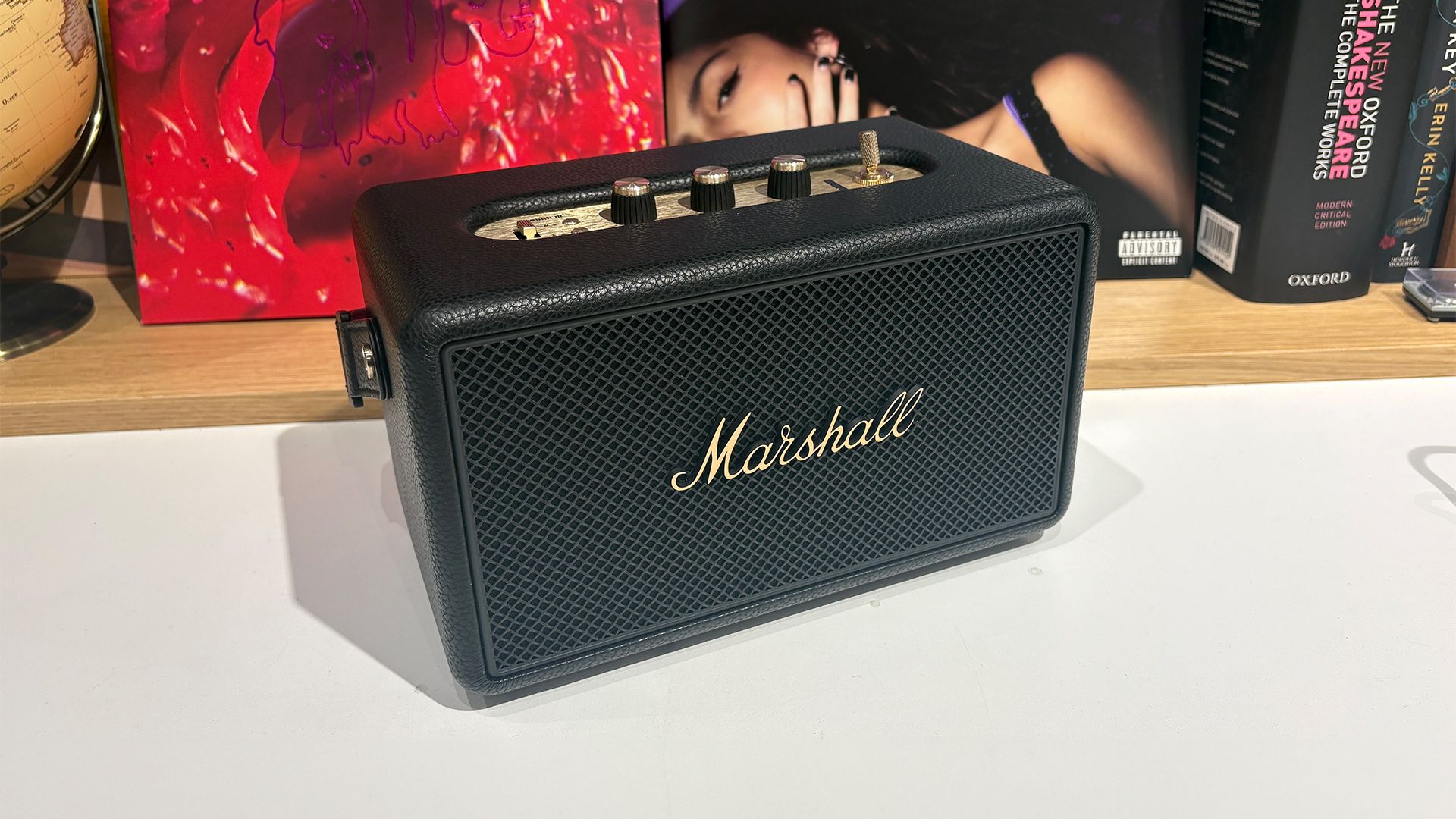
The Kilburn series has historically served as the brand’s "middle-weight" contender. The original Kilburn, released in 2015, established the blueprint: a rectangular, vinyl-wrapped cabinet with brass accents and a guitar-inspired strap. The Kilburn II followed with improved weather resistance and multi-directional sound. The Kilburn III continues this lineage, representing the third iteration of the product line, incorporating a more robust internal power management system and updated wireless protocols that address the shortcomings of its predecessors.
Design and Build Quality Analysis
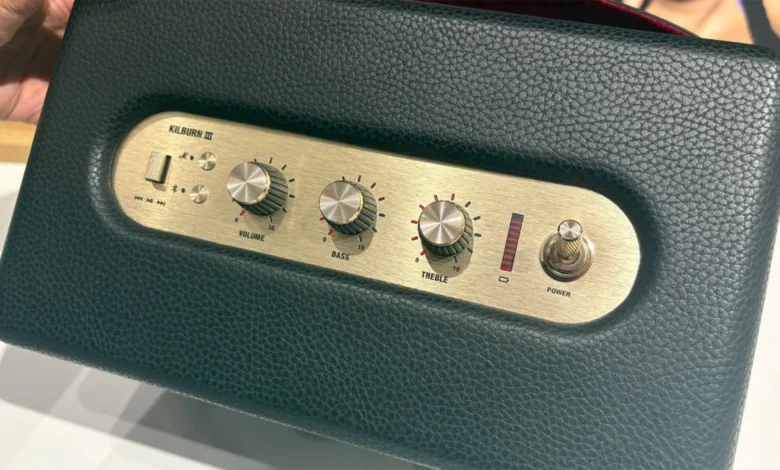
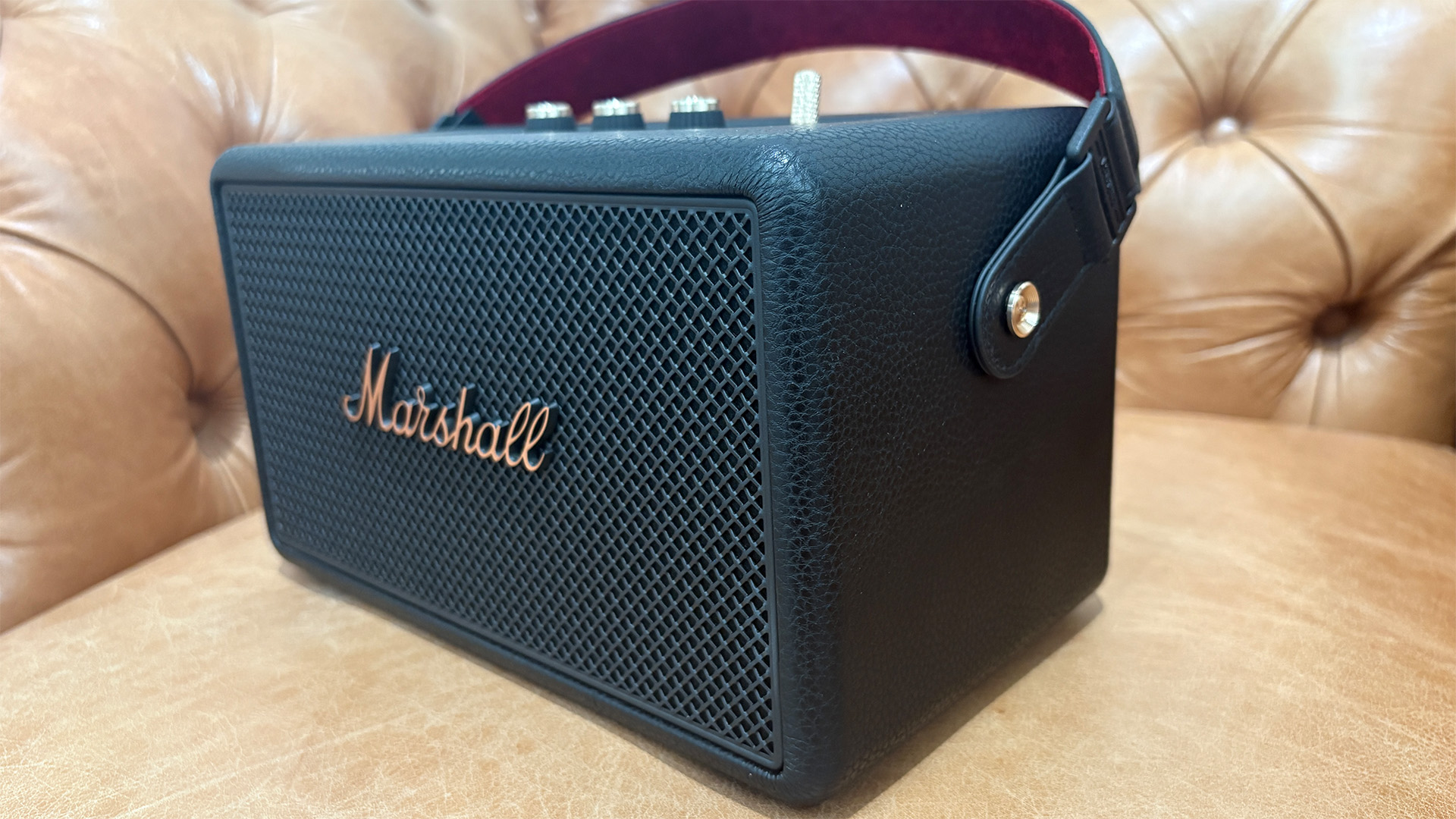
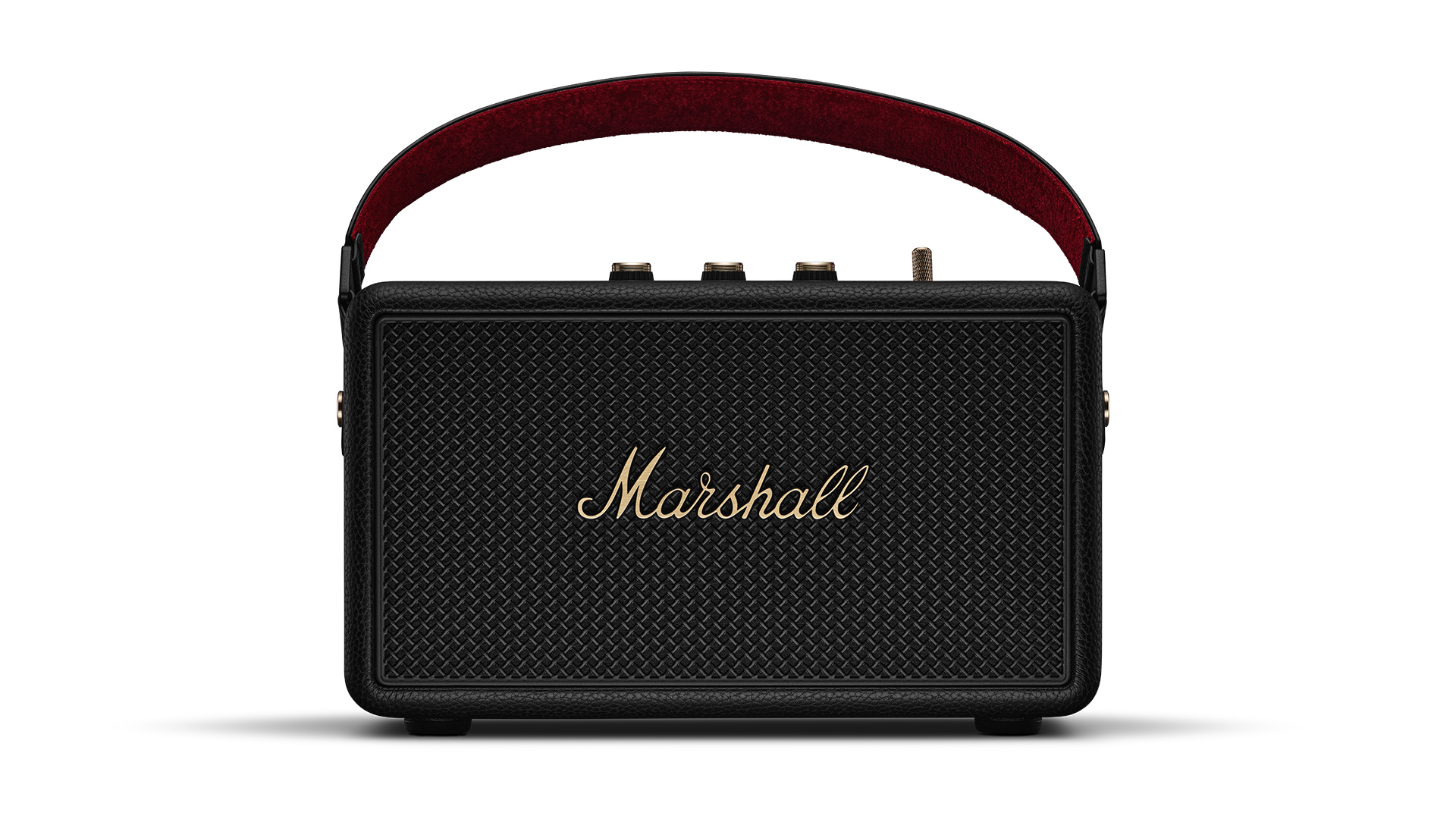
The physical design of the Kilburn III remains faithful to the brand’s heritage. The chassis is finished in textured vegan leather, providing a tactile experience that mimics the durability of a stage-ready amplifier. The control scheme retains the tactile, analog-style interaction that distinguishes it from the touch-sensitive interfaces common among competitors like Sonos or Bose. The top panel features brass-capped, knurled control knobs for volume, bass, and treble adjustments, alongside a satisfyingly mechanical power toggle switch.
From a technical perspective, the build quality prioritizes resonance control. The cabinet is engineered to reduce internal vibration, ensuring that the 50W of Class D power does not result in muddying the audio output at higher volumes. While the speaker carries an IP54 rating, which provides protection against limited dust ingress and water splashes, it remains a "lifestyle" portable speaker rather than an "adventure" speaker. This contrasts with the JBL Xtreme 5, which features an IP68 rating, signaling that Marshall intends the Kilburn III for patio and home use rather than beach or pool environments.
Technical Specifications and Connectivity
Under the hood, the Kilburn III utilizes a 360-degree sound configuration, driven by two 5cm full-range speakers and a dedicated 10cm woofer, supported by a rear-firing bass reflex port. This internal architecture is designed to minimize "blind spots" in the audio projection.
Connectivity is handled via Bluetooth 5.3, supporting the standard SBC and AAC codecs. Notably, the device skips high-resolution codecs like aptX Adaptive or LDAC, a decision that suggests the manufacturer is prioritizing stable, widespread compatibility over audiophile-grade wireless streaming. The inclusion of Auracast, a feature of the Bluetooth LE Audio standard, allows for synchronized audio sharing across multiple supported devices, reflecting a trend toward networked, multi-room listening experiences.
The power management system is perhaps the most significant upgrade in the Kilburn III. With a rated battery life exceeding 50 hours, it significantly outperforms its closest competitors. Furthermore, the inclusion of a USB-C charging port that supports both input and output allows the unit to serve as a power bank for mobile devices, a practical feature for users who rely on the speaker during extended outdoor gatherings.
Audio Performance and DSP Integration
Marshall has implemented a "dynamic loudness" digital signal processing (DSP) system, which intelligently adjusts the frequency balance as the user increases the volume. This helps to maintain a consistent sonic signature, preventing the harsh distortion often associated with small, high-output drivers.
The sound profile is distinctly "Marshall," favoring a warm, mid-range-heavy, and bass-prominent presentation. During testing, the device demonstrated a strong aptitude for rock, metal, and electronic genres. The punchy, energetic delivery of distorted guitars and complex rhythmic patterns makes it an effective tool for music that requires a sense of "physicality."
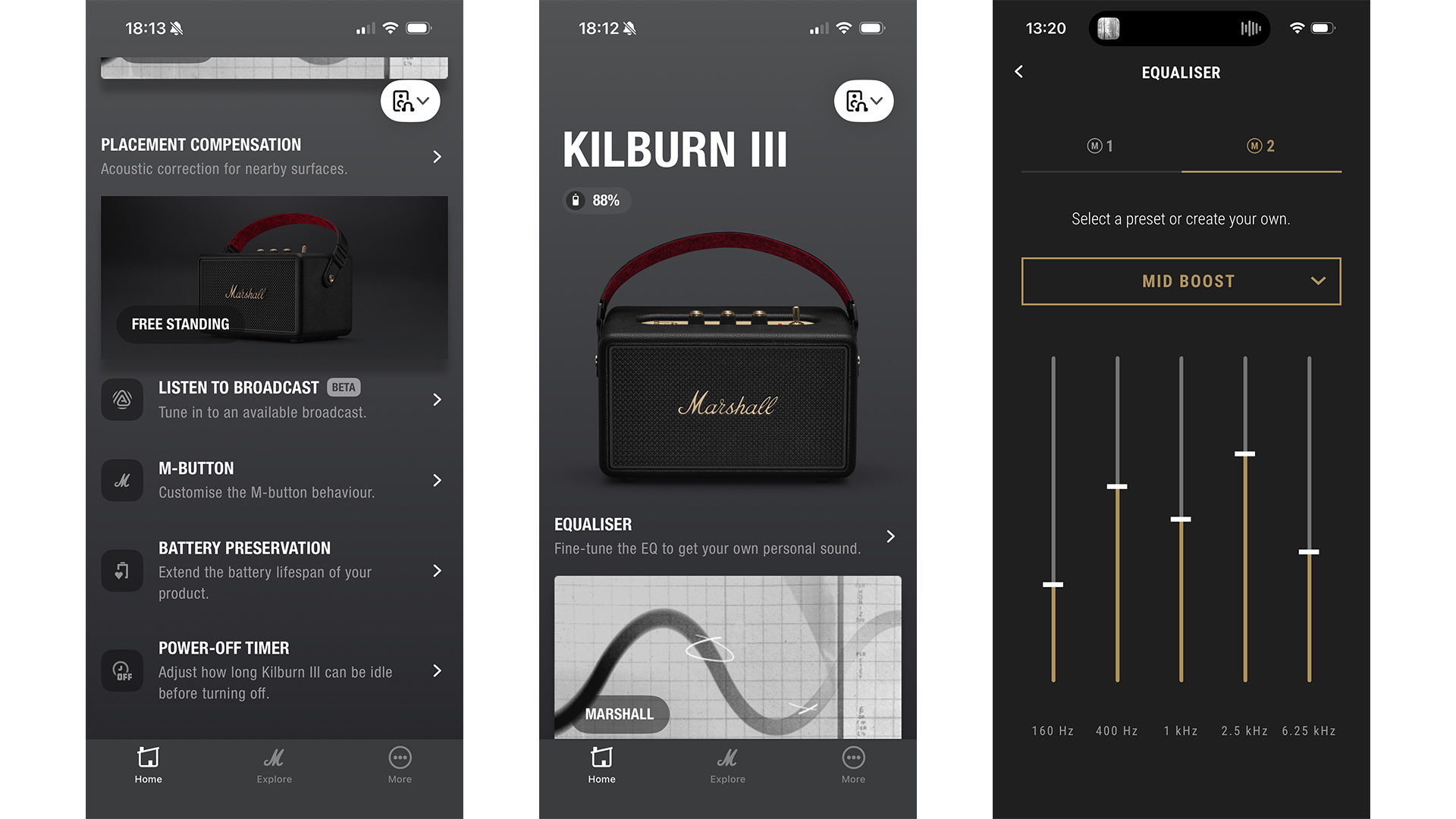
However, this character comes with trade-offs. The richness of the sound can occasionally obscure the finer, more subtle details in acoustic, folk, or classical arrangements. The "leading edges" of notes—the initial pluck of a string or the sharp hit of a snare—are softened rather than rendered with clinical precision. For listeners who prefer a neutral or "flat" studio-monitor sound, the Kilburn III’s colorized, musical presentation may feel slightly over-processed. Fortunately, the accompanying mobile application provides a five-band equalizer, allowing users to mitigate these traits by cutting the bass or boosting the mid-range to bring vocals forward.
Placement Compensation and Spatial Awareness
One of the most innovative software-driven features of the Kilburn III is its "placement compensation" technology. Via the mobile app, users can inform the speaker of its surroundings—whether it is positioned in a corner, against a wall, or free-standing. The internal DSP then dynamically alters the output to prevent the "boominess" typically caused by sound waves reflecting off adjacent surfaces.
In practical testing, this feature proved highly effective. When placed in a tight corner, the system attenuated the low-end frequencies to maintain clarity, effectively preventing the bass from becoming muddy or overpowering. This level of environmental awareness is rarely found in speakers at this price point and adds significant value for users living in smaller, acoustically challenging spaces.
Market Context and Competitive Landscape
The portable speaker market is currently dominated by brands focusing on ruggedization and high-resolution streaming. The JBL Xtreme 5 represents the primary benchmark for the Kilburn III. While the JBL offers superior weatherproofing and a slightly more analytical, rhythmic precision, the Marshall wins in terms of subjective aesthetic appeal and brand identity.
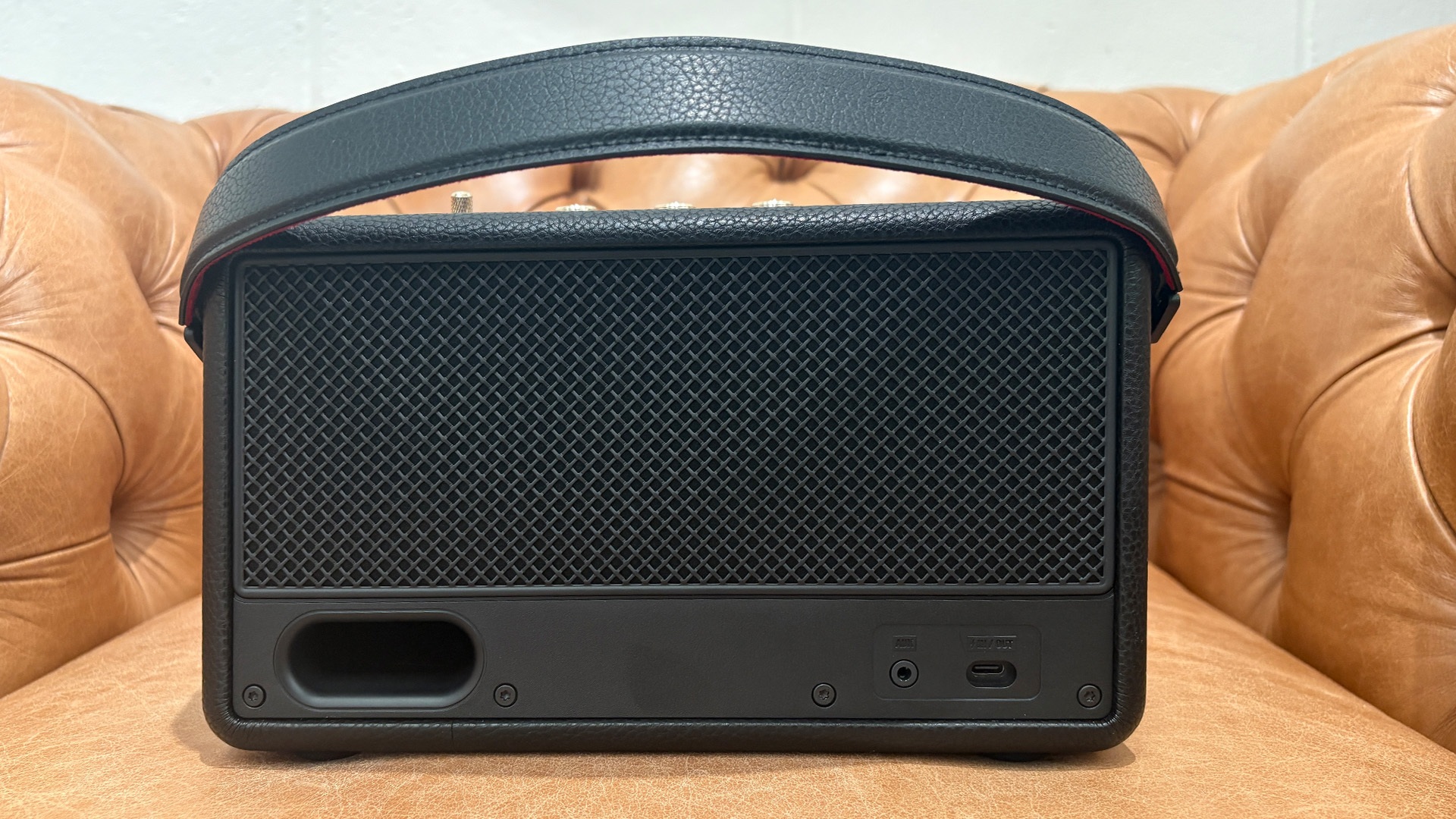
The decision to exclude Wi-Fi connectivity is a strategic one. By relying strictly on Bluetooth and 3.5mm auxiliary input, Marshall avoids the complexity of software updates, network configuration, and potential interoperability issues associated with smart-speaker ecosystems. This "plug-and-play" simplicity is a core component of the product’s identity, appealing to consumers who view the speaker as a piece of furniture or a style statement as much as a piece of audio equipment.
Future Implications and Conclusions
The Marshall Kilburn III represents a successful synthesis of form and function. While it may not satisfy the demands of an audiophile seeking perfect neutrality, it succeeds in its primary objective: providing a bold, energetic, and long-lasting audio experience that leans heavily into its rock-and-roll heritage.
The long-term success of the product will likely hinge on the longevity of its battery and the continued support for its mobile application. As Marshall continues to expand its reach into the mainstream consumer market, the Kilburn III serves as a critical bridge. It demonstrates that a brand can successfully leverage its history to create modern hardware that feels both nostalgic and technologically relevant.
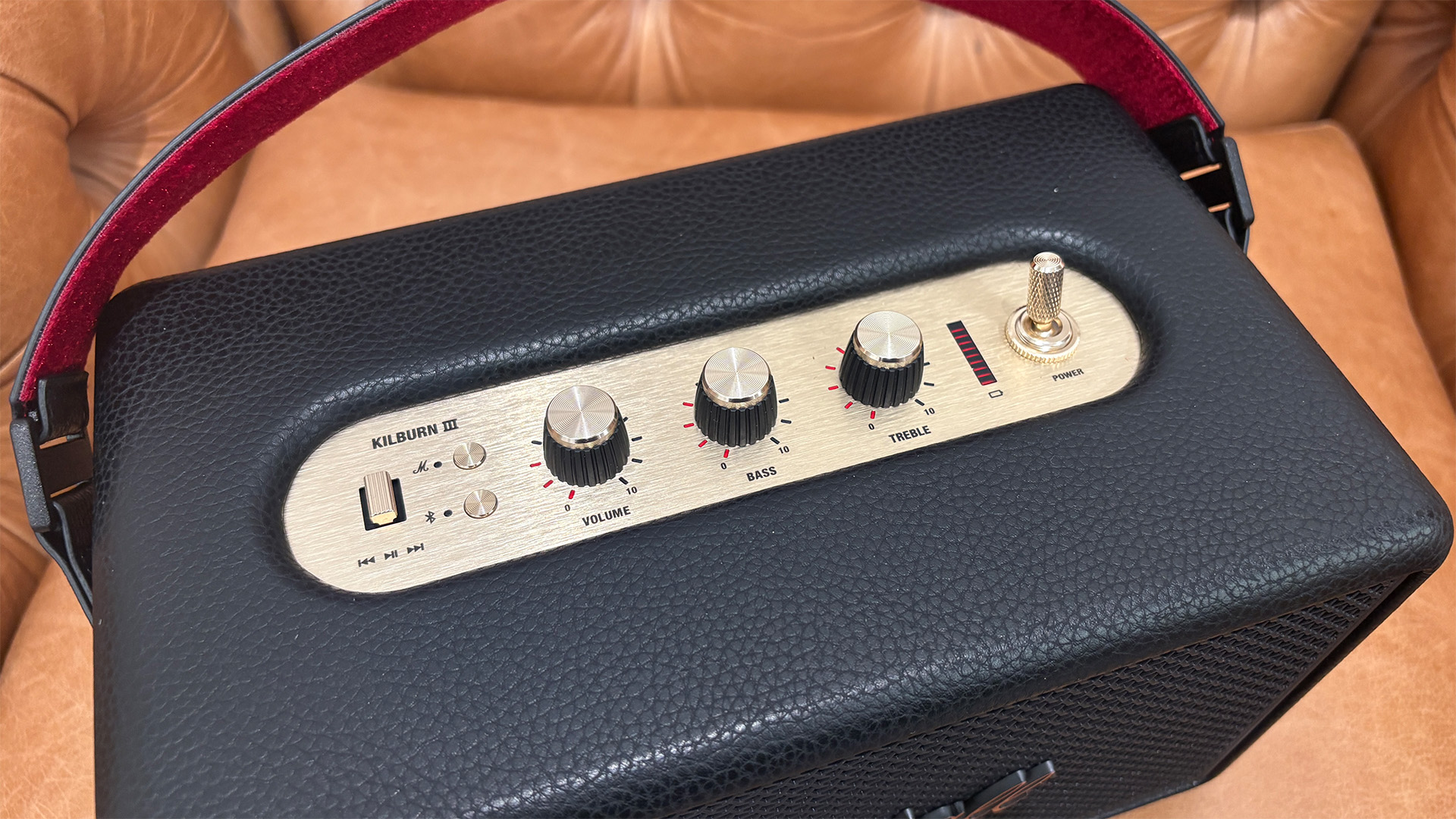
For consumers, the choice between the Kilburn III and its competitors comes down to a matter of priority: those who prioritize extreme durability and technical neutrality will likely look toward the JBL or Ultimate Ears catalogs. However, for those who value the marriage of iconic design, tactile control, and a warm, punchy sound signature, the Marshall Kilburn III stands as a unique and compelling choice in the current landscape of portable audio. It is a device that does not just play music; it performs it with the kind of bravado one expects from a brand that has spent decades on the world’s most prestigious concert stages.
Related posts: