The Definitive Guide to Mahler Symphony No. 4: The Classic Review Editorial Team Recommendations

Gustav Mahler’s Symphony No. 4 in G major stands as one of the most paradoxical and deceptively accessible masterpieces in the late-Romantic orchestral canon. While it is the most compact, delicately scored, and sunlit of his first four monumental symphonies, it simultaneously conceals a profound psychological undercurrent, balancing childlike innocence with macabre irony and transcendent grief. As classical music lovers continue to seek definitive interpretations of this multi-layered work, The Classic Review editorial team has evaluated the recorded legacy of the piece, surveying foundational historical recordings alongside modern digital-era masterworks to determine the ultimate benchmark performances.
Chronology and Genesis of a Masterpiece
The conceptual genesis of Mahler’s Fourth Symphony stretches back to the final decade of the nineteenth century. In 1892, Mahler composed "Das himmlische Leben" ("The Heavenly Life"), a luminous setting of a poem from the Des Knaben Wunderhorn collection that depicts a child’s whimsical, vibrant vision of paradise. Initially, the composer intended to use this song as the magnificent, triumphant finale of his sprawling Third Symphony. However, structural and artistic considerations shifted his trajectory.
During the summers of 1899 and 1900—spent in the idyllic retreat of Maiernigg along the Wörthersee in southern Austria—Mahler formally began and completed the Fourth Symphony, using "Das himmlische Leben" not as an afterthought, but as the thematic destination toward which the entire four-movement architectural structure builds.
The premiere took place in Munich in November 1901, with Mahler himself on the podium. The public and critical reaction was sharply divided, ranging from outright bewilderment to active hostility. Audiences accustomed to the thunderous, earth-shaking sonorities of the First and Second Symphonies were startled by the work’s lean textures and apparent lightness. Undeterred by the initial resistance, Mahler remained intimately engaged with the score, continuously refining and editing the orchestration until his final performances of the work in 1911, shortly before his death.
Orchestral Innovations and Unique Instrumentation
Musically, the Fourth Symphony marks a radical departure from the monumental forces required by Mahler’s earlier and later symphonic works. The orchestration is notably light; the score completely omits trombones and tubas, relying instead on a transparent web of woodwinds, strings, and an inventive percussion section.
The structural fabric of the symphony is defined by stark contrasts:
- First Movement: Begins unexpectedly with the delicate chiming of sleigh bells, setting a pastoral yet subtly unsettled atmosphere.
- Second Movement (Scherzo): Features the concertmaster playing a violin tuned a whole tone higher (scordatura tuning) to evoke a grotesque, otherworldly soundscape. This represents "Freund Hein"—the skeleton fiddler, a traditional personification of Death.
- Third Movement (Poco adagio): The emotional anchor and longest movement of the four, moving from profound introspection to a sudden, blazing orchestral rupture.
- Fourth Movement: The 1892 Wunderhorn song itself, delivered by a solo soprano who must navigate the delicate boundary between profound innocence and worldly knowingness.
Curated Editorial Recommendations: Historic Benchmarks and Modern Interpretations
To help listeners navigate the vast discography, The Classic Review editors have assessed ten landmark recordings, highlighting how different conductors and soloists balance the score’s fragile grace and psychological depth.
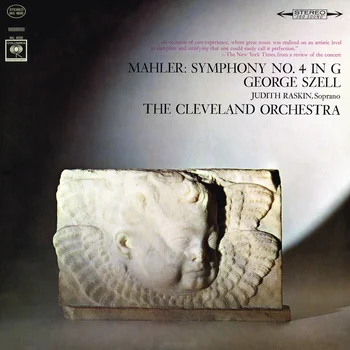
Cleveland Orchestra, George Szell (1965)
George Szell’s legendary 1965 recording leaves nothing to chance, showcasing the formidable precision and discipline of the Cleveland Orchestra. Every instrumental line is articulated with surgical exactness, making the scherzo’s mistuned violin feel intensely unsettling. While the Poco adagio leans toward a measured rather than spontaneously felt poise, Judith Raskin delivers the finale with a pure, unblemished tone devoid of artifice. For listeners seeking a masterclass in structural clarity and symphonic architecture, this remains an essential starting point.
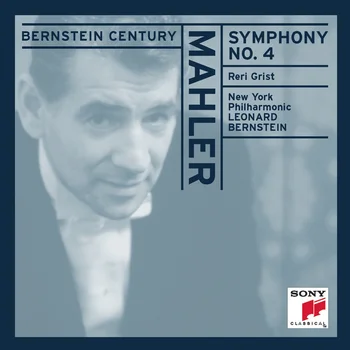
New York Philharmonic, Leonard Bernstein (1960)
Leonard Bernstein’s first recording of the Fourth treats the score as a turbulent emotional journey through rapidly shifting psychological states. Irony brushes shoulders with sentimentality, tempos push forward aggressively, and transitions can be startlingly abrupt. Soprano Reri Grist anchors the finale with a youthful, fresh voice that captures the poem’s unpretentious charm despite minor vocal rough edges. It remains the ultimate wild card in the discography, illustrating the absolute limits of interpretive risk this music can withstand.
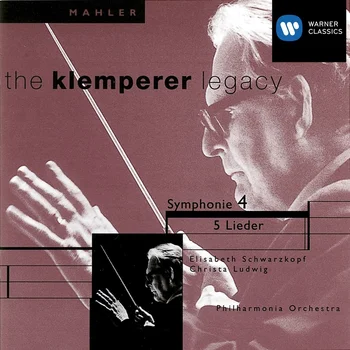
Philharmonia Orchestra, Otto Klemperer (1961)
Otto Klemperer’s 1961 account is defined by monumental weight and stark textures. The first movement unfolds at a deliberate, leisurely pace, with woodwinds projecting sharply against the string section rather than blending into a uniform wash. The scherzo benefits immensely from this approach, yielding a heavy-footed trio and a biting solo violin. Though the slow movement is uncharacteristically brisk and Elisabeth Schwarzkopf’s worldly vocal delivery slightly misses the naive innocence of the text, the sheer power of the first three movements makes this a compelling purchase.
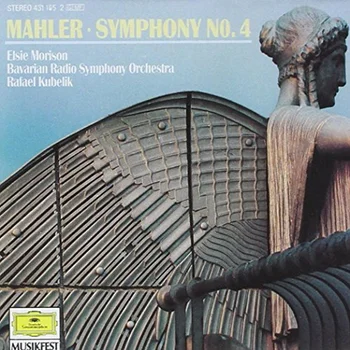
Bavarian Radio Symphony Orchestra, Rafael Kubelík (1968)
Rafael Kubelík infuses his 1968 performance with an unmistakable breath of fresh air. Utilizing a scaled-down orchestral footprint and brisk, agile tempos, Kubelík highlights the intricate counterpoint of the opening movement with effortless clarity. Elsie Morison provides a warm, natural vocal performance in the finale. While purists may crave a touch more gravitas in the third movement, few recordings capture the smiling, pastoral warmth of Mahler’s creation with such effortless charm.
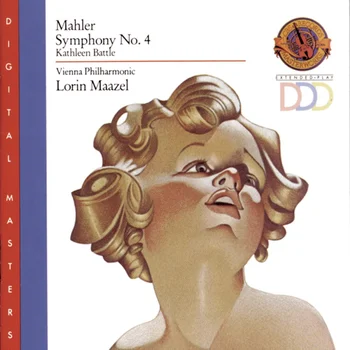
Vienna Philharmonic, Lorin Maazel (1983)
Lorin Maazel’s 1983 recording with the Vienna Philharmonic revels in elongated phrasing, muted sleigh bells, and an overarching wistfulness. The scherzo carries a dark, brooding undertone that proves relaxed tempos do not equate to a lack of dramatic tension. Kathleen Battle sings the finale with glorious vocal opulence, though her rich tone occasionally flirts with sounding more mature than the required child persona. It is a highly mannered, luxurious reading that showcases the Vienna strings at their most sublime.
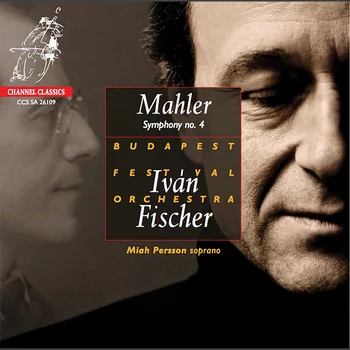
Budapest Festival Orchestra, Iván Fischer (2008)
Iván Fischer’s 2008 performance stands out among modern digital recordings for successfully bridging contemporary orchestral transparency with spontaneous, unforced phrasing. The Budapest strings produce a lush, velvety sound, while Miah Persson navigates the final movement with a playful lightness free of excessive coyness. Though some listeners might desire a sharper edge in the percussion and scherzo, Fischer achieves a rare synthesis of rigorous discipline and expressive freedom.
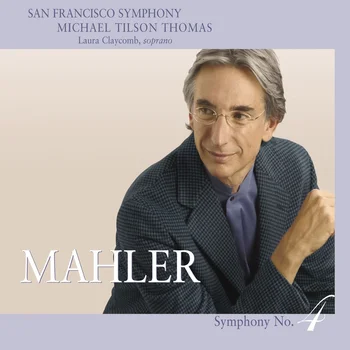
San Francisco Symphony, Michael Tilson Thomas (2003)
Michael Tilson Thomas’s concert recording divides opinion through its embrace of old-fashioned string slides and grand-manner phrasing. The performance pivots around an expansive slow movement that stretches several minutes longer than standard interpretations, building toward an earth-shattering climax. Laura Claycomb’s straightforward, boyish vocal delivery suits the concept well, though the recording’s heavy reliance on refined beauty leaves some critics questioning whether it strays too far from Mahler’s explicit markings.
London Philharmonic Orchestra, Vladimir Jurowski (2016)
Vladimir Jurowski’s 2016 live recording is elevated by Sofia Fomina’s silvery, innocent, and deeply articulate vocal performance in the finale. The London Philharmonic responds with precision that avoids coldness, expertly managing Mahler’s sudden shifts between deadpan seriousness and bright simplicity. Despite a slightly dry acoustic environment that dampens the bloom of the slow movement’s climaxes, Jurowski’s structural assurance is admirable.
Minnesota Orchestra, Osmo Vänskä (2018)
Osmo Vänskä adopts an unhurried, highly contemplative approach in his 2018 recording. Careful attention to internal balances and characterful woodwind solos anchors the outer movements, even if the scherzo occasionally lacks a sharper rhythmic pulse. Carolyn Sampson delivers a deeply touching, sincere account of the child’s heaven in the finale, turning the movement into the emotional heart of the performance. Spacious, detailed engineering makes this an ideal choice for listeners who prefer a patient, beautifully captured Mahler landscape.
Czech Philharmonic, Semyon Bychkov (2020)
Semyon Bychkov’s 2020 reading with the Czech Philharmonic leans into historical performance practices, featuring expressive rubato and classic string slides. The interpretation prioritizes lyrical beauty and fluid poetry over aggressive dynamic contrasts. While the emotional temperature remains cooler than historic benchmark recordings, soprano Chen Reiss crowns the performance with spring-like freshness, effortlessly executing long phrases with breathtaking breath control.
Implications and the Ongoing Evolution of Mahler Interpretation
The enduring vitality of Mahler’s Fourth Symphony across more than a century of recorded history highlights the work’s infinite malleability. Conductors continue to grapple with its central dichotomy: whether to emphasize the dark, ironic undercurrents of mortality and psychological complexity, or to lean entirely into the pastoral, light-hearted simplicity of a child’s idyllic heaven. As modern orchestras apply period-informed practices, transparent balancing, and shifting aesthetic priorities to the score, Mahler’s delicate masterwork remains a vital proving ground for the world’s greatest maestros, ensuring that listeners will continue to debate its true meaning for generations to come.