A Masterclass in Vocal Mastery: Juan Diego Flórez Captivates the Teatro Colón in a Landmark Recital

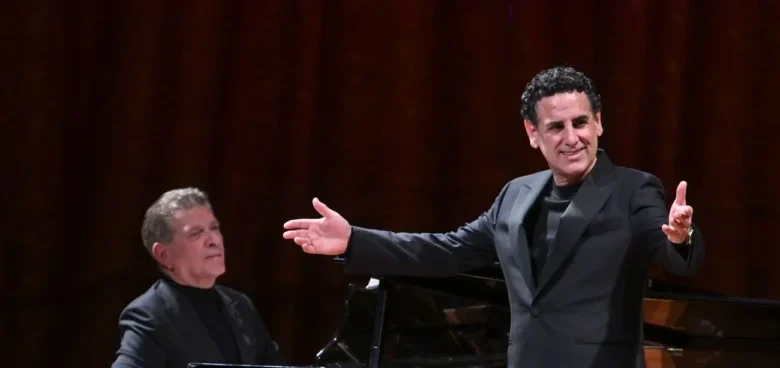
The historic Teatro Colón played host to an unforgettable evening of vocal artistry as renowned lyric tenor Juan Diego Flórez took the stage alongside collaborative pianist Vincenzo Scalera. Marking a significant milestone in his illustrious career, the performance showcased Flórez’s enduring vocal prowess, effortless high notes, and commanding stage presence. Despite minor structural curiosities within the programmed repertoire, the tenor delivered a magisterial recital that culminated in an electrifying, guitar-accompanied encore session, leaving both critics and audience members spellbound well past the evening’s scheduled conclusion.
Setting the Stage: Background and Context of the Event
The recital was highly anticipated, primarily because Flórez, despite his global stature and decades-long career at the pinnacle of opera, had remarkably never performed a staged operatic role at the famed Buenos Aires opera house. Known globally for his definitive interpretations of Rossini, Donizetti, and Bellini, the Peruvian-born tenor arrived in Argentina at a mature stage of his artistic journey. Now navigating middle age, Flórez has strategically expanded his repertoire into heavier dramatic territory while retaining the silvery clarity, focused lyricism, and piercing projection that initially propelled him to international stardom.
Accompanying him on the piano was Vincenzo Scalera, a legendary figure in collaborative piano and a long-time musical partner to many of the world’s greatest singers. Coincidentally celebrating his birthday during the performance, Scalera provided more than mere accompaniment; his subtle phrasing and virtuosic interludes served as the structural connective tissue of the evening, grounding Flórez’s soaring vocals with understated elegance.
Chronology of the Formal Program
The evening commenced precisely at 8:00 p.m. local time, immediately capturing the attention of the sold-out house. The first half of the program was heavily weighted toward the Italian bel canto tradition, opening with a surprising and demanding choice: Wolfgang Amadeus Mozart’s concert aria "Misero! O sogno… Aura che intorno spiri." Flórez utilized the opening recitative to test the acoustic properties of the venue, warming his voice into the vast space before launching into pristine legato lines and a forceful climax that established his vocal intentions for the night.
Transitioning seamlessly into the Romantic era, the tenor performed selections from Gioachino Rossini’s late-career collection Péchés de vieillesse, including "La Lontananza" and "L’esule," before tackling "La speranza più soave" from Semiramide. While Flórez’s trademark coloratura showed the slight, expected adjustments in tempo necessary for a tenor now exploring heavier repertoire, his upper register remained remarkably uncompromised. Every high note was executed with pristine control, thrilling precision, and unwavering stability.
Following a brief respite during which Scalera performed a delicate reading of Gaetano Donizetti’s "Une caresse à ma femme," Flórez delivered what many consider the emotional peak of the formal program: Nemorino’s iconic aria "Una furtiva lagrima" from Donizetti’s L’elisir d’amore. Flórez approached the piece with meticulous architectural care, building a subtle crescendo into the critical cadence and delivering the concluding mezza di voce with tender yet impassioned intensity. The aria concluded to an immediate, thunderous ovation. The first half closed with a resolute and resonant traversal of excerpts from Donizetti’s Roberto Devereux.
Repertoire Shifts: Spanish, French, and Italian Detours
The second half of the recital shifted dramatically in geographical and stylistic scope, moving away from the thematic cohesion of the first act into a mixed mosaic of Spanish Zarzuela, French opera, and a concluding Italian detour.
Opening the second act with selections from Spanish repertoire, including Pablo Sorozábal’s "Bella enamorada" from El último romántico and Jacinto Guerrero’s "Suena, guitarrico mío," Flórez displayed a newfound interpretive freedom. He experimented dynamically with anaphora in the text, deploying breathtaking diminuendos that captivated the hall. Scalera then claimed the spotlight with a witty, fleet-fingered performance of Ernesto Lecuona’s "Mazurka Glissando," balancing humor with strict rhythmic discipline.
The French segment followed, highlighted by "Vainement, ma bien-aimée" from Édouard Lalo’s Le roi d’Ys and the rapturous "Ah, lève-toi, soleil!" from Charles Gounod’s Roméo et Juliette. In the latter, Flórez injected rhythmic urgency and crisp articulation into the phrases leading up to the soaring high B-flats, culminating in a prolonged, honeyed tone that again drove the audience into raptures.
The formal program concluded with an unexpected choice: an aria from Giuseppe Verdi’s I Due Foscari ("Ah, sì, ch’io senta ancor… Come uno spirto angelico"). While vocally immaculate, the programming choice puzzled some critics. Placing Verdi at the very end of a non-Italian second half broke the evening’s flow, particularly because the aria’s dramatic cabaletta was performed in an abbreviated format without repeats. Despite the curatorial debate over its placement, Flórez’s vocal execution remained technically flawless.
The Unscheduled Masterclass: Encores and Cultural Connection
True to form, the formal conclusion of the program merely served as the threshold for the evening’s most magical phase: the encore set. Stepping back onto the stage equipped with an acoustic guitar, Flórez fundamentally shifted the artistic dynamic of the evening. Moving from a position of performing for the audience to inviting the audience in, the tenor transformed the grand hall of the Teatro Colón into an intimate salon.
Sensing his location, Flórez opened the encore segment with Carlos Gardel’s timeless tango "El día que me quieras." The performance was defined by a loose, conversational phrasing style, punctuated by delicate guitar vamping and gossamer-thin pianissimo high notes. This was followed by a heartfelt sequence including Chabuca Granda’s "La flor de la canela," the Argentine folk standard "Zamba de mi esperanza"—which Flórez noted his mother used to sing to him—and a soaring rendition of "Cucurrucucú paloma," during which he held an immaculate falsetto high note over an extended vamp.
In a poignant nod to his collaborative partner, Flórez paused the proceedings to publicly acknowledge Vincenzo Scalera’s birthday. The entire audience joined in spontaneous unison to sing "Que lo cumpla feliz" (Happy Birthday) to the veteran pianist. As a musical gift, Flórez performed Ruggero Leoncavallo’s "Mattinata," physically stepping upstage at the conclusion to cede the physical and metaphorical spotlight to Scalera for the final measures.
Broader Impact and Implications for the Artist
As the clock neared 10:30 p.m.—well past the scheduled 9:50 p.m. finish time—the house lights flickered on, yet clusters of patrons lingered in the aisles, transfixed by the atmosphere. A final, impromptu performance of "Amapola" served as a magnetic pull, nearly coaxing departing audience members back to their seats.
This landmark Buenos Aires appearance reinforced several vital aspects of modern vocal arts programming and artist branding. First, it demonstrated that vocal longevity in the bel canto repertoire is achievable when a tenor exercises rigorous technical preservation combined with intelligent, incremental repertoire expansion. Second, it underscored the irreplaceable value of intimate, unscripted audience engagement. By stripping away the acoustic barrier of the orchestra and accompanying himself on the guitar during encores, Flórez bridged the gap between elite classical performance and popular cultural touchstones.
For the Teatro Colón, the evening will be recorded as a historic triumph—the long-overdue house debut (in recital format) of one of the defining lyric tenors of the 21st century. For Flórez, the performance served as an emphatic reminder to South American audiences that his star power, vocal elegance, and interpretive mastery remain entirely undiminished.