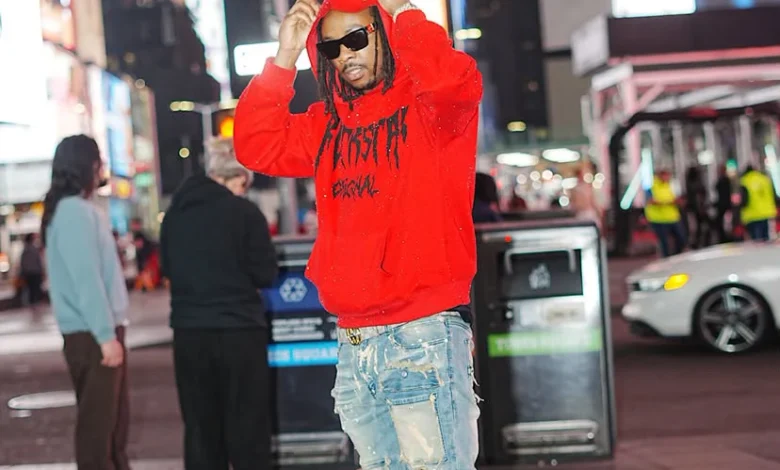
Philadelphia has long served as a crucible for Hip-Hop talent, fostering a legacy that traces from the early contributions of Lady B in 1979 to the street-oriented lyricism of Schoolly D and the mainstream dominance of artists like Meek Mill and Lil Uzi Vert. Within this dense musical lineage, a new, unconventional voice has emerged. 215Sha, a North Philadelphia native who balances a career as a city firefighter and EMT with a burgeoning music career, is currently pivoting away from the secular rap scene toward a faith-based path, marking a significant evolution in his artistic identity.
A Career Defined by Dual Identities
The life of 215Sha is defined by a dichotomy of public service and creative expression. As an EMT and firefighter, he is tasked with the high-stakes physical and emotional labor of emergency response. This career path, while noble, has come at a personal cost. During a recent emergency operation involving the transport of a paraplegic patient from a second-story residence, the rapper sustained significant neck and shoulder injuries. This physical trauma served as a catalyst for a broader period of introspection, which he credits for his recent transition into gospel-focused music.
In the world of professional firefighting, where the average response time is critical and the physical toll is cumulative, such injuries are a sobering reality. According to the Bureau of Labor Statistics, firefighters experience one of the highest rates of musculoskeletal injuries among all occupations. For 215Sha, this forced downtime provided the silence necessary to reconsider his creative output. He notes that the loss of a pet during this period of physical recovery deepened his sense of isolation, leading him to prioritize a spiritual connection over his previous lyrical themes.
From Secular Stages to Gospel Advocacy
For over 15 years, 215Sha operated within the secular Hip-Hop sphere, utilizing the profanity and aggression common in the genre. However, his current artistic mandate is to align his music with his faith, effectively acting as an "ambassador" for his beliefs. This shift is not merely aesthetic but structural; he has taken the initiative to build his own studio, learning the technical nuances of production, mixing, and mastering through a process he describes as being guided by his faith.
The intersection of Hip-Hop and Christianity is not new to Philadelphia. The city saw the rise of the Cross Movement in the 1990s, a collective that laid the groundwork for modern Christian rap. Similarly, nearby Camden, New Jersey, produced Tye Tribbett, who successfully bridged the gap between traditional gospel and contemporary R&B and Hip-Hop. 215Sha’s approach, however, seeks to maintain a "gritty" Philadelphia identity, viewing himself as a "Tupac-style" artist—someone who utilizes the cadence and storytelling elements of gangsta rap to convey, in his view, a more redemptive message.
The XRumble Incident and Public Scrutiny
In an era where social media interactions frequently translate into viral moments, 215Sha found himself at the center of an altercation during an XRumble event. The incident, which involved television personality and influencer Tommie Lee, garnered significant attention after a video circulated showing a bottle being thrown in his direction.
According to 215Sha, the tension arose from a misunderstanding during his performance. Attempting to engage with the audience, he threw a T-shirt into the crowd, an action complicated by his existing shoulder injury, which limited his range of motion. The gesture was interpreted as an affront by Lee, leading to a physical retaliation. While reports varied on whether the projectile made contact with the artist, 215Sha maintains that his focus remained on his performance, and he was largely unaware of the escalating conflict until he exited the stage. The incident highlights the volatile nature of public performance environments and the speed at which minor interpersonal conflicts can be amplified through digital platforms.

A Childhood Connection to Lil Uzi Vert
Amidst his reflections on his upbringing in Philadelphia, 215Sha shared a notable anecdote regarding his childhood interactions with Lil Uzi Vert. The two attended a private Catholic school together during their early elementary years. 215Sha recalls a brief period of friendship centered around basketball before the future superstar left the institution.
This connection serves as a reminder of the hyper-local nature of Philadelphia’s creative circles, where paths often cross long before fame is achieved. For 215Sha, realizing that his former classmate had become a global music icon was a moment of profound recognition, underscoring the disparate trajectories that can arise from a shared starting point.
The Process of Forgiveness in the Face of Tragedy
Perhaps the most sobering aspect of 215Sha’s current perspective is his stance on forgiveness. He has spoken openly about the murder of a former partner who was killed in a shooting incident three years ago. The act of violence, which involved the victim being followed to her home, remains an unsolved trauma in his life.
In clinical terms, the process of radical forgiveness—the choice to release resentment toward those who have caused irreparable harm—is often studied in the context of grief counseling and restorative justice. For 215Sha, this is not a theoretical exercise but a necessary step to prevent his own emotional stagnation. By choosing to let go of the anger associated with the perpetrator, he views himself as clearing the path for his own spiritual growth, arguing that harboring hate is fundamentally incompatible with his commitment to his faith.
Broader Implications and Future Outlook
As 215Sha moves forward, his strategy for dissemination involves bypassing traditional record label structures in favor of private web-based distribution. This shift reflects a growing trend among independent artists who seek direct-to-consumer models to maintain creative control and ideological consistency. He has expressed a desire to release a steady stream of singles and videos rather than a traditional album, viewing the latter as a potential vehicle for "bad energy" if it were to include his older, secular material.
Beyond music, he is exploring the literary medium, documenting his experiences and beliefs in written form. His stated goal is to reach an audience that feels disconnected from traditional religious institutions, using his background as a bridge.
The implications of his transition are significant for the local scene. By bringing the "gritty" narrative style of North Philadelphia into the Christian rap sphere, 215Sha is challenging the sometimes-polished perception of gospel music. His trajectory—from a street-wise upbringing to the disciplined life of a first responder, and finally to a self-professed spiritual messenger—provides a complex case study in the evolution of personal identity.
Ultimately, 215Sha’s mission is centered on the concept of incremental improvement. Whether through his work as an EMT or his efforts in the recording studio, he advocates for a "brick by brick" approach to self-actualization. As he continues to balance the high-pressure demands of emergency services with his newfound religious advocacy, his work will likely continue to draw interest from those who find resonance in his blend of urban experience and theological commitment. His story is one of resilience, emphasizing the capacity for individuals to redefine their purpose in the face of physical injury, personal loss, and the inherent challenges of the modern music industry.