Legal Battle Intensifies Between Musicians Union AFM and Major Music Labels Over Generative AI Licensing Deals and Unresolved Performer Compensation

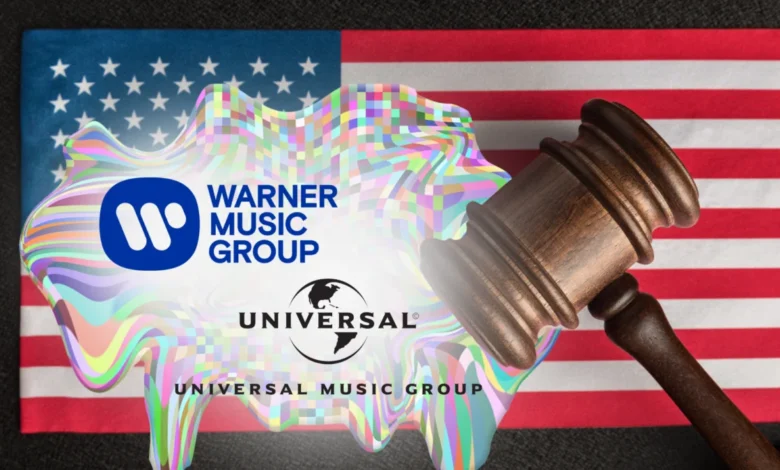
Even as the global music industry continues to celebrate and announce lucrative, high-profile artificial intelligence licensing partnerships, a foundational labor dispute is quietly brewing in the United States federal court system. The American Federation of Musicians (AFM), representing tens of thousands of professional instrumentalists and session performers, is locked in an escalating legal standoff with Universal Music Group and Warner Music Group. At the heart of this contentious litigation is a fundamental disagreement over contractual obligations: specifically, whether major record labels are required to compensate unionized session musicians when valuable master recordings are handed over to generative AI platforms for model training and data ingestion.
As autumn court filings unfold, both sides have dug deeply into opposing interpretations of legacy collective bargaining language. The outcome of this case could profoundly reshape the economic architecture of the music business, setting a critical legal precedent for how human creators are remunerated in an era dominated by artificial intelligence.
The Core Conflict: Unpacking the Sound Recording Labor Agreement
The legal battle centers around the Sound Recording Labor Agreement (SRLA), a comprehensive collective bargaining pact negotiated between the AFM and major record labels. This foundational agreement dictates the terms, minimum compensation structures, and working conditions for session musicians hired to play on studio recordings. Crucially, the agreement contains what is known in industry parlance as a "new use" clause.
For decades, the new use clause has served as a vital financial safety net for musicians. Under its provisions, if a record label takes an existing sound recording and repurposes it in a novel way that was never anticipated or explicitly covered when the track was initially recorded, the label retains a clear contractual obligation. Specifically, the company must financially compensate the musicians who performed on the track and provide formal notification to the union regarding this secondary application.
However, the rapid advent of generative AI has thrust this decades-old clause into uncharted territory. Major tech startups and AI developers—such as Udio (which partnered with both Universal and Warner) and Suno (which partnered with Warner)—rely heavily on massive datasets of existing music to train their neural networks. By feeding commercial master recordings into these algorithms, AI systems learn to emulate musical styles, vocal textures, and instrumental arrangements, effectively creating competing content that mimics human artistry.
Neither Universal Music Group nor Warner Music Group has informed the AFM regarding these AI licensing arrangements, nor have they distributed compensation to the session musicians whose performances helped train the underlying AI models. The labels argue that they are under no legal obligation to do so, while the union maintains that this omission constitutes a blatant breach of contract.
Chronology of the Dispute
The trajectory of this high-stakes legal confrontation spans several key milestones over the past year:
- Early to Mid-2023: Major record labels begin quietly exploring and negotiating data-licensing partnerships with generative AI companies, seeking to monetize their extensive catalogs while attempting to protect copyrights from unauthorized scraping.
- June 2024: Frustrated by the total exclusion of session musicians from lucrative AI licensing revenues, the American Federation of Musicians formally files a landmark lawsuit in federal court against Universal Music Group and Warner Music Group, citing violations of the SRLA’s new use clause.
- Late Summer to Early Fall 2024: Universal and Warner file formal motions to dismiss the lawsuit, arguing that the union’s legal interpretation of the collective bargaining agreement is fundamentally flawed and legally untenable.
- November 2024: Both parties submit new, comprehensive filings to the court. The major labels double down on their request for dismissal, while the AFM vigorously defends its reading of the contract, setting the stage for a critical judicial review.
Legal Arguments: A War of Contractual Interpretation
The core of the courtroom battle hinges entirely on how a judge will interpret the precise wording of the SRLA’s new use clause. The legal strategies deployed by the opposing parties reveal a stark contrast in contract philosophy.
Universal Music Group, in its latest court filing, insists that the disputed text of the SRLA is entirely "clear and unambiguous." According to Universal’s legal team, the clause dictates that when a label utilizes a covered recording for an unlisted purpose, it must pay "an amount equal to all payments that would be required under the AFM agreement that would then be effective if the recording were originally made for the purpose set forth under that agreement."
In simpler terms, the majors argue that the new use clause does not independently state a standalone compensation rate; rather, it "imports" a rate from a separate, specific AFM agreement governing that exact new purpose. Because no separate, specialized collective bargaining agreement currently exists for generative AI usage, the labels argue that the mechanism collapses. Consequently, Universal asserts that the union has offered nothing more than "a scattershot series of arguments that obscure rather than confront what the contract makes clear." Furthermore, Universal notes that the union conceded during settlement and meet-and-confer sessions that a dedicated AI labor agreement does not yet exist.
The AFM, conversely, adopts a decidedly different legal posture. In its counter-filings, the union maintains that the text of the SRLA imposes an absolute, mandatory payment obligation the moment a signatory company puts a protected recording to any purpose not explicitly covered by the base agreement.
Addressing the absence of a dedicated AI agreement, the union contends that a missing specialized rate sheet does not invalidate the underlying obligation. The AFM argues that existing provisions within the broader SRLA—including standard session rates, streaming royalties, and established sampling compensation formulas—provide objective, reliable economic measures from which judicial damages can be accurately calculated.
Crucially, the union acknowledges that the new use clause is "reasonably susceptible to more than one interpretation." While this might sound like a concession, it is actually a calculated litigation strategy. Under standard contract law, if a judge finds that a contract term is ambiguous and that both sides’ interpretations are plausible, the case cannot be dismissed prematurely at the preliminary motion stage. Instead, the litigation must proceed to discovery and trial, allowing the union to present evidence supporting its reading.
Broader Industry Context and Economic Implications
The lawsuit between the AFM and the major labels does not happen in a vacuum. Across the wider entertainment landscape, rightsholders are sharply divided over how to navigate the generative AI revolution. While music publishers, independent distributors, and major record companies are actively cutting multi-million-dollar deals with AI firms to secure early licensing fees and legal protections, the creators at the bottom of the production chain are frequently left behind.
Session musicians, background vocalists, and independent instrumentalists occupy an especially vulnerable position. These artists are often hired on a work-for-hire basis, receiving upfront fees for their studio time rather than ongoing master royalties. For decades, unions like the AFM have fought to secure residual payments, streaming shares, and secondary-use protections to ensure these foundational contributors share in the long-term commercial success of the recordings they helped build.
The rise of generative AI models trained on copyrighted studio work introduces an existential economic threat. When an AI model absorbs the stylistic nuances, phrasing, and technical execution of a seasoned session player without authorization or compensation, it creates a digital substitute capable of generating endless competing audio content. If major labels can monetize these master recordings for AI training without triggering residual or new-use obligations, the traditional revenue models supporting professional session musicians could face severe erosion.
Path Forward and Future Outlook
As the presiding federal judge weighs the motions to dismiss filed by Universal Music Group and Warner Music Group, the broader music community is watching closely.
If the judge rules in favor of the major labels and dismisses the lawsuit, the AFM will be forced to rely entirely on future collective bargaining rounds to secure explicit AI protections—a process that could take years while AI technology advances at a breakneck pace. Alternatively, if the court allows the lawsuit to proceed, it will establish a powerful legal precedent affirming that legacy labor agreements still apply to modern technological disruptions.
Ultimately, regardless of how the court rules on this specific motion, the dispute highlights an inescapable reality for the modern music industry: existing copyright frameworks and labor agreements are straining under the weight of artificial intelligence. Meaningful, long-term stability will likely require a dual approach combining aggressive union negotiations, judicial enforcement of legacy contracts, and potential legislative reform to ensure that human musicians are fairly compensated when their life’s work trains the machines of tomorrow.