World On Fire Theatre Collective: World On Fire written and directed by George F. Walker


The Assembly Theatre in Toronto recently became the staging ground for the premiere of World On Fire, the latest production from legendary Canadian playwright and director George F. Walker. Running from May 28 through June 7, 2026, the play marks the inaugural effort of the newly formed World On Fire Theatre Collective, an artistic body dedicated specifically to showcasing Walker’s extensive and often gritty body of work. This production, which delves into the harrowing lives of society’s most vulnerable citizens and the professionals tasked with their care, serves as a stark reflection of contemporary urban struggles, blending Walker’s signature dark humor with a sobering look at institutional limitations.
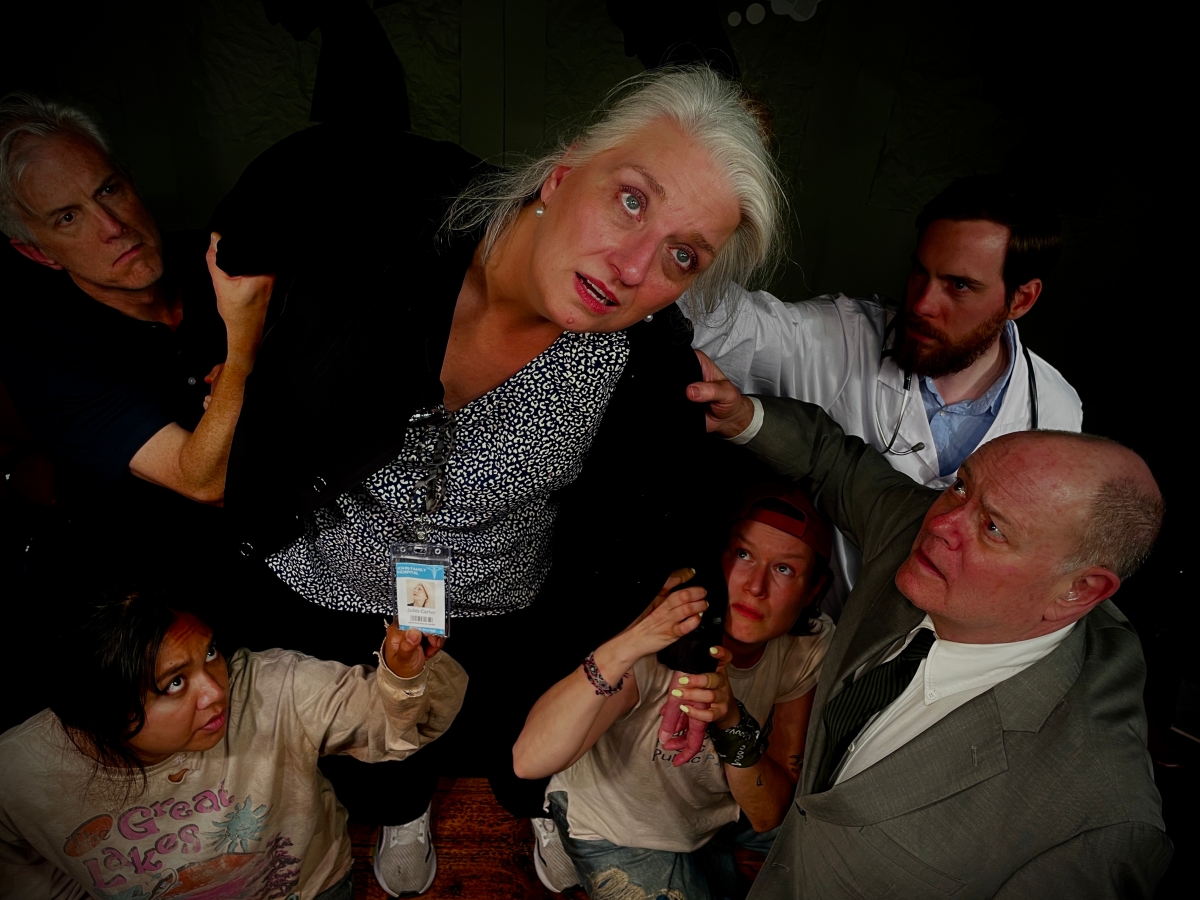
The narrative of World On Fire is centered on Jules, portrayed by Elizabeth Friesen, a social worker whose professional resolve is being eroded by the sheer magnitude of the systemic failures she witnesses daily. The play introduces a quartet of clients who represent various facets of the modern crisis in mental health and housing: Annie (Marline Yan), a young woman who has survived on the streets since the age of 13; Casey (Anne van Leeuwen), a woman grappling with delusions and a tragic history of loss; David (David Huband), an irritable man living in the shadow of his parents’ Holocaust survival; and Marius (Chris Peterson), an individual paralyzed by pervasive, debilitating fear. As their stories intersect within the confines of a sterile meeting room, the play examines the friction between human empathy and the cold reality of "bad choices" and psychotic breaks.
Artistic Context and the Legacy of George F. Walker
George F. Walker remains one of Canada’s most prolific and celebrated dramatists, known for a career spanning over five decades. With more than 30 plays to his credit, including the acclaimed "Suburban Motel" series and "Love and Anger," Walker has garnered multiple Governor General’s Awards and Dora Mavor Moore Awards. His work is frequently characterized by its "East End" grit, focusing on lower-income characters, the marginalized, and the absurdities of the legal and social systems.
The formation of the World On Fire Theatre Collective represents a significant development in the Toronto theater scene. By creating a dedicated vehicle for Walker’s scripts, the collective aims to ensure that his brand of biting social commentary remains a fixture of the independent stage. World On Fire fits squarely into the "Walker-esque" tradition: it is dialogue-heavy, character-driven, and unflinching in its portrayal of the "cast-offs" of society. The production directed by Walker himself ensures that the pacing and tone align with his specific vision of tragicomedy, where the line between a punchline and a breakdown is razor-thin.

Detailed Character Profiles and Performance Analysis
The strength of World On Fire lies in its raw characterizations. Elizabeth Friesen’s Jules provides the emotional anchor for the production. Her performance is noted for its subtlety, capturing the nuance of a woman who began her career with a "basic impulse to do good" but has transitioned into a "burned-out human" hidden behind a professional facade. Jules’ exhaustion serves as a proxy for the audience’s own potential fatigue when faced with the intractable problems of homelessness and mental illness.
Anne van Leeuwen’s portrayal of Casey is perhaps the most physically and emotionally demanding role in the play. Casey is depicted as a woman who "simply broke under the strain" of a collapsed marriage, multiple jobs, and the eventual loss of her children to the state. Van Leeuwen employs a "jittery, seldom still" physicality, alternating between a mask of superficial smiles and outbursts of overwrought emotion. Her fixation on social justice acts as a crumbling framework for a life that has otherwise lost all stability.
Marline Yan’s Annie provides a different perspective on trauma. Having been on the streets for over a decade, Annie is cynical and defensive. Her character serves as a bridge between the play and the audience, particularly during moments where she breaks the fourth wall to berate those watching. In contrast, Chris Peterson’s Marius represents a more internal struggle. Despite having the material resources to potentially improve his situation, he is "crippled and stymied" by an inscrutable fear of the world, highlighting that trauma is not always a byproduct of poverty but can be a cause of it.
Critical Dramaturgy: Representing Intergenerational Trauma
While the performances are generally praised for their intensity, the character of David, played by David Huband, has sparked discussion regarding the portrayal of intergenerational trauma. David is written as the child of Holocaust survivors, a background that ostensibly fuels his irritability and suicidal ideation. However, some critics and audience members have noted a disconnect between the historical weight of this trauma and the character’s presentation.
Research into the psychological profiles of Holocaust survivors and their descendants—often referred to as the "Second Generation"—suggests that while trauma is frequently transmitted through epigenetic and behavioral channels, it often manifests as a heightened sense of resilience or a specific type of anxiety regarding safety and security. Huband’s David is portrayed more as a "cranky, irritable old man" given to joking about his plight. This characterization, combined with a chronological incongruity regarding the timing of his inheritance and his parents’ ages, has been identified as a point where the script’s realism falters. Unlike Casey or Annie, whose anguish feels immediate and visceral, David’s struggles occasionally feel detached from the play’s central urgency.
Production Design and Technical Execution
The Assembly Theatre’s intimate space is utilized effectively by the design team, consisting of Madeleine Rosenberg, Daniel Rosenberg, and Nicholas Friesen. The set is minimalist, employing just two chairs and two benches to represent various locations, from a hospital meeting room to Jules’ office. This simplicity underscores the transient and often precarious nature of the characters’ lives.
A prominent feature of the set is the graphic design on the back wall, which visually represents the internal stresses and uncertainties of the cast. These visuals complement the sound design, which features "snippets of old school alt rock" played at high volume during scene transitions. This choice of music serves to maintain a high level of energy and sets a mood of defiance and agitation, mirroring the "world on fire" sentiment of the title.
Societal Implications and Institutional Critique
World On Fire arrives at a time when urban centers across Canada are facing a documented crisis in social services. Data from various municipal housing authorities indicate that the number of individuals experiencing chronic homelessness has risen significantly since 2020, exacerbated by the rising cost of living and a shortage of mental health beds.
The play touches upon the "intractable problem" of a society that continues to leave larger segments of the population behind. One of the script’s most poignant lines—"I became a social worker specializing in people who don’t want any help"—speaks to the moral and professional quandaries faced by frontline workers. The play suggests that while individual empathy is necessary, it is ultimately insufficient in the face of institutional failure.
However, some observers have noted that the play focuses heavily on individual responsibility and personal trauma while leaving the "roots" of these issues—such as housing policy, healthcare funding, and systemic economic inequality—largely unexamined. By centering the narrative on the friction between the social worker and the client, the play emphasizes the human cost of the crisis rather than its political origins.

Conclusion and Future Outlook
Despite certain structural inconsistencies and narrative choices that have divided opinion, World On Fire is a significant addition to George F. Walker’s body of work. It succeeds in humanizing the "victims" of society without making them saintly or overly sympathetic; instead, they are shown as bickering, complex, and often difficult individuals. This multifaceted approach prevents the play from descending into melodrama, keeping it rooted in a harsh, recognizable reality.
The World On Fire Theatre Collective’s debut suggests a promising future for independent theater in Toronto, particularly for works that prioritize character-driven storytelling over high-concept spectacle. As the production concludes its run at The Assembly Theatre, it leaves the audience with a haunting question that resonates far beyond the stage: what becomes of a society that loses the ability to care for those who have fallen through the cracks?
The production stands as a testament to Walker’s enduring relevance and his ability to hold a mirror up to the darker corners of the Canadian experience. As the city continues to navigate the complexities of mental health and social justice, World On Fire serves as both a warning and a witness to the ongoing struggle for dignity in the face of despair.