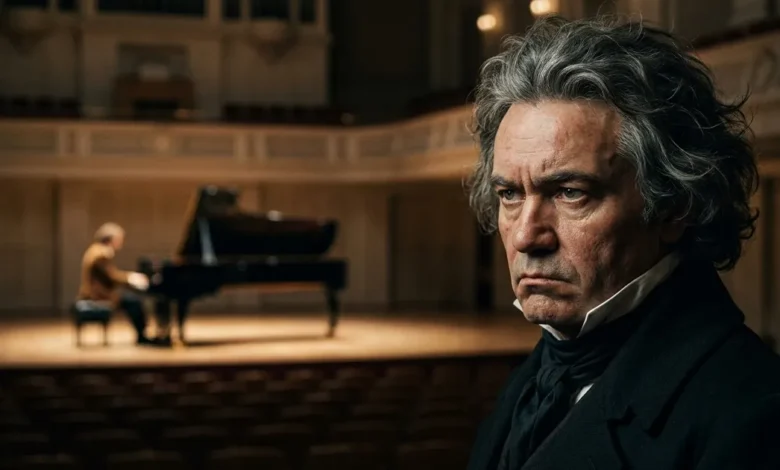
Ludwig van Beethoven completed his Piano Sonata No. 14 in C-sharp minor, marked Op. 27, No. 2, in 1801, a period of profound personal and professional transition for the composer. Published in 1802, the work was issued alongside its predecessor, Op. 27, No. 1, under the Italian subtitle per il Clavicembalo o Piano-forte… Sonata quasi una fantasia. This designation, "in the manner of a fantasy," signaled Beethoven’s deliberate departure from the rigid structural expectations of the traditional three-movement sonata. While the work is globally recognized today as the "Moonlight" Sonata, this evocative title was not of Beethoven’s making. It was coined in 1832, five years after the composer’s death, by the German poet and music critic Ludwig Rellstab. Rellstab famously compared the effect of the first movement to the sight of moonlight reflecting off the surface of Lake Lucerne, a Romantic image that cemented the work’s popularity but arguably obscured the darker, more turbulent emotions underpinning the composition.
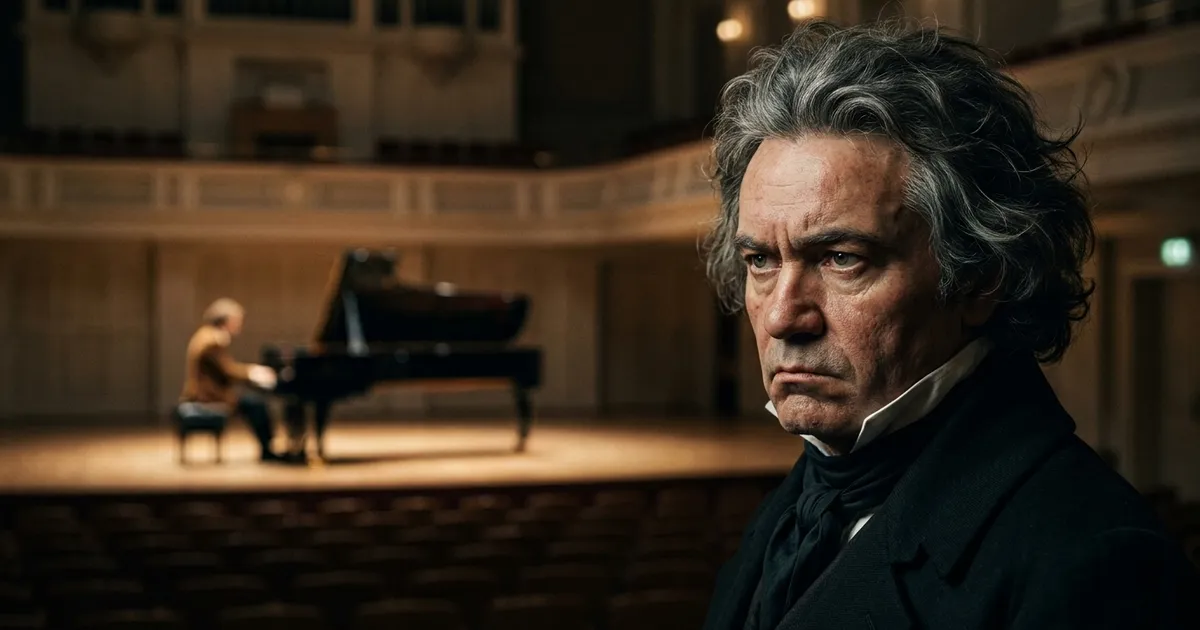
Historical Context and the 1801 Crisis
The composition of the Sonata No. 14 occurred during a pivotal year in Beethoven’s life. By 1801, the composer’s hearing loss had progressed to a point where he could no longer hide it from his close associates. In a letter to his friend Franz Wegeler dated June 29, 1801, Beethoven confessed, "For the last two years my hearing has become weaker and weaker… in the theater I have to lean very close to the orchestra to understand the performers." This encroaching deafness, which would lead to the famous "Heiligenstadt Testament" in 1802, arguably informed the somber, introspective nature of the C-sharp minor sonata.
Beethoven dedicated the work to the Countess Giulietta Guicciardi, a 16-year-old pupil with whom he was reportedly infatuated. Although the dedication suggests a romantic connection, historians note that the sonata may not have been intended for her originally; Beethoven often swapped dedications at the last minute for social or financial reasons. Nevertheless, the work’s emotional depth and technical innovation made it an instant success in Vienna, much to Beethoven’s eventual chagrin. He once remarked to his pupil Carl Czerny, "Everybody is always talking about the C-sharp minor Sonata! Surely I have written better things."
Structural Innovation and the Pedal Controversy
The Sonata No. 14 is structurally revolutionary because it shifts the musical and emotional weight from the beginning to the end. Traditional sonatas of the era usually opened with a fast, complex movement in sonata-allegro form. Beethoven inverted this, beginning with a slow, hypnotic Adagio sostenuto.
One of the most debated aspects of the work is Beethoven’s specific instruction at the beginning of the first movement: Si deve suonare tutto questo pezzo delicatissimamente e senza sordini ("This entire piece must be played with the greatest delicacy and without dampers"). On the pianos of 1801, which had a much shorter decay than modern instruments, holding the sustaining pedal down throughout the movement created a blurred, ethereal wash of sound. On a modern 9-foot concert grand, however, following this instruction literally can result in a dissonant "mush." This has forced every major pianist to find a compromise—using half-pedaling, frequent "clearing," or simply ignoring the instruction in favor of clarity.

The brief second movement, an Allegretto, serves as a transitional bridge. Franz Liszt famously described it as "a flower between two abysses." It provides a moment of D-flat major relief before the "abyss" of the third movement, the Presto agitato. This finale is a ferocious display of virtuosity and raw power, returning to the home key of C-sharp minor and utilizing sonata-allegro form to bring the work to a dramatic, stormy conclusion.
Critical Analysis of Landmark Recordings
Given its status as a cornerstone of the piano repertoire, the "Moonlight" Sonata has been recorded by nearly every major pianist in history. The following recordings represent the pinnacle of interpretative diversity, ranging from period-accurate performances to grand Romantic gestures.

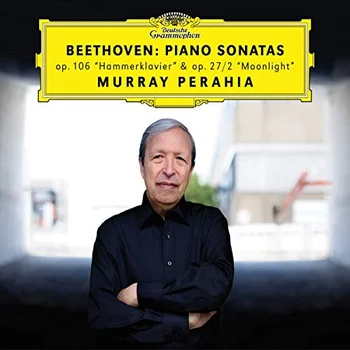
Murray Perahia (Sony Classical)
Murray Perahia’s 2017 recording is the result of years of scholarly research and his own editorial work on Beethoven’s scores. Perahia’s approach is characterized by a "middle-way" philosophy—he avoids the extremes of Romantic indulgence while maintaining a deeply singing tone. His first movement is notable for its steady pulse; he avoids the common trap of dragging the tempo into a funeral march. The finale is a model of finger clarity, where every rapid-fire arpeggio is articulated with crystalline precision. This recording is often cited by critics as the "reference" version for those seeking a balance between historical fidelity and modern tonal beauty.
Emil Gilels (Deutsche Grammophon)
The legendary Soviet pianist Emil Gilels provides a reading that is often described as "architectural." Recorded in the 1980s, his first movement is exceptionally quiet, almost static, creating a sense of timelessness. Gilels possessed a unique ability to produce a deep, "bronze" sonority even at low volumes. His finale is not merely fast; it is heavy with a sense of tragic inevitability. Where other pianists might sound frantic in the Presto agitato, Gilels remains firmly in control, making the drama feel grounded and monumental.
Arthur Rubinstein (RCA Red Seal)
Arthur Rubinstein’s 1962 recording captures the "Grand Style" of the mid-20th century. Having waited until his 70s to record the work, Rubinstein brings a sense of aristocratic ease to the music. He treats the opening movement with a noble simplicity, avoiding the sentimental "sighing" that characterized many earlier 20th-century accounts. His Allegretto is particularly praised for its dance-like charm, reminding the listener that this movement was intended as a light contrast to the surrounding gloom.
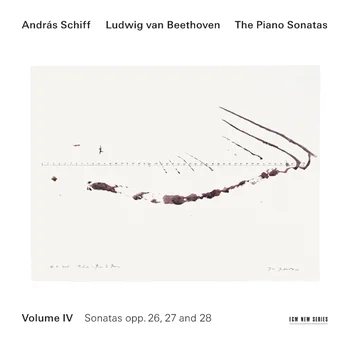
András Schiff (ECM New Series)
András Schiff’s live recording is perhaps the most controversial in recent decades. Schiff adheres strictly to the "two beats per bar" time signature (cut time) that Beethoven specified, resulting in a significantly faster first movement than the traditional "moonlight" interpretation. Furthermore, he attempts to replicate Beethoven’s senza sordini instruction by using the pedal to blur harmonies, creating a ghostly, dissonant atmosphere. While some critics find it jarring, others argue it is the most authentic representation of Beethoven’s radical intentions.

Maria João Pires (Deutsche Grammophon/Erato)
Maria João Pires offers a reading that emphasizes the "fantasy" aspect of the subtitle. Her 2001 recording is marked by a transparent, luminous touch. She treats the first movement not as a dark meditation but as a delicate, fluid dreamscape. Her interpretation is often lauded for its "honesty"—she avoids unnecessary artifice, letting the music’s natural lyricism speak for itself.
Paul Lewis (Harmonia Mundi)
A student of Alfred Brendel, Paul Lewis has emerged as one of the preeminent Beethoven interpreters of the 21st century. His recording is defined by its meticulous grading of dynamics. Lewis uses a wide range of colors to shape the sonata, making the transition from the hushed opening to the explosive finale feel like a single, unified psychological journey. His account is particularly favored for its high-fidelity sound quality, which captures the subtle nuances of his touch.

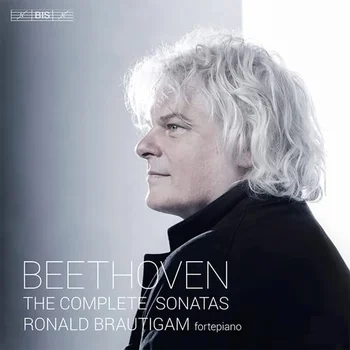
Ronald Brautigam (BIS Records)
For listeners interested in the sonata’s original soundscape, Ronald Brautigam’s recording on a fortepiano (a replica of an 1805 McNulty instrument) is essential. The lighter action and leather-covered hammers of the period instrument allow the bass notes to growl without overwhelming the treble. In the finale, the "clatter" of the fortepiano adds a percussive, visceral energy that a modern Steinway cannot replicate. Brautigam’s brisk tempos remind the listener that Beethoven’s music was once considered shocking and avant-garde.
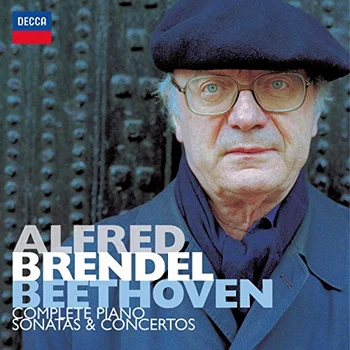
Alfred Brendel (Philips/Decca)
Alfred Brendel’s 1970s recording is often called "the thinking man’s Moonlight." Brendel is famous for his intellectual rigor, and here he focuses on the structural connections between the movements. He treats the opening movement with a certain detachment, focusing on the rhythmic pulse of the triplets rather than overt emotion. This creates a tension that is only released in the finale, which he plays with a sharp, rhythmic bite.
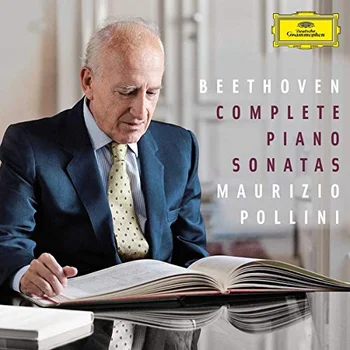
Maurizio Pollini (Deutsche Grammophon)
Maurizio Pollini’s 1991 recording is a masterclass in technical perfection. Pollini is known for his objective, almost clinical approach to the keyboard. In the first movement, he uses very little pedal, opting for a dry, clear sound that highlights the movement’s harmonic shifts. In the finale, his sheer velocity and accuracy are unparalleled, making the movement sound like a precursor to the modern age of mechanical precision.
Stephen Kovacevich (EMI/Warner Classics)
Stephen Kovacevich’s interpretation is defined by its extreme contrasts. His first movement is incredibly tender, bordering on the fragile, while his finale is arguably the most violent on record. Kovacevich is not afraid to produce a harsh sound when the music demands it, emphasizing the "agitato" marking of the third movement. It is a recording that captures the "Beethovenian" spirit of struggle and triumph.
Benno Moiseiwitsch (Historical – 1941)
As a "bonus" choice, the 1941 recording by Benno Moiseiwitsch offers a glimpse into a bygone era of piano playing. Moiseiwitsch was a master of rubato—the subtle bending of tempo for expressive effect. His interpretation is unabashedly Romantic, filled with poetic nuances and a singing "bel canto" melody line. While it may not satisfy modern scholarly standards, it remains one of the most beautiful and individualistic accounts ever captured on disc.
Broader Impact and Musical Legacy
The "Moonlight" Sonata’s influence extends far beyond the concert hall. Its first movement has become a cultural shorthand for melancholy and introspection, appearing in countless films, television shows, and even pop music arrangements. However, its true significance lies in how it redefined the piano sonata. By labeling it Quasi una fantasia, Beethoven gave subsequent generations of composers—including Schubert, Chopin, and Liszt—the permission to break traditional forms in favor of emotional narrative.
In the context of Beethoven’s own output, Sonata No. 14 stands as a bridge between the classical elegance of his early works and the heroic, expansive structures of his middle period. It remains a mandatory test for any pianist, requiring not just technical facility in the fingers, but a profound understanding of how to balance silence, sound, and the "soft, resonant halo" that Beethoven first envisioned in the quiet rooms of 1801 Vienna. Whether performed on a period fortepiano or a modern grand, the work continues to challenge performers to look past the "moonlight" nickname and confront the "storm" that lies within.