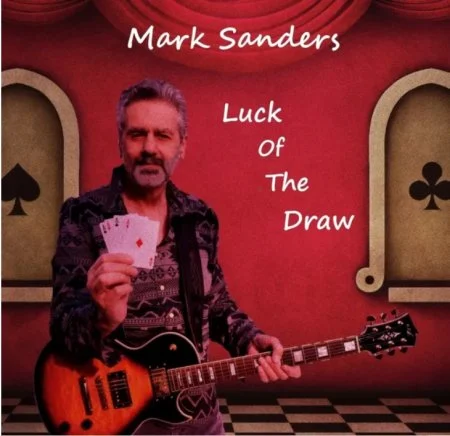
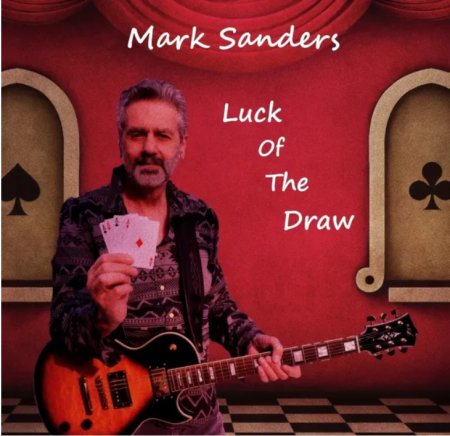
The contemporary American roots and blues landscape continues to be shaped by prolific independent artists who handle every facet of the creative process, from initial composition to final mastering. A notable addition to this body of work is the eighth studio release from veteran multi-instrumentalist and songwriter Mark Sanders, titled Luck of The Draw and distributed via Dream Time Records. Spanning eight tracks and a compact 33 minutes, the album encapsulates a lifetime of musical exploration across multiple genres, distilling those diverse experiences into a focused exploration of modern blues and soul.
Main Facts and Production Overview
Luck of The Draw arrives as a deeply personal project for Sanders, who assumes nearly all instrumental and production duties on the record. According to production credits, Sanders wrote every track on the album, engineered the mixing sessions, and performed the lead vocals, guitars, keyboards, and acoustic drums. This solitary approach highlights a distinct artistic vision, allowing the songwriter to maintain absolute control over the sonic texture and emotional pacing of the release.
Assisting Sanders in the studio are bassist Gus Belanger, whose steady low-end grooves anchor the rhythm section, and backing vocalist Suzanne Weiler, whose harmonies add depth and warmth to the arrangements. The album is currently available through Dream Time Records, continuing Sanders’ long-standing association with the independent label. As part of his broader distribution strategy, Sanders has made his complete catalog of previous releases available for free streaming on his official website, www.marksandersmusic.com, offering listeners a comprehensive window into his artistic evolution.
Chronology and Musical Background
Sanders’ path to Luck of The Draw is grounded in a decades-long career within the American independent music circuit. During his formative professional years, he traversed a wide spectrum of musical traditions, playing folk music with The Sunrisers, exploring deep soul rhythms with The 7th Court, and sharpening his blues sensibilities with The Shakers, among numerous other collaborative projects. These varied engagements exposed him to the structural intricacies of acoustic storytelling, the dynamic arrangements of rhythm and blues, and the improvisational freedom inherent in traditional blues.
Over time, Sanders synthesized these disparate influences, gradually narrowing his primary creative focus toward the intersection of blues and soul. This stylistic consolidation became increasingly apparent across his prior releases on Dream Time Records, culminating in the cohesive, streamlined approach heard on Luck of The Draw. Rather than relying on massive ensemble arrangements, Sanders opts for a minimalist aesthetic that places lyrical vulnerability and vocal delivery at the foreground of the listening experience.
Lyrical Themes and Narrative Structure
The thematic core of Luck of The Draw centers squarely on the complexities of romance, heartbreak, introspection, and the uncertainty of human relationships. Across its eight tracks, Sanders constructs a narrative arc that moves from hopeful connection to suspicion, separation, and eventual philosophical acceptance.
The album opens with a sense of urgent longing on tracks like Calling on the Hot Line, where Sanders portrays a protagonist seeking connection and reassurance through the phone lines, noting a reluctance to "shoot the breeze" in favor of more meaningful engagement. However, this initial hope quickly gives way to unease. On Can’t Help Thinking, the narrative darkens as a growing intuition suggests an impending separation. Sanders reflects on routine behaviors replacing genuine affection, pleading on Don’t Let It Slip Away for a return to shared dreams.
As the album progresses, the lyrics confront the harsh realities of mismatched aspirations and unforeseen truths. In the title track, Luck of The Draw, Sanders employs gambling metaphors to describe the unpredictable nature of romance, singing that one must "roll the dice" and "jump right in," even when outcomes remain uncertain. He contrasts the idealized illusions of modern life with reality, observing that people often live "like a Hollywood scene" where dreams obscure genuine connection.
This theme of revelation continues on The Truth Comes Out, where Sanders reflects on deception and the inevitability of hidden realities surfacing over time. The emotional weight intensifies in tracks like Over You, capturing the internal struggle of attempting to move past a profound attachment when memories linger persistently. The album concludes with I Had to Wonder, a contemplative track where Sanders looks back on a long, solitary road, acknowledging the lessons learned from a chapter of life that has now closed.
Supporting Data and Musical Analysis
Musically, Luck of The Draw presents a study in stylistic restraint. Sanders’ vocal delivery throughout the album is characterized by a smooth, unforced tone that conveys a sense of soothing comfort while simultaneously channeling underlying themes of melancholy and despair. His guitar work follows a similar path of understatement; rather than leaning into virtuosic, high-gain solos or flashy pyrotechnics, his guitar lines remain functional, melodic, and supportive of the overarching mood.
However, the album’s rhythmic foundation has drawn varied technical observations from critics and listeners alike. The drum patterns executed by Sanders on acoustic drums maintain a steady tempo throughout the 33-minute run time, yet the repetitious nature of the rhythmic delivery can occasionally overshadow the subtle nuances of the surrounding instrumentation. Despite this rhythmic uniformity, the record successfully functions as an ambient, reflective listen, well-suited for quiet background environments or focused personal engagement.
Broader Impact and Implications in the Blues-Soul Circuit
The release of Luck of The Draw underscores the viability of the independent artist model within the modern roots music ecosystem. By utilizing digital distribution platforms alongside direct-to-fan streaming initiatives on his website, Sanders bypasses traditional industry gatekeepers to maintain a direct relationship with his audience.
Furthermore, the album illustrates a broader trend among seasoned musicians who utilize their later career stages to refine their craft into its most essential elements. By stripping away extraneous production gloss and focusing on core songwriting, instrumentation, and personal storytelling, Sanders provides a case study in artistic self-sufficiency. As independent blues and soul artists increasingly adopt do-it-yourself production workflows, works like Luck of The Draw demonstrate both the creative freedom and the unique structural challenges inherent in a completely self-produced body of work.