Equally Stupid Redefines Contemporary Jazz Dynamics with the Release of Escape from The Unhappy Society

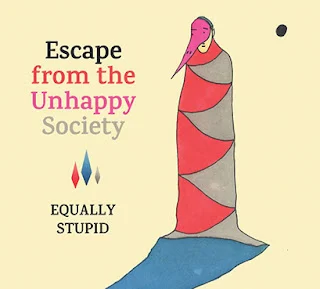
The multinational jazz trio Equally Stupid has returned to the forefront of the contemporary improvisational scene with their second full-length studio offering, Escape from The Unhappy Society. This release marks a significant evolutionary step for the ensemble, comprising Icelandic guitarist Sigurdur Rögnvaldsson, Finnish saxophonist Pauli Lyytinen, and Swiss drummer David Meier. Following the critical success of their 2014 debut, Exploding Head, the trio has moved beyond the brash, high-energy aggression of their early work to explore a more nuanced, melodic, and spacious sonic landscape. This shift in direction highlights the group’s maturation and their commitment to an organic, human-centric approach to jazz composition and performance that contrasts sharply with the increasingly polished and often sterile production standards of the modern industry.
The Evolution of a Multinational Power Trio
The genesis of Equally Stupid lies in the rich, collaborative environment of the European jazz circuit, where musicians from diverse cultural backgrounds frequently intersect to push the boundaries of the genre. The trio’s composition is inherently interdisciplinary, blending the distinct musical traditions of Finland, Iceland, and Switzerland. Sigurdur Rögnvaldsson brings a gritty, Icelandic sensibility to the guitar, often utilizing the baritone guitar to bridge the gap between melodic lead lines and rhythmic bass foundations. Pauli Lyytinen, a prominent figure in the Finnish jazz scene, contributes a versatile range of saxophone textures, frequently augmenting his natural tone with subtle electronic effects. David Meier, representing the precision and avant-garde spirit of Swiss percussion, provides the rhythmic glue that allows the group to oscillate between rigid structures and free-form improvisation.
The transition from Exploding Head to Escape from The Unhappy Society represents a three-year period of artistic refinement. While their debut was characterized by an "in-your-face" aesthetic—defined by high-velocity riffs and a certain punk-rock urgency—the new album demonstrates a willingness to embrace silence and lyricism. This evolution does not imply a loss of power; rather, the "muscularity" noted in their previous work has been channeled into more sophisticated arrangements. The interaction between the three musicians remains the core of their sound, but the dialogue has become more conversational and less confrontational.
Architectural Foundations: The Role of the Baritone Guitar
One of the most defining characteristics of Escape from The Unhappy Society is the prominent use of the baritone guitar by Sigurdur Rögnvaldsson. In a traditional jazz trio format, the absence of a double bass or electric bass guitar often leaves a vacuum in the lower frequencies. Rögnvaldsson fills this void with the baritone guitar, an instrument tuned lower than a standard guitar but higher than a bass. This choice provides the album with a dark, sonorous quality that anchors Lyytinen’s saxophone flights.
In tracks such as "Fools Paradise," the baritone guitar creates deep, resonant rhythms that provide a fertile ground for melodic exploration. The instrument’s unique timbre allows the group to maintain a "power trio" energy without the clutter of a four- or five-piece ensemble. This technical choice is central to the album’s "dirty rice and beans" aesthetic—a metaphor for music that is earthy, authentic, and unpretentious. By avoiding the clean, compressed tones common in mainstream jazz fusion, Rögnvaldsson ensures that the trio’s sound remains grounded in an organic reality.
Chronology and Development of the Recording
The timeline of Escape from The Unhappy Society reflects a deliberate and measured creative process. Following the release of Exploding Head in 2014, the trio spent several years touring extensively across Europe and Asia. These live performances were instrumental in honing the telepathic communication required for their improvisational style. The new material was developed on the road, allowing the compositions to breathe and evolve in response to live audiences before being captured in the studio.
The recording sessions for the new album sought to capture the "humanness" of the performance. Unlike many contemporary jazz recordings that rely heavily on overdubbing and digital correction, Escape from The Unhappy Society emphasizes the live interaction between the three players. The production, while polished, deliberately retains the textures and imperfections that define a live musical experience. This approach aligns with the band’s philosophy of rejecting the "sterile" nature of modern jazz CDs, opting instead for a sound that feels lived-in and visceral.
Detailed Track Analysis and Narrative Themes
The track listing of Escape from The Unhappy Society suggests a narrative arc that moves from societal critique to personal liberation. The opening track, "Politician’s Nightmare," sets a provocative tone, utilizing angular riffs and driving rhythms to evoke a sense of urgency and unrest. This is followed by "Birdlife," which offers a stark contrast through its use of space and more delicate, nature-inspired textures.
"Fools Paradise" serves as a centerpiece for the album’s melodic evolution. The track features lilting saxophone phrasing from Lyytinen, supported by Meier’s gentle, brushed percussion. Here, the group demonstrates their ability to create a sense of profound longing and lyricism without sacrificing their avant-garde edge. The use of "swells" and dynamic shifts creates a cinematic quality that was less prevalent in their earlier work.
In contrast, "Paranoia" revisits the high-energy interplay that first brought the band to prominence. The track is built around a "childlike chase" between the saxophone and guitar, with the two instruments weaving in and out of a central riff. This playful, almost mischievous approach is a hallmark of the Equally Stupid brand, proving that complex jazz can remain accessible and good-natured. The track eventually gives way to a lyrical solo before returning to its frantic, driving intro, showcasing the band’s ability to balance structure with spontaneity.
The title track, "Escape from the Unhappy Society," concludes the album by synthesizing these various elements. It serves as a manifesto for the group’s current state of mind—a rejection of the pressures and "unhappiness" of modern societal structures in favor of the freedom found in creative expression.
Implications for the Contemporary Jazz Landscape
The release of Escape from The Unhappy Society comes at a time when the European jazz scene is undergoing a period of significant diversification. As traditional centers like New York continue to influence the genre, European collectives are increasingly asserting their own cultural identities. Equally Stupid represents a "New European" sound—one that is not beholden to the Great American Songbook but is instead informed by a globalized array of influences, including rock, folk, and electronic music.
Industry analysts suggest that the "organic" production style favored by Equally Stupid is part of a broader trend among emerging artists who are pushing back against the over-production of the digital age. By prioritizing the "art of the music" over commercial polish, the trio appeals to a demographic of listeners who value authenticity and technical prowess in equal measure. This approach has implications for how jazz is marketed and consumed, suggesting a return to the values of the 1960s and 70s avant-garde, but updated with 21st-century sensibilities.
Official Personnel and Technical Credits
The cohesive sound of the album is a testament to the specific roles played by each member:
- Sigurdur Rögnvaldsson (Iceland): Baritone guitar. His contribution is characterized by dark textures and a rhythmic approach that bridges the gap between bass and melody.
- Pauli Lyytinen (Finland): Tenor, alto, and bass saxophones, plus effects. Lyytinen provides the melodic voice of the group, ranging from warm, round tones to biting, aggressive solos.
- David Meier (Switzerland): Drums. Meier’s work is noted for its muscularity and textural depth, moving seamlessly from delicate brushwork to driving, high-energy percussion.
The album features a total of nine tracks:
- Politician’s Nightmare
- Birdlife
- Legacy to the Children of the 21st Century
- Fool’s Paradise
- Cruising Back to Mother Earth
- The Garden of Edward James
- Paranoia
- Transpiration
- Escape from the Unhappy Society
Conclusion and Future Outlook
Equally Stupid’s Escape from The Unhappy Society is more than just a sophomore effort; it is a declaration of artistic independence. By choosing a "more measured and polished sound" that still retains its "dirty rice and beans" soul, the trio has successfully navigated the difficult transition from "young emerging artists" to established voices in the contemporary jazz world.
The album’s success lies in its ability to be "refreshingly good-natured" while dealing with complex musical and social themes. As the group continues to tour and promote this latest work, they remain a vital example of how multinational collaboration can lead to a unique and compelling artistic vision. For the listener, the album offers an alternative to the sterile mainstream, providing an organic, human experience that resonates long after the final note has faded. The trio’s trajectory suggests that they will continue to be a force for innovation in the European music scene, consistently challenging the boundaries of what a jazz trio can—and should—be.