Modern Jazz Perspectives: Skinny Hightower, The Tim Kliphuis Trio, and the Legacy of Cannonball Adderley

The landscape of modern jazz continues to oscillate between the forward-thinking innovation of multi-instrumentalists and the reverence for mid-century classics. This analysis explores three distinct pillars of the current musical climate: the high-production fusion of Skinny Hightower, the genre-bending technicality of the Tim Kliphuis Trio, and the archival reappraisal of the Cannonball Adderley and Bill Evans collaboration, Know What I Mean?
Skinny Hightower: A New Paradigm in Multi-Instrumentalism
Born Jason Carroll in Wichita, Kansas, Skinny Hightower has firmly established himself as a fixture in the smooth-jazz charts since his breakthrough in 2016. His latest release, Feels Like Destiny, represents a significant escalation in his artistic output. Hightower serves as the primary architect of this project, handling piano, organ, Rhodes, synthesizer, guitar, vibraphone, bass, and drums. The album, recorded at Truphonic in Charleston, South Carolina, features supplementary flute contributions from Charlotte Glasson and Althea Rene.
From a production standpoint, the record avoids the pitfalls of excessive technical display. Instead, Hightower balances complex arrangements with melodic accessibility. By synthesizing elements of jazz-funk, R&B, and hip-hop, he constructs a soundscape that pays homage to 1970s pioneers—specifically citing the influence of Tower of Power, Donny Hathaway, and Ronnie Foster. The track Ridin’ High, a reimagining of Stevie Wonder’s Higher Ground, serves as the centerpiece of this stylistic tribute.
Analysis of the album’s structure reveals a strategic division between high-tempo compositions—such as Devotion and Hypnotic—and more atmospheric, refined pieces like Velour and Deeper Than You Think. The absence of vocal tracks appears to be a deliberate creative choice, allowing the rhythmic interplay of the bass and drums to command the listener’s focus. The funk-driven Chain Reaction stands out as a technical highlight, showcasing a level of rhythmic precision that has become a hallmark of Hightower’s evolving portfolio.
The Tim Kliphuis Trio: Twenty Years of Rhapsody and Reinvention
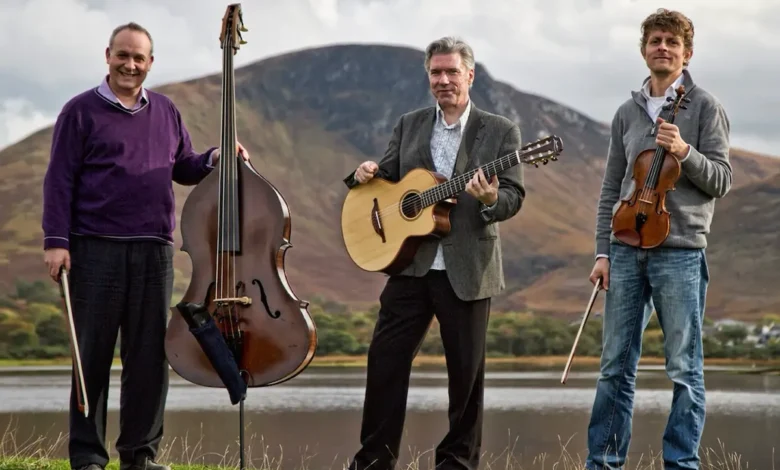
The Tim Kliphuis Trio, featuring Dutch violinist Tim Kliphuis, guitarist Nigel Clark, and bassist Roy Percy, represents two decades of consistent collaboration. Their latest project, Rhapsody In Blue, marks their fourth major release, serving as a reimagining of George Gershwin’s seminal works.
The trio’s approach to this material is characterized by a fluid transition between disparate musical traditions. The 17-minute title track seamlessly weaves together baroque structures, Spanish melodic sensibilities, and the improvisation-heavy spirit of gypsy jazz. Kliphuis, who utilizes a percussive, fingered violin technique, draws frequent stylistic comparisons to Stéphane Grappelli, particularly on ballad arrangements of The Man I Love and Someone To Watch Over Me.
The album’s tracklist, recorded between March and April 2026, also includes an ambitious fusion of Aaron Copland’s Hoedown and Fanfare For The Common Man. This pairing highlights the trio’s ability to synthesize "swamp" aesthetics with classical academic rigor. While critics have noted that the track Our Love Is Here To Stay feels somewhat disjointed in its placement within the broader sequence, the technical proficiency of the trio remains undisputed. The release solidifies the group’s status as a premier ensemble capable of bridging the gap between classical repertoire and the improvisational spontaneity of modern jazz.
Cannonball Adderley and Bill Evans: Reassessing a 1961 Milestone
The 1961 collaborative album Know What I Mean? remains a subject of intense interest for jazz historians and collectors. During this period, Julian "Cannonball" Adderley was at the height of his influence, following his work on Miles Davis’s landmark Kind Of Blue. Know What I Mean? offered a stylistic counterpoint to his more hard-swinging previous records, emphasizing the contrast between Adderley’s earthy, blues-inflected saxophone style and Bill Evans’s intellectual, delicate piano work.
The inclusion of the Modern Jazz Quartet’s rhythm section—bassist Percy Heath and drummer Connie Kay—provided a unique, understated foundation for the duo. The album features iconic interpretations of Waltz For Debby and the Clifford Jordan-penned melody Toy.
However, the recent reissue of this title by the Waxtime label has drawn scrutiny regarding the standards of archival preservation. While the package includes a rare outtake of Toy, the production quality has been flagged for noticeable background hiss and a lack of original documentation. For audiophiles and serious collectors, these technical deficiencies highlight the tension between the commercial demand for mid-century jazz reissues and the necessity of high-fidelity restoration. Despite these packaging issues, the musical content of the original 1961 sessions remains a fundamental study in the synergy between two of the most influential figures in the post-bop era.
Chronological Overview and Industry Context
The release schedules for these projects reflect the diverse nature of the contemporary jazz market. While Cannonball Adderley’s archival material looks back to the structural experiments of the early 1960s, the Tim Kliphuis Trio represents a mid-career peak of established ensemble play. Conversely, Skinny Hightower’s 2024–2025 project demonstrates the capabilities of the modern "studio-as-instrument" approach, where a single artist can curate a multi-genre experience from the ground up.
| Artist/Ensemble | Primary Focus | Recording Period | Label/Distributor |
|---|---|---|---|
| Skinny Hightower | Jazz Fusion/Funk | 2024–2025 | CastOver Records |
| Tim Kliphuis Trio | Gypsy Jazz/Classical | March–April 2026 | Lowland Records |
| Cannonball Adderley | Post-Bop/Modal | Jan–March 1961 | Waxtime (Reissue) |
Broader Implications for the Jazz Genre
The current state of the jazz industry suggests a bifurcation in how audiences consume content. There is a robust market for historical preservation, as evidenced by the consistent demand for Adderley’s early 60s output. However, the success of contemporary artists like Hightower underscores a growing appetite for hybrid forms that incorporate elements of R&B and hip-hop.
The Tim Kliphuis Trio occupies a middle ground, leveraging classical training and traditional instrumentation to appeal to listeners who appreciate technical dexterity. The professional consensus across these three disparate projects is that technical proficiency remains the prerequisite for success, whether it is being applied to the reconstruction of a 1920s Gershwin masterpiece or the synthesis of modern, electronic-adjacent jazz fusion.
As the industry moves into the latter half of the decade, the ability of labels to provide high-quality, curated reissues—avoiding the pitfalls seen in some budget-tier historical releases—will be critical. Simultaneously, the rise of multi-instrumentalists who exercise full creative control over their production environment suggests that the "solo auteur" model will continue to challenge traditional band-centric paradigms in the years to come.
The confluence of these three distinct artistic directions—the archival, the ensemble-based, and the self-produced—provides a comprehensive snapshot of the modern jazz experience. Each project, in its own way, contributes to a legacy that values both the preservation of established standards and the ongoing evolution of the genre’s sonic boundaries. Whether through the lens of history or the experimentalism of contemporary studio craft, the essence of the medium remains rooted in the improvisational spirit that has defined jazz since its inception.