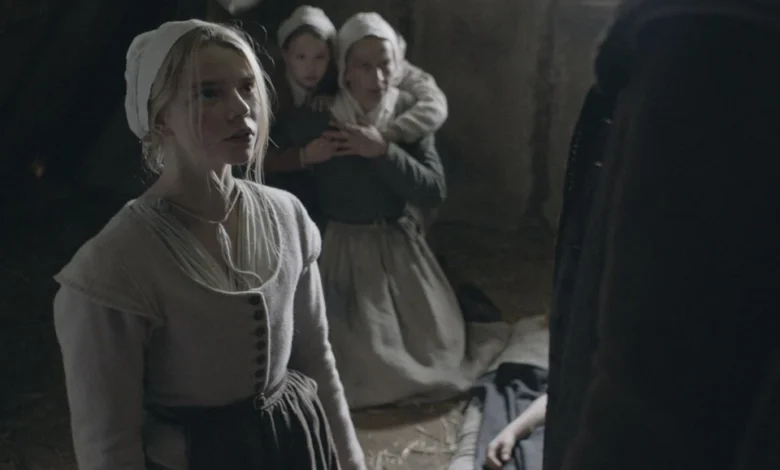
The Parliament of Catalonia has formally approved a resolution to posthumously pardon more than 700 individuals—predominantly women—who were prosecuted, tortured, and executed for the crime of witchcraft between the 15th and 18th centuries. This landmark decision, passed in late 2021 with an overwhelming majority of 114 votes in favor and 21 against, represents a significant effort by the Spanish autonomous community to confront a dark chapter of its judicial and social history. The measure not only clears the names of the deceased but also urges local municipalities to rename streets and public squares in honor of the victims, shifting the historical narrative from one of "criminality" to one of systemic persecution and gender-based violence.
The initiative follows similar movements across Europe, where historians and human rights advocates have increasingly characterized the witch hunts of the early modern period as a form of "femicide." Catalonian parliament member Jenn Díaz, a vocal supporter of the resolution, emphasized the continuity of gender-based prejudice in a statement to Vice News, noting that the same impulses that once fueled witch trials now manifest in modern rhetoric against feminist movements. "We are heiresses of the witches, the poisoners, and the healers," Díaz stated. "There is a direct connection between witch hunts and femicide. We want reparation and an understanding that the past is not as distant as we think."
Historical Context: Catalonia as a Pioneer of Persecution
While the Salem witch trials of 1692 in colonial Massachusetts remain the most famous instance of such hysteria in the English-speaking world, the phenomenon was far more extensive and enduring across continental Europe. Catalonia holds the grim distinction of being one of the first regions in Europe to carry out organized witch hunts. Historical records indicate that the first European law against witchcraft was enacted in the Catalonian town of Lleida in 1424.
The scale of the European "Great Witch Hunt" is staggering. Between 1580 and 1630, an estimated 50,000 people were sentenced to death for witchcraft across the continent. Approximately 80 percent of those executed were women. In Catalonia, the persecution was particularly concentrated in rural, mountainous areas where central authority was weak and local feudal lords held significant power over the peasantry.

The Role of the Secular Courts and the Inquisition
A common misconception regarding the witch trials in Spain is that they were primarily driven by the Spanish Inquisition. In reality, the Inquisition was often skeptical of accusations of witchcraft, frequently viewing such claims as the result of mental illness, herbal hallucinations, or simple superstition. When the Inquisition intervened, the accused were often acquitted or given lenient sentences due to a lack of empirical evidence.
However, in the secular and local courts of rural Catalonia, the situation was markedly different. Feudal lords and village councils often bypassed ecclesiastical oversight, enlisting the help of professional "witch hunters" to identify and prosecute suspects. In these local jurisdictions, a confession—often extracted through brutal torture—was considered sufficient proof of guilt. The legal standards were significantly lower than those of the central religious authorities, making the rural populations of Catalonia some of the most vulnerable in Europe to local outbursts of hysteria.
The victims were typically marginalized members of society: elderly widows, independent women without male "protection," or those who practiced traditional folk medicine and midwifery. These women often served as the community’s primary healers, yet their knowledge of herbs and medicine made them easy targets when misfortune struck.
The Scapegoating Mechanism: Natural Disasters and Social Strife
The peaks of witch-hunting activity in Catalonia often coincided with periods of intense social or environmental stress. When a village suffered from a failed harvest, a sudden outbreak of disease, a catastrophic flood, or the unexplained death of a child, the community sought a tangible cause for their suffering. In a pre-scientific era, "maleficium" (harmful magic) provided a convenient explanation.
The process of accusation usually began with local rumors that eventually coalesced into formal charges. Once a woman was branded a witch, she became a lightning rod for the community’s collective anxieties. The 2021 parliamentary resolution acknowledges that these women were not victims of "magic," but victims of a society that required scapegoats to navigate economic and environmental crises.

Methods of Execution and Judicial Economy
The methods of execution in Catalonia also reflected the secular nature of the trials. While the popular image of a witch trial involves burning at the stake—a method often favored by religious courts for "purifying" the soul—the secular courts of Catalonia frequently opted for hanging.
Historical research suggests that hanging was preferred primarily for economic reasons. Wood was a valuable resource, and the cost of the large quantities of firewood required for a public burning was often prohibitive for small village councils. Hanging was a cheaper, more efficient method of execution that achieved the same goal of permanent removal and public deterrent without straining the local budget. This utilitarian approach to execution highlights the cold, administrative nature of the persecution in the region.
A Chronology of Redress and International Precedents
Catalonia’s decision to pardon its "witches" is part of a broader European trend toward historical reconciliation. Several other nations and regions have taken steps to acknowledge the injustice of the early modern trials:
- 2008: Switzerland. The government of the canton of Glarus posthumously pardoned Anna Göldi, often described as the last person in Europe to be executed for witchcraft (in 1782). The Swiss parliament acknowledged that her trial was a "judicial murder."
- 2011: Norway. The Steilneset Memorial was opened in Vardø to commemorate the 91 victims of the 17th-century witch trials in the Finnmark region. The monument serves as a somber reminder of the dangers of intolerance.
- 2022: Scotland. Following years of campaigning by the "Witches of Scotland" group, the Scottish First Minister issued a formal apology to the estimated 4,000 people (mostly women) accused under the Witchcraft Act of 1563.
The Catalonian movement was heavily influenced by a campaign led by the local history magazine Sapiens, which launched the "No More Witches" manifesto. The campaign garnered support from over 100 historians and thousands of citizens, eventually leading to the parliamentary vote.
Implications for Modern Human Rights and Memory
The decision to pardon the victims of the witch trials is more than a symbolic gesture; it is a reflection of Spain’s ongoing engagement with "Historical Memory." Since the mid-2000s, Spain has undergone a profound national dialogue regarding the crimes of the Franco era and earlier periods of state-sanctioned violence. By including the witch trials in this dialogue, the Catalonian government is acknowledging that the roots of misogyny and institutional violence run deep into the region’s pre-modern history.

The resolution has prompted a re-evaluation of how history is taught in Catalonian schools. Educators are now encouraged to frame the trials not as folklore or "spooky" legends, but as a period of grave human rights abuses. The renaming of streets is also a practical step in changing the cultural landscape, replacing names of inquisitors or feudal lords with the names of the women who were silenced.
Analysis: The Enduring Legacy of the Witch Hunt
The 21 votes against the measure in the Catalonian Parliament primarily came from right-wing parties, who argued that the government should focus on contemporary issues rather than "re-litigating" events from 400 years ago. However, proponents of the pardon argue that the psychological and social structures that allowed for the witch hunts have not entirely disappeared.
The term "witch hunt" remains a potent metaphor in modern political discourse, though it is often co-opted by powerful figures claiming to be victims of unfair scrutiny. The Catalonian resolution seeks to reclaim the term for the truly marginalized. By documenting the names and stories of the 700 victims, historians are proving that these were not "witches" in the supernatural sense, but individuals who were punished for their independence, their poverty, or their non-conformity.
As Catalonia moves forward with the implementation of the resolution, the focus remains on education and visibility. The aim is to ensure that the names of the victims—women like Caterina Huguet, who was tortured and hanged in the 17th century—are remembered not for the "crimes" they supposedly committed, but for the injustice they endured. In doing so, the region hopes to foster a society that is more resilient against the modern equivalents of the ancient hysteria that once claimed so many lives.