Jeff Rupert and Richard Drexler Explore the Art of the Duet in New Collaborative Album Imagination

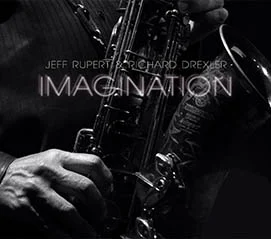
The landscape of contemporary jazz has been notably enriched by the release of Imagination, a collaborative studio effort featuring tenor saxophonist Jeff Rupert and pianist Richard Drexler. This project, which strips the traditional jazz ensemble down to its most fundamental conversational elements, showcases a sophisticated dialogue between two masters of their respective instruments. Recorded with a focus on clarity and spatial resonance, the album serves as a testament to the enduring power of the saxophone-piano duet, a format that demands absolute technical proficiency and an intuitive sense of timing.
The collaboration brings together two stalwarts of the Florida jazz scene who also maintain significant international profiles. Jeff Rupert, a Yamaha Performing Artist and the Director of Jazz Studies at the University of Central Florida (UCF), has long been recognized for a tone that bridges the gap between the robust swing of the hard-bop era and the lyrical fluidity of the "cool jazz" movement. Richard Drexler, a multi-instrumentalist known for his equally formidable skills on both piano and double bass, provides a harmonic foundation that is both supportive and provocatively inventive. Together, they navigate a repertoire that spans Great American Songbook standards, bossa nova classics, and original compositions.
The Artistic Vision Behind the Duet Format
The decision to record as a duo is a deliberate aesthetic choice that highlights the "nimbleness of sound" mentioned by observers of the session. In a quartet or quintet setting, the presence of drums and bass often dictates the rhythmic drive and harmonic boundaries. In the absence of a rhythm section, Rupert and Drexler are forced into a more intimate interaction where the "spaces along with the notes" become integral components of the music.
This transparency allows for a closer examination of Rupert’s phrasing. His approach on the tenor saxophone frequently recalls the aesthetic of Lester Young and Stan Getz—players known for their "hushed tones and rounded edges." This style prioritizes melody and breath control over aggressive technical displays, though the underlying complexity of the improvisations remains high. Drexler’s role is equally critical; his pianism involves a delicate balance of providing a steady pulse while simultaneously adorning simple melodies with "brilliantly gilded glissandi" and ebullient arpeggios.
Biographical Context: The Performers
To understand the depth of the performances on Imagination, one must look at the pedagogical and professional backgrounds of the artists. Jeff Rupert is not only a performer but a conductor, arranger, and the founder of Flying Horse Records. His tenure at UCF has seen the jazz program rise to national prominence, and his experience leading the Flying Horse Big Band has informed his ability to manage dynamics and structure within smaller groups. His discography includes collaborations with jazz legends such as Sam Rivers, Mel Tormé, and Benny Carter, providing him with a vast historical vocabulary to draw upon.
Richard Drexler’s career is marked by a similar versatility. Having performed with the likes of Woody Herman, Art Pepper, and the Jeff Berlin Trio, Drexler possesses a rare ability to adapt to various stylistic requirements. On Imagination, his ability to "switch roles as if by magic" with Rupert is a highlight of the recording. His impulse to treat the piano not just as a chordal instrument but as a melodic equal ensures that the album never feels like a soloist-plus-accompanist date, but rather a true partnership.
Chronology and Repertoire Analysis
The tracklist for Imagination represents a carefully curated journey through jazz history, beginning with "Without a Song" and concluding with the haunting "Soul Eyes." Each selection serves a specific purpose in demonstrating the duo’s range.
The Standards and Classics
The opening track, "Without a Song," establishes the rhythmic rapport between the two. The duo manages to maintain a sense of forward motion without the aid of a drummer, utilizing subtle accents and a shared internal metronome. This is followed by "I Can’t Help It," which allows Rupert to showcase his lyrical sensibilities.
A significant highlight of the album is the rendition of Claude Thornhill’s "Snowfall." In this track, the tempo is described as "flowing," with Rupert sending up "phrase after phrase of delicate notes." The choice of "Snowfall" is particularly apt for this duo, as the song’s inherent atmospheric quality suits the "silken" delivery that characterizes the entire project.
The inclusion of Dave Brubeck’s "Strange Meadowlark" further emphasizes the duo’s connection to the "Cool Jazz" tradition. Brubeck’s compositions often feature complex time signatures and classical influences, which Drexler navigates with a "harmonically pleasing presentation" that respects the original’s intent while allowing for modern improvisation.
International and Original Contributions
The album takes a turn toward the rhythmic traditions of Brazil with Tom Jobim’s "A Felicidade." Here, the "invisible passing of the torch" between the saxophone and piano is most evident. The duo captures the melancholic joy essential to bossa nova, with Rupert’s tenor providing a warm, vocal-like quality to the melody.
Perhaps the most intellectually stimulating track is Rupert’s original composition, "My Mistress’ Eyes." Based on a Shakespearean sonnet, the piece functions as a musical "sonnet" in its own right. It demonstrates Rupert’s skill as a composer who can translate literary structures into melodic forms. The interaction here is described as a "series of highlights," where the spotlight shifts seamlessly between the two performers.
The album closes with Mal Waldron’s "Soul Eyes," a ballad that has become a staple for tenor saxophonists since it was famously recorded by John Coltrane. Rupert and Drexler’s version avoids imitation, opting instead for a "pure subtlety" that emphasizes the song’s emotional core through "hushed tones" and careful use of silence.
Technical Production and Recording Quality
A defining feature of Imagination is its recording quality. Captured "live" in a studio setting, the album avoids the sterile perfection of heavily overdubbed modern productions. Instead, it captures the "vitality and brilliance" of the moment. The balance between the instruments is meticulously achieved, ensuring that neither the saxophone nor the piano overpowers the other. This technical balance is reflective of the mutual respect the artists have for one another’s "singular voices."
The use of space is a recurring theme in the analysis of this record. By allowing the notes to breathe, the recording captures the "breathless excitement" of a live performance. This transparency also highlights the "rhythmic attack" that both players utilize to keep the music engaging despite the lack of a traditional rhythm section.
Broader Impact and Implications for the Jazz Genre
The release of Imagination comes at a time when the jazz world is increasingly looking toward smaller, more intimate configurations. Economic and logistical shifts in the music industry have made duos and trios more common, but the artistic challenge of the duo remains formidable. Rupert and Drexler’s success with this format provides a blueprint for how to maintain listener engagement through melodic clarity and harmonic sophistication.
Furthermore, the album reinforces the importance of the "Florida sound" in the global jazz community. As educators and performers, Rupert and Drexler represent a lineage of jazz that values tradition, technical mastery, and the pedagogical transfer of knowledge. Their work on this album serves as a practical application of the theories taught in university jazz programs, demonstrating that "academic" jazz can be deeply soulful and accessible.
Conclusion
Imagination by Jeff Rupert and Richard Drexler is more than just a collection of songs; it is a "glorious musical exposition" that celebrates the history of jazz while pushing the boundaries of the duet format. Through a combination of "ingenious writing and inspired improvisation," the duo has created a work that is "easy on the ears" yet intellectually stimulating.
The album stands as a significant achievement for both artists, showcasing their ability to create a "full and wholesome interaction" with minimal resources. As the jazz world continues to evolve, recordings like Imagination remind audiences and critics alike that the core of the genre remains the "magical dialogue" between two musicians who are perfectly in sync. Whether through the "curved edges" of their playing or the "invisible passing of the torch" in their solos, Rupert and Drexler have produced a "one day classic" that is likely to be studied and enjoyed by jazz enthusiasts for years to come.