Bridging Continents and Genres: Belgian Saxophonist Nicolas Kummert and Guitarist Lionel Loueke Unite for the Acclaimed 2017 Album La Diversité

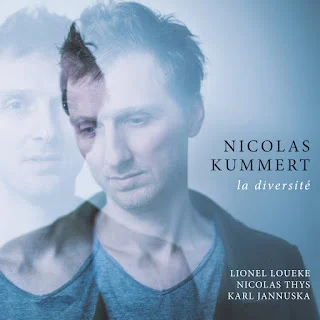
The contemporary jazz landscape is frequently defined by cross-cultural experimentation, yet few collaborations achieve the seamless synthesis found in the ongoing partnership between Belgian saxophonist Nicolas Kummert and acclaimed Beninese guitarist Lionel Loueke. With the release of his 2017 album, La Diversité, Kummert crystallized decades of global musical exploration into a cohesive, transcendent body of work. Released following a prolific period that included the albums Voices in 2014 and Flow in 2015, La Diversité represents a milestone not only in Kummert’s personal discography but also within the broader genre of modern international jazz. Supported by bassist Nicolas Thys and drummer Karl Jannuska, the quartet delivers an intricate, emotionally resonant sonic journey that honors West African rhythmic traditions while firmly rooting itself in the sophisticated vocabulary of contemporary European jazz.
A Lifelong Journey of Cross-Cultural Musical Immersion
The foundations of La Diversité were laid decades prior to its recording, rooted in Kummert’s formative teenage experiences. At the age of 17, the Belgian saxophonist embarked on a life-changing two-month journey to Senegal. During this extended stay, he immersed himself in local musical communities, collaborating directly with West African musicians. This early exposure to complex polyrhythms, call-and-response structures, and microtonal vocalizations fundamentally altered his musical perspective.
Rather than treating African music as an exotic ornament to be applied superficially to Western jazz, Kummert integrated its core philosophies into his artistic identity. Over subsequent years, his educational and exploratory path expanded across the African continent. He traveled extensively through Benin, Mali, Kenya, São Tomé and Príncipe, Morocco, and Tunisia. Each stop on this extensive itinerary enriched his harmonic understanding and rhythmic sensibility, allowing him to develop a fluid, vocalistic approach to the tenor saxophone. These accumulated experiences served as the underlying architecture for his compositional output, transforming his horn into a vehicle for cross-cultural dialogue.
The Genesis of a Creative Partnership with Lionel Loueke
A critical turning point in Kummert’s career occurred in 2008 during a recording session for renowned Beninese singer Patrick Ruffino. It was in this studio environment that Kummert crossed paths with Lionel Loueke, a guitarist whose unique technique—combining fretboard tapping, vocal chord accompaniment, and West African folkloric strumming—had already earned him international acclaim and collaborations with jazz legends like Herbie Hancock.
The initial encounter sparked an immediate musical and personal rapport. Over the ensuing years, mutual respect blossomed into a professional ambition. By 2015, as Kummert began conceptualizing the material that would become La Diversité, he extended an invitation to Loueke to join his newly formed ensemble. Loueke’s involvement was not merely that of a guest soloist; his distinct stylistic footprint became integral to the band’s identity, bridging the gap between Kummert’s melodic European sensibilities and the deep rhythmic traditions of West Africa.
Deconstructing La Diversité: Compositional Mastery and Instrumentation
The sonic architecture of La Diversité relies heavily on the interplay between Kummert’s winding, serpentine saxophone lines and Loueke’s nuanced guitar accompaniment. Music critics and industry analysts have frequently noted how Loueke’s subtle note choices elevate Kummert’s compositions, pushing the music toward a higher level of consciousness and emotional depth. However, Loueke’s contributions are by no means confined to minimalism.
On tracks such as "We’ll Be Alright," Loueke steps forward with a boisterous, high-energy elucidation that showcases his virtuosity and dynamic range. Conversely, the album demonstrates a remarkable breadth of mood and texture, offering an antipodean deliverance on pieces like "And What If We’re Not?" Here, Loueke transitions effortlessly between electric and acoustic guitars, demonstrating astonishing versatility. On "Le Vent Se Lève," he employs delicate, bell-like harmonics that evoke the gentle rustling of wind, while "Le Peuple De L’Arc-En-Ciel" highlights his dexterous finger-picking technique, drawing direct lines to the traditional folk music of Benin.
The stylistic centerpiece of the album’s intimate configurations is found on "Gnossienne A Deux," where Kummert and Loueke strip away the rhythm section to perform as a duo. This track lays bare the profound chemistry shared by the two artists, offering a masterclass in dynamic restraint, active listening, and spontaneous melodic invention.
Reinterpreting a Legend: The Tribute to Leonard Cohen
One of the most daring artistic choices on La Diversité is the inclusion of two distinct interpretations of Leonard Cohen’s timeless anthem, "Hallelujah," alongside an acoustic rendition titled "Hallelujah Again—In Memory of Leonard Cohen." In the hands of less experienced artists, revisiting a song as ubiquitous as "Hallelujah" often borders on redundancy. Yet, Kummert and his ensemble approach the composition with a reverence and delicacy that completely recontextualizes the melody.
Executed in two different formats—one by the full quartet and another as an intimate acoustic piece—the tracks serve as a poignant homage following Cohen’s passing. Rather than relying on familiar lyrical delivery, the group allows the emotional weight of the melody to be carried by Kummert’s expressive saxophone tone and Loueke’s warm harmonic bed. This respectful treatment transforms a pop-culture standard into a profound jazz lament, demonstrating the ensemble’s ability to communicate universal grief and solace through instrumental performance.
Rhythmic Diversity and Conceptual Framework
The thematic core of the album is encapsulated in its title, La Diversité (Diversity), and is brought to life through a diverse range of grooves, tempos, and emotional registers. From the infectious West African rhythmic feel of "Rainbow People" to the languorous, smoldering atmosphere of the title track, "Diversity Over Purity," the album consistently prioritizes engagement and innovation.
The full track listing of the release encompasses a wide narrative arc:
- Rainbow People
- Le Vent Se Lève
- Harmattan
- Lighthouse
- Hallelujah
- Gnossienne
- Gnossienne A Deux
- Liberté
- Le Peuple De L’Arc-En-Ciel
- La Terre Ne Ment Pas
- Diversity Over Purity
- We’ll Be Alright
- And What If We’re Not?
- Hallelujah Again – In Memory of Leonard Cohen
Behind this rich sonic tapestry is a rhythm section of exceptional caliber. The personnel features Nicolas Kummert on tenor saxophone, Lionel Loueke on guitars, Nicolas Thys on double bass, and Karl Jannuska on drums. Thys and Jannuska provide a flexible, responsive foundation that anchors the complex polyrhythms while leaving ample space for the frontline soloists to breathe and explore.
Industry Reception and Critical Analysis
Upon its release, La Diversité received widespread critical acclaim from international jazz publications and cultural critics alike. Reviewers highlighted the album’s refusal to pander to commercial trends, instead championing a sophisticated hybrid of European modal jazz and African folk traditions.
Musicologists examining the album have pointed out its significance within the broader discourse of global jazz. In an era where "world music" is sometimes treated as a monolithic genre, Kummert and Loueke’s collaboration exemplifies true transcultural dialogue. By building on years of authentic, boots-on-the-ground engagement with African cultures rather than engaging in cultural tourism, Kummert established a blueprint for respectful, deeply integrated artistic cooperation.
Furthermore, the addition of rhythm section veterans Nicolas Thys and Karl Jannuska ensures that the album maintains a high level of improvisational rigor. Industry insiders noted that the synergy between the four musicians created a live-in-studio energy that translates powerfully to the recorded medium, giving the album a timeless quality that resists easy categorization.
Broader Impact and Implications for the Future of Jazz
The release and subsequent reception of La Diversité carry broader implications for the trajectory of contemporary improvised music. As geographic boundaries become increasingly porous through digital connectivity, jazz musicians are presented with unprecedented opportunities to collaborate across international divides. However, Kummert’s work serves as a reminder that meaningful cross-cultural art requires patience, deep listening, and long-term personal commitment.
By translating his youthful experiences in Senegal, Benin, and beyond into mature compositional structures, Kummert demonstrated that jazz remains one of the most flexible and inclusive mediums for human expression. The success of La Diversité underscores a growing appetite among audiences for music that defies borders, resists homogenization, and embraces complexity.
As Nicolas Kummert continues to build upon a discography that bridges continents, La Diversité stands as a defining artistic statement—a testament to the power of musical curiosity, cross-cultural respect, and the unifying language of improvised sound.