Cologne Jazzweek and the Stadtgarten Anniversary: A Deep Dive Into Germany’s Vibrant Musical Heartland

While Berlin often dominates the international narrative regarding Germany’s cultural output, Cologne quietly maintains a claim to the title of the nation’s true jazz capital. This status is not merely a matter of historical sentiment but is rooted in a robust, multi-generational infrastructure that supports both the avant-garde and the traditional. The city’s unique position was recently underscored by the inaugural Cologne Jazzweek—a festival launched in August 2021—and the milestone 40th anniversary of the Stadtgarten, a venue that has served as the bedrock of the local scene since its founding in 1983.
A Legacy Defined: The Stadtgarten at 40
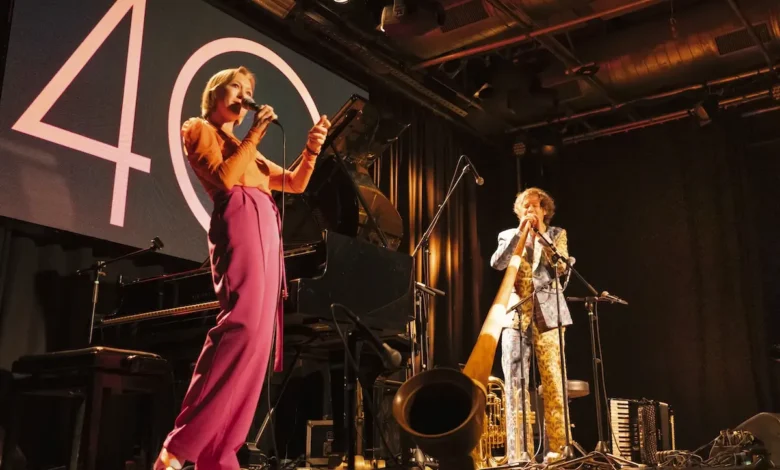
The Stadtgarten concert hall is far more than a performance space; it is a vital incubator for European jazz. Over four decades, it has evolved from a grassroots initiative into a state-subsidized cultural institution, hosting thousands of musicians and serving as a central hub for the German jazz community. Its anniversary, celebrated on September 4th, provided the symbolic prologue for the Cologne Jazzweek. The event featured a sprawling, multi-stage program that invited the public to engage with music in both formal concert halls and open-air settings, effectively bridging the gap between the institution and the city streets.
The decision to offer a full night of free, multi-venue programming served as a public statement regarding the accessibility of high-level jazz. By hosting approximately 20 distinct performances across the Stadtgarten complex, organizers reinforced the venue’s philosophy: that jazz is a communal, living art form rather than an academic pursuit reserved for the elite.
Chronology of a Musical Weekend
The festivities began on Friday, September 4th, under challenging meteorological conditions. Despite persistent rainfall, the turnout remained robust, highlighting the dedication of the Cologne audience. The program offered a study in contrasts, ranging from the ethereal, soundscape-heavy performances of Norwegian trumpeters Nils Petter Molvær and Arve Henriksen to the technical, chamber-focused trio work of saxophonist Niels Klein. Klein’s performance, featuring double bassist Robert Landfermann and drummer Jonas Burgwinkel, with harpist Kathrin Pechlof substituting for the traditional piano role, demonstrated the innovative spirit that defines the modern Cologne aesthetic.
By Saturday afternoon, the festival’s operational strategy shifted toward an urban exploration model. Matthias Schriefl and Johannes Bär transformed the concept of the “green walk” into a mobile performance. Utilizing alphorns—instruments rarely associated with urban jazz—the duo displayed a versatile mastery that included tuba, trumpet, and accordion. Their performance, which eventually migrated to a nearby park hill, was accompanied by the vocal improvisations of Tamara Lukasheva, turning a standard afternoon stroll into a site-specific musical experience.
Sunday, September 5th, shifted the focus toward the city’s architectural history. Beginning at the base of the Cologne Cathedral, the event juxtaposed the city’s Gothic grandeur with the realities of modern urban development. The morning saw a high-altitude performance by Schriefl and Bär from the cathedral towers, followed by a procession along the Rhine. The evening brought the festival to the Loft, a venue defined by its physical intimacy and acoustic precision. There, the pairing of Evan Parker and Peter Evans provided a masterclass in extended technique. Parker, a pioneer of circular breathing, and Evans, a virtuoso of tonal manipulation, created a performance so intense that a temporary medical emergency occurred in the audience—a testament to the visceral impact of their soundscapes.
Data and Infrastructure: The Backbone of the Scene
The resilience of the Cologne jazz scene is supported by significant institutional backing. The Stadtgarten receives consistent funding from the City of Cologne, recognizing it as a pillar of the local economy and tourism. However, the venue faces physical limitations. Built in the early 1980s, the structure requires extensive modernization to meet 21st-century safety and acoustic standards.
Official reports from the Stadtgarten administration confirm that a major renovation project is slated for 2028. This upcoming timeline is a point of concern for local historians and musicians alike, who draw inevitable comparisons to the 632-year construction timeline of the Cologne Cathedral. While the Stadtgarten renovation is expected to be completed within a few years, the symbolic weight of the venue’s survival in the face of urban change remains a central theme for the city’s cultural planners.
Artistic Analysis: The Evolution of Chamber Jazz
One of the most notable trends observed during the festival was the move toward "pure" chamber jazz. In performances at the Neu St Alban church, artists like Damian Dalla Torre and the trio of Kathrin Pechlof, Christian Weidner, and Robert Landfermann explored the intersection of architecture and sound. By stripping away amplification and focusing on the acoustic properties of the venue, these musicians transformed the concert experience into something akin to a secular sermon.
This trend toward minimalist, highly atmospheric music suggests a shift in how audiences consume jazz. Rather than focusing solely on virtuosic soloing, the contemporary Cologne scene is increasingly interested in "sound-as-space." The use of electronics, avian field recordings, and the integration of the church’s natural reverb demonstrate a sophisticated approach to performance art that transcends traditional genre boundaries.
Broader Implications for the European Jazz Circuit
The success of Cologne Jazzweek, despite its infancy, signals a shift in the European festival landscape. Many established festivals are currently grappling with issues of sustainability and audience aging. Cologne’s model—integrating a major festival into an existing, year-round venue ecosystem—appears to be a viable solution for maintaining long-term engagement.
Industry analysts note that by focusing on local talent alongside international headliners, Cologne Jazzweek manages to avoid the "touring circuit" trap, where festivals become identical iterations of one another. Instead, the festival acts as an extension of the city’s internal jazz culture. The inclusion of artists like Peter Bernstein, who brought a more traditional, swing-inflected quartet to the stage, provided a necessary anchor to the genre’s roots, ensuring that the festival’s avant-garde leanings did not alienate the broader jazz audience.
The Road Ahead: 2028 and Beyond
As the city looks toward the 2028 renovation of the Stadtgarten, the focus will remain on balancing heritage with necessity. The venue’s role as a meeting place—a physical space for musicians, audience members, and promoters to interact—remains its most valuable asset. The "Jaki" room, a smaller, intimate performance space within the Stadtgarten complex, continues to be the primary site for this exchange. The closing night’s performance by Roger Kintopf, Sun-Mi Hong, and Emmanuel Michael served as a perfect microcosm of this dynamic: informal, intense, and deeply collaborative.
Ultimately, the Cologne Jazzweek is not merely a week of concerts; it is a reflection of a city that has made a conscious decision to value its musical heritage. While other cities may boast larger populations or more commercialized music scenes, Cologne’s commitment to its homegrown talent and its iconic venues suggests that its influence on the European jazz scene will only grow. As the festival enters its next few years of development, it is poised to become one of the most important cultural fixtures in Germany, provided it can successfully navigate the logistical challenges of its own physical expansion.
The legacy of the last 40 years at the Stadtgarten has proven that jazz, when nurtured with patience and institutional support, can become the heartbeat of an entire city. For the organizers, the goal moving forward is clear: to ensure that the foundation laid in 1983 remains firm enough to support the innovations of the next generation of jazz musicians.