Jazz Perspectives and Industry Evolutions in the Late 1970s: A Comprehensive Review of Artistic Trajectories and Concert Experiences

The landscape of jazz and its peripheral genres underwent significant structural and creative shifts during the late 1970s, a period marked by the increasing intersection of cinematic composition, the maturation of fusion ensembles, and the transition of legendary figures into new creative chapters. From the scoring suites of Lalo Schifrin to the rigorous performances of Weather Report, the industry reflected a tension between traditional jazz values and the evolving requirements of modern performance, technology, and commercial viability.
Lalo Schifrin: The Cinematic Architect and the Jazz Tradition
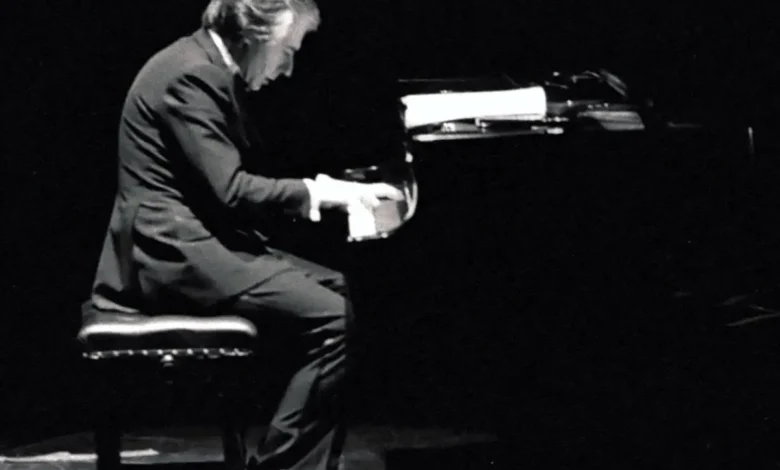
Lalo Schifrin, long recognized for his prowess as a composer for film and television—most notably for Mission: Impossible and Starsky and Hutch—recently visited London following the completion of his score for Voyage of the Damned. Despite his global success in the visual arts, Schifrin maintains a steadfast commitment to his roots as a jazz pianist.
Schifrin’s approach to film scoring is predicated on a doctrine of restraint. He posits that music in cinema must serve as an atmospheric extension of the narrative rather than an independent focal point. Citing Duke Ellington’s score for Anatomy of a Murder as the gold standard for this balance, Schifrin argues that effective soundtracks are those that avoid distracting the viewer from the action.
His forward-thinking approach extends to the potential integration of free jazz within film. Schifrin suggests that avant-garde practitioners and filmmakers should engage in a reciprocal creative arrangement, a concept that mirrors the aborted collaboration between director Conrad Rooks and Ornette Coleman. While Rooks ultimately excluded Coleman’s Chappaqua Suite from his 1966 film Chappaqua, citing the music’s overwhelming presence as a potential detractor from the visual narrative, Schifrin remains convinced that the synergy between experimental soundscapes and avant-garde visuals is a frontier yet to be fully realized. Looking ahead, Schifrin is currently coordinating a collaborative album with Dizzy Gillespie, with plans to integrate contemporary recording techniques and vocal textures into the trumpeter’s established sound.
Weather Report and the Fusion Era
The concert experience in the late 1970s saw a rise in the technical complexity of jazz-fusion, most notably demonstrated by the ensemble Weather Report. Drawing comparisons to the rhythmic dynamism of early big band leaders like Fletcher Henderson and Chick Webb, Weather Report has established a reputation for live performances that exceed the limitations of their studio recordings.
At a recent Hammersmith performance, the band’s current lineup—featuring Joe Zawinul and Wayne Shorter—showcased a sophisticated integration of acoustic and electronic instrumentation. Shorter’s return to the soprano saxophone offered a nostalgic yet invigorated link to his formative work with Miles Davis, while Zawinul’s utilization of the synthesizer provided a modern textural layer to the group’s sound. The inclusion of bassist Jaco Pastorius, noted for his innovative harmonic approach, signaled a transition toward a more virtuosic era of fusion. However, the performance also highlighted the challenges of balancing large-scale productions; the five-hour concert duration and the logistical hurdles regarding venue management raised concerns about the sustainability of the modern rock-jazz touring model.
The Changing Guard: Dizzy Gillespie’s Renaissance
Dizzy Gillespie, a foundational figure in the development of bebop, continues to exhibit a notable creative resurgence. His recent residency at Ronnie Scott’s in London featured a quartet that successfully blended traditional improvisation with contemporary rhythm section support. Gillespie’s current repertoire, which includes his tribute to Dr. Martin Luther King Jr., suggests a move toward more deliberate, narrative-driven performances. By eschewing the frantic double-time tempos of his youth in favor of a more measured delivery, Gillespie has demonstrated a mastery of the "slows," proving that his technical capability is matched by an evolving emotional maturity.
The Legacy of Stanley Dance
The retirement of critic and historian Stanley Dance marks the end of an era for Jazz Journal. Dance, who famously codified the term "mainstream" to describe the continuity of the jazz tradition, served as a polarizing yet essential voice in the discourse of the music. His career, spanning from his first column in 1948, was defined by a rigorous adherence to the established canon of Ellington, Basie, and Hines.
Dance’s impact was not merely in his advocacy for traditionalism, but in his persistent questioning of the industry’s trajectory. He frequently challenged the audience demographics of the avant-garde movement, questioning why certain black artists struggled for reach while others flourished, and remained a staunch critic of pretentiousness in experimental music. His departure leaves a void in the critical landscape, prompting a re-evaluation of how jazz criticism will handle the transition from the mid-century foundations to the contemporary, often fragmented, scene.
Innovation and Institutional Support: The Coventry Jazz Society
Regional efforts to sustain the jazz tradition remain robust, as evidenced by the Coventry Jazz Society. Supported by the West Midlands Arts, the society has successfully curated a monthly modern session that features high-caliber performers such as Kenny Wheeler, Barbara Thompson, and Bob Downes. This model of community-supported, localized performance serves as a vital counterbalance to the massive, sometimes impersonal, arena-touring culture that has come to dominate the industry. By providing a consistent platform for established and emerging modernists, these local societies ensure that the pedagogical and artistic heritage of jazz remains accessible to local audiences outside of major metropolitan hubs.
Annette Peacock and the Future of Keyboard Innovation
The contemporary scene is also bolstered by individual innovators like Annette Peacock, who has spent the last decade refining the intersection of vocal and electronic music. Beginning her experiments with the synthesizer as a vocal treatment in 1968, Peacock has bridged the gap between avant-garde jazz and pop, having composed for artists as diverse as David Bowie and Al Kooper. Her extensive discography and history as a sideman with figures like Albert Ayler and Paul Bley position her as a pivotal figure in the cross-pollination of genres. As she establishes a presence in the British music scene, her upcoming recitals represent a significant shift toward the prioritization of electronic-vocal synthesis in live performance.
Analysis of Current Industry Trends
The state of the industry as of the late 1970s reflects a three-fold trend:
- Technological Integration: The increasing use of synthesizers and studio-treated instruments is fundamentally altering the expectations for both studio recordings and live performance.
- Economic Logistical Constraints: The rise of multi-act, long-form concerts has led to logistical friction, with audiences frequently subjected to poor venue management and excessive downtime between sets.
- Genre Fluidity: The boundaries between jazz, rock, and avant-garde are becoming increasingly porous. While this has allowed for creative experimentation, it has also sparked debate regarding the dilution of jazz as a distinct art form.
As veteran performers like Gillespie and composers like Schifrin continue to influence the next generation, the industry remains in a state of flux. The challenge for the coming decade will be maintaining the integrity of the jazz tradition while embracing the technical and creative possibilities presented by a modern, globalized musical landscape. Whether through the archival preservation championed by critics like Stanley Dance or the avant-garde experiments of artists like Annette Peacock, the music continues to serve as a mirror to the rapidly changing cultural environment.