The Global Evolution of Jazz Language Through the Lens of Modern Digital Performance Platforms

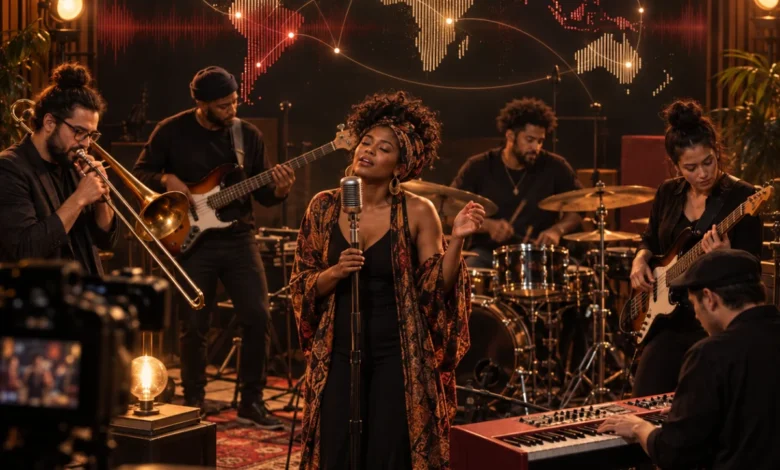
The modern jazz landscape is no longer confined to the traditional boundaries of smoky clubs or genre-specific record stores. Instead, the language of jazz—characterized by fluid rhythm, complex harmonic structures, and spontaneous improvisation—is currently migrating across global platforms, finding a second home in high-visibility digital performance spaces. From the minimalist, high-stakes aesthetic of the COLORS studio to the intimate, conversational setup of NPR’s Tiny Desk and the live-session rigor of KEXP’s Seattle studio, the way audiences discover and consume music is undergoing a fundamental transformation.
This shift is underscored by a series of performances uploaded during the second week of September 2026. These videos demonstrate that viewers are increasingly drawn to "performance-as-discovery," where the camera captures the mechanics of music-making—the subtle breath before a horn entrance, the intricate interplay of a rhythm section, and the non-verbal communication between ensemble members.
The Rise of the Digital Bandstand
At the center of this movement is the emergence of the "filmed session" as the primary vehicle for musical discovery. Unlike traditional music videos, which often rely on high-concept editing and narrative storytelling, these sessions prioritize raw, real-time documentation. This transparency allows casual viewers to engage with the technical nuances of the craft, effectively bridging the gap between passive listening and active appreciation.
Tori Kelly’s appearance on NPR’s Tiny Desk, which premiered on September 10, 2026, serves as a primary case study for this phenomenon. Accumulating over 520,000 views within its first 24 hours, the performance demonstrated how a pop-adjacent artist could utilize the format to re-contextualize her work through a jazz lens. Rather than presenting a pared-down promotional acoustic set, Kelly integrated an all-woman ensemble featuring guitarist Jordan Waters, bassist Kyla Wright, keyboardist Lynette Williams, and drummer Taylor Gordon (The Pocket Queen). By treating the desk as a legitimate bandstand, the group showcased the improvisational capabilities of contemporary R&B, specifically during their rendition of Stevie Wonder’s "Don’t You Worry ‘Bout a Thing." The session highlighted the essential tenets of jazz: ensemble balance, tone control, and the ability to restructure familiar compositions in real-time.
Global Rhythms and Cross-Genre Synthesis
While North American pop-R&B remains a dominant force in digital metrics, global acts are increasingly leveraging these platforms to expose traditional forms to international audiences. The South Korean ensemble Leenalchi provides a compelling example of this cultural exchange. Their KEXP performance, which debuted on September 4, garnered nearly 150,000 views within its first week.
Leenalchi’s music is rooted in pansori, a centuries-old Korean narrative singing tradition. However, their arrangement—utilizing two bassists and a drummer in the absence of traditional chordal instruments—creates a soundscape that sits comfortably within the global jazz-funk spectrum. The performance of tracks like "Tiger Is Coming" illustrates how rhythmic legibility and a compelling visual presentation can bypass traditional genre barriers. By placing these traditional narratives within a modern, bass-heavy context, the group has successfully introduced regional identity to a global digital audience, proving that the "jazz language" is as much about the elasticity of the rhythm section as it is about specific musical scales or chord progressions.
The Sustained Impact of Digital Engagement
A critical metric for measuring the success of these performances is not merely the initial spike in views, but the sustainability of audience engagement over time. Mac Ayres’ Tiny Desk session is a prime example of a breakout performance. After an initial surge on September 4, the video experienced a 157% increase in views by September 11, moving from approximately 223,000 to over 575,000. This sustained growth suggests that the video has moved beyond Ayres’ core fan base and into the "discovery" phase, where organic recommendations and repeat viewings become the primary drivers of traffic.
This trend toward longevity is echoed by emerging artists who operate in more specialized or intimate settings. Iam6teen, performing at the August House in Johannesburg, achieved an 8.1% like-to-view ratio—the highest among the observed datasets for that week. This level of engagement suggests that niche, authentic performances are highly valued by digital communities, who are often looking to "discover" talent before it reaches mainstream saturation.
Technical Restraint as a Competitive Advantage
While high-energy, multi-member ensembles dominate the view counts, there remains a significant audience for minimalist, atmospheric performances. Kalia Vandever’s KEXP session, which focuses on the trombone, utilizes silence and ambient decay to command attention. By rejecting the expectation for continuous, high-octane display, Vandever aligns her work with ambient composition. Her ability to treat space as a "lead instrument" demonstrates that audiences are increasingly willing to engage with complex, meditative music when it is presented with visual clarity and intentionality.
Similarly, the collaboration between Jakob Bro, Larry Grenadier, Jorge Rossy, and Charles Lloyd on the track "Osaka" signals the enduring relevance of "temperature-controlled" jazz. Despite lower view counts compared to mainstream pop performances, the video serves as a successful early-stage promotional tool for an upcoming album, Bjerge, Strand. The performance, which relies on the deep, unspoken rapport between veteran musicians, reinforces the idea that the "camera as a bandstand" format is as effective for contemplative improvisation as it is for high-energy funk.
Spontaneity and the Role of the Viral Moment
Not all significant musical moments in the current ecosystem are the result of curated studio sessions. The impromptu appearance of Stevie Wonder at the DC JazzFest on September 5, where he joined the Trinidadian soca group Kes, illustrates the power of spontaneous performance in the digital age.
The footage, captured by audience members, lacked the high-production value of a Tiny Desk or KEXP session, yet it resonated deeply with viewers. By bridging the gap between American soul, Caribbean soca, and a traditional jazz festival setting, the event captured a level of authenticity that cannot be manufactured in a studio. This moment served a dual purpose: it functioned as a joyful document of cross-genre cooperation and acted as an effective, if unintentional, lead-up to the announcement of Wonder’s 50th-anniversary tour for Songs in the Key of Life.
The Future of Jazz in the Digital Sphere
The data from the second week of September 2026 suggests that the definition of jazz is becoming increasingly porous. It is no longer defined by a specific set of instruments or a rigid historical canon, but rather by the way musicians interact, manage time, and prioritize spontaneous arrangement.
The rise of platforms such as NPR, KEXP, and COLORS—alongside independent spaces like August House—has fundamentally shifted the gatekeeping of music. These platforms have effectively democratized the "jazz experience," allowing viewers to witness the decision-making process of musicians from Johannesburg to Seoul. As these videos continue to circulate, they are not only providing a showcase for individual artists but are also teaching a new generation of listeners how to value the process of creation.
The implications for the industry are profound. As the traditional record store model fades, the "live session" has emerged as the definitive medium for verifying an artist’s legitimacy. Whether through the athletic vocalism of a pop-star bandstand or the quiet, resonant decay of a solo trombone, the most effective music videos of the current era are those that make the act of listening and performing visible. In this new ecosystem, jazz is not a genre of the past, but a flexible, living language that is currently being rewritten in real-time, one room at a time. As of September 11, 2026, the metrics confirm that audiences are not just watching these videos; they are engaging with the technical, rhythmic, and improvisational choices that make modern music a vibrant, interconnected global conversation.