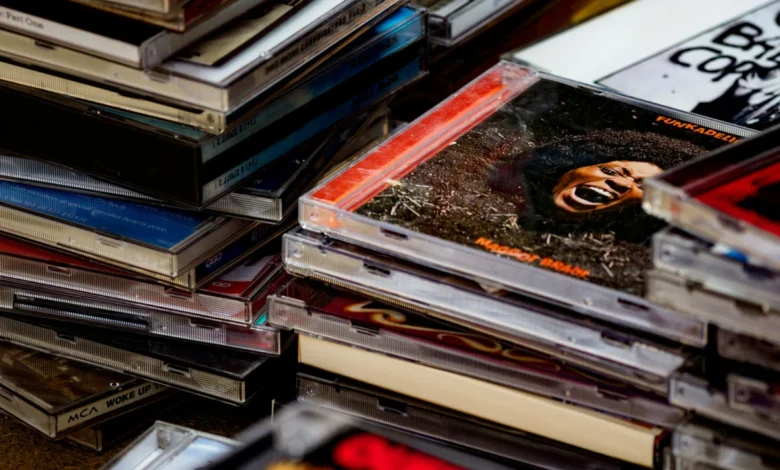
This significant uptick in compact disc sales serves as a focal point in the Recording Industry Association of America’s (RIAA) 2026 Mid-Year Recorded Music Revenue Report, which highlights a complex, multi-layered landscape for the US music industry. While digital streaming remains the primary engine of industry growth, the resurgence of physical media—led by a surprising rebound in CD demand and the continued dominance of vinyl—suggests that consumer habits are shifting toward tangible ownership in an increasingly digitized world.
A Snapshot of the Physical Media Renaissance
The RIAA report confirms that total revenues from physical music formats, including CDs, vinyl records, and cassette tapes, climbed by 25.9 percent to reach approximately 731.5 million dollars in the first six months of 2026. This figure represents a robust recovery for a segment that many industry analysts had previously written off as a niche interest.
The CD, once the primary vessel for recorded music in the late 1990s and early 2000s, has witnessed a remarkable 58.6 percent revenue surge. Reaching 171 million dollars in the first half of the year, this growth indicates that the format is finding a new lease on life. Industry observers attribute this partly to a collector’s market and a generational push toward "physicality," where listeners seek to own their music library independent of fluctuating subscription licensing agreements.
Vinyl continues to reign supreme as the titan of physical formats. Generating 544 million dollars—a 17.7 percent increase over the previous year—the vinyl resurgence shows no signs of plateauing. The format has successfully transitioned from an audiophile hobbyist market to a mainstream consumer product, supported by the widespread availability of turntables in big-box retailers and the emergence of limited-edition pressings that incentivize impulse purchases.
The Broader Financial Landscape: Streaming and Downloads
While physical media has enjoyed a banner half-year, it exists within a larger, streaming-dominated ecosystem. Total US recorded music revenues rose by 6.9 percent to hit approximately 6 billion dollars during the first half of 2026. Of this total, streaming services contributed 4.3 billion dollars.
Within the streaming sector, paid subscriptions remain the cornerstone of the industry’s financial health, accounting for 3.4 billion dollars of the total revenue. This indicates that despite the resurgence of physical formats, the average American consumer still prefers the convenience and vast library access offered by platforms like Spotify, Apple Music, and Amazon Music.
In contrast, the decline of digital downloads continues to accelerate. Revenues from single and album downloads fell by 12.7 percent, reinforcing the obsolescence of the pay-per-track model in favor of the access-based subscription model. This downward trajectory for digital downloads has been a consistent trend for nearly a decade, as consumers trade the burden of file management for the ease of cloud-based streaming.
Chronology of the Physical Format Rebound
The current state of the music market is the culmination of a decade-long transformation. To understand the significance of the 2026 figures, one must look back at the industry’s recent history:
- 2015–2018: The "Streaming Transition" period. Industry revenues hit a nadir as physical sales plummeted and streaming infrastructure was still being built.
- 2019–2021: The "Vinyl Recovery" phase. Vinyl began its consistent climb, eventually outpacing CDs in revenue for the first time in over three decades.
- 2022–2024: Market stabilization. As inflation and subscription fatigue began to influence consumer behavior, some listeners started diversifying their music consumption habits.
- 2025–2026: The "Hybrid Consumption" era. Consumers began blending high-fidelity streaming with physical collections, leading to the unexpected 58.6 percent growth in CD sales observed in the first half of 2026.
Economic and Cultural Implications
The growth of physical media in 2026 is not merely a statistical anomaly; it carries profound implications for artists, record labels, and retailers. For independent artists, the higher margins associated with physical sales—compared to the fractional-cent payouts of streaming platforms—make the sale of CDs and vinyl a critical revenue stream for touring and production costs.
From a retail perspective, the uptick in physical sales has forced a re-evaluation of shelf space. Major retailers, which had previously purged their music sections, are now reallocating floor space to accommodate vinyl displays and, increasingly, CD inventories. This physical presence creates a "discovery" opportunity that digital algorithms often fail to replicate, as shoppers encounter new releases while browsing in-store.
However, industry experts caution against interpreting these numbers as a full-scale return to the CD era. The revenue is still a fraction of what the industry generated during the peak of the CD era in the late 1990s. Instead, the current market is characterized by fragmentation. Consumers are more likely to be "hybrid listeners," paying for a streaming subscription for daily convenience while purchasing physical media as a way to support artists and own a piece of cultural history.
Reaction and Industry Forecasts
While the RIAA has not issued a formal commentary beyond the data release, industry analysts suggest that the 58.6 percent CD growth is being driven by younger demographics. Marketing data from the past eighteen months indicates that Gen Z and younger Millennials are increasingly gravitating toward CDs as a cost-effective alternative to the more expensive vinyl pressings, while still satisfying the desire for physical album art and liner notes.
Record labels have reacted to these shifts by increasing the frequency of deluxe CD editions, which often include exclusive behind-the-scenes content or unique packaging, thereby increasing the value proposition for the consumer. This strategy appears to be working, as labels are seeing higher engagement per unit sold than in previous years.
Looking ahead to the remainder of 2026, the industry is expected to maintain its current momentum. With the holiday shopping season typically accounting for a significant portion of annual physical music sales, the final revenue figures for 2026 are likely to exceed current mid-year projections.
Strategic Challenges for the Music Industry
Despite the positive growth, the music industry faces distinct challenges in the latter half of the decade. The primary concern remains the sustainability of streaming revenue growth. As market saturation approaches in the United States, the growth of paid subscriptions may begin to slow, forcing labels and platforms to seek new revenue streams.
The growth in physical media provides a potential buffer against this stagnation. However, supply chain constraints remain a hurdle. The global production capacity for vinyl, in particular, has struggled to keep pace with demand, leading to long lead times for artists looking to press records. The sudden surge in CD demand presents a different challenge: retooling manufacturing facilities that had previously been downsized to accommodate the era of digital dominance.
Furthermore, the environmental impact of physical manufacturing is becoming a topic of discussion within the industry. As sustainability becomes a core value for many artists and fans, record labels are under pressure to explore carbon-neutral manufacturing processes for CDs and vinyl, which could impact profit margins in the coming years.
Conclusion
The 2026 Mid-Year Recorded Music Revenue Report serves as a definitive indicator that the death of physical music was greatly exaggerated. While streaming remains the dominant force in terms of reach and total revenue, the 58.6 percent increase in CD sales and the sustained success of vinyl highlight a resilient consumer desire for tangible music experiences.
As the industry navigates the second half of 2026, the focus will likely remain on balancing the scale and accessibility of digital streaming with the premium, collector-oriented nature of physical formats. Whether this CD resurgence is a temporary trend or a long-term shift in consumer behavior remains to be seen, but for now, it represents a significant and welcome boost to the broader US recorded music landscape. The full details, including data breakdowns by format and genre, are available in the official RIAA report, which continues to provide the benchmark for understanding the pulse of the American music economy.