Catalonia Issues Posthumous Pardons for Victims of Historic Witch Hunts as Regional Government Confronts Legacy of Femicide

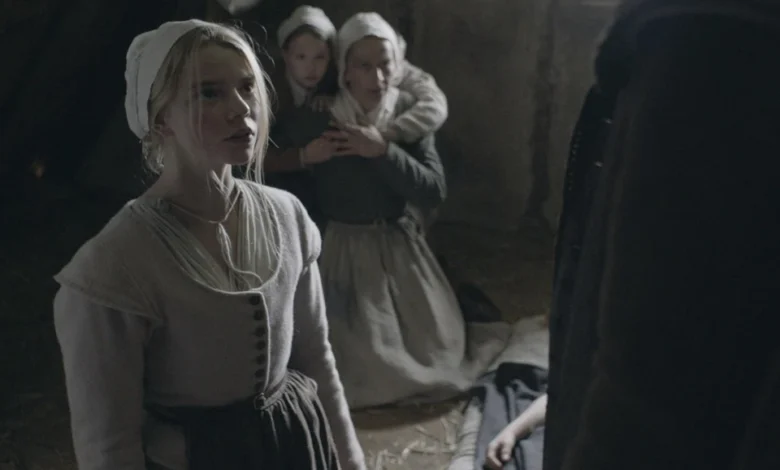
In a landmark decision aimed at addressing centuries of historical injustice, the Parliament of Catalonia has officially approved a resolution to posthumously pardon more than 700 individuals—the vast majority of them women—who were prosecuted, tortured, and executed for the crime of witchcraft between the 15th and 18th centuries. This legislative measure, passed in late 2021, represents a significant step in the region’s ongoing efforts to reconcile with a dark chapter of its judicial and social history. The resolution not only clears the names of those unjustly accused but also encourages local municipalities to rename streets and public spaces in honor of the victims, ensuring that their stories are integrated into the collective memory of the Spanish autonomous community.
The motion was passed with an overwhelming majority, receiving 114 votes in favor and only 21 against. The initiative was spurred by recent historical research and a public campaign titled "No eran brujas, eran mujeres" (They were not witches, they were women), which sought to reframe the witch hunts not as supernatural phenomena, but as a systematic campaign of gender-based violence and social cleansing.
The Historical Context of Catalan Witch Hunts
While the Salem witch trials of 1692 remain the most famous instance of such hysteria in the English-speaking world, the European continent experienced a much longer and more lethal period of persecution. Catalonia, in particular, was a pioneer in the codification of anti-witchcraft laws. The region is home to some of the earliest recorded witch trials in Europe, with the first documented cases appearing in the early 15th century.
Historians note a peculiar legal landscape in Catalonia during this era. While the Spanish Inquisition is often associated with religious persecution, it was frequently more skeptical of witchcraft accusations than local secular courts. In rural Catalonia, which was often under the jurisdiction of feudal lords rather than the central crown or the high Church, accusations of sorcery were handled with brutal efficiency. Local villagers, often spurred by hardship, would petition their lords to hire professional witch-hunters.
In these secular trials, the standard of evidence was remarkably low. Unlike the Inquisition, which eventually required a high threshold of proof and often viewed "witchcraft" as a mental delusion or a minor superstition, Catalan local courts accepted confessions extracted under torture as absolute proof of guilt. Between 1580 and 1630, the peak of the "Great Witch Hunt" in Europe, Catalonia saw a surge in executions that far outpaced other regions of the Iberian Peninsula.

Profiles of the Persecuted: Gender and Social Marginalization
The enrichment of historical records has allowed modern researchers to understand who these "witches" actually were. Approximately 80 percent of those executed across Europe were women, and in Catalonia, this demographic trend was equally pronounced. The victims were rarely the stereotypical hags of folklore; instead, they were often midwives, healers, or independent women who possessed knowledge of traditional medicine and herbalism.
The social mechanics of the accusations often followed a predictable pattern. Accusations typically spiked following periods of communal misfortune, such as sudden outbreaks of the plague, failed harvests, or the unexplained deaths of livestock or infants. In a society lacking scientific explanations for these disasters, the "witch" served as a convenient scapegoat.
Those who lived on the margins of society—widows, the poor, or those who lacked a male protector—were the most vulnerable. By labeling these women as "poisoners" or "servants of the devil," the community could purge individuals who challenged social norms or whose presence was deemed a burden during times of scarcity.
Judicial Brutality and the Economics of Execution
The methods of execution in Catalonia reflected both the cruelty of the era and a grim sense of municipal pragmatism. While the image of the witch burning at the stake is prevalent in popular culture, many Catalan victims were actually hanged. Historical records suggest that hanging was the preferred method in secular courts because it was significantly less expensive than burning. Public burnings required large quantities of dry firewood, which was a valuable commodity; hanging required only a length of rope and a scaffold, making it the "cost-effective" choice for local administrations.
This judicial process was characterized by a lack of defense for the accused. Once a woman was charged, the burden of proof rested on her to demonstrate her innocence against a tide of communal prejudice. In many instances, the only way to stop the torture was to confess to impossible crimes, such as flying through the air or attending "Sabbats" with the devil, which in turn sealed the victim’s fate.
A Modern Reckoning: The Legislative Response
The 2021 resolution was heavily influenced by a comprehensive study published by the history magazine Sapiens and led by historian Pau Castell of the University of Barcelona. The research identified more than 1,000 cases of individuals tried for witchcraft in Catalonia, providing the names and stories of hundreds of victims for the first time in centuries.

During the parliamentary debate, Pro-independence and leftist parties championed the measure as a necessary feminist intervention. Jenn Díaz, a member of the Catalan Parliament, explicitly linked the historical witch hunts to modern-day femicide and the marginalization of women.
"We are heiresses of the witches, the poisoners, and the healers," Díaz told Vice News following the vote. She argued that the same impulses that drove the witch hunts—the desire to control women’s bodies and silence independent voices—persist in modern society. "There has been an evolution—today they call us ‘feminazis.’ There is a connection between witch hunts and femicide. We want reparation and an understanding that the past is not as distant as we think."
The resolution calls for:
- Posthumous Pardons: An official recognition that the trials were a miscarriage of justice.
- Street Renaming: Encouraging towns like Terrassa, Vic, and La Seu d’Urgell—all former hotspots of trials—to replace the names of persecutors with the names of the victims on street signs.
- Educational Initiatives: Integrating the history of the witch trials into the regional curriculum to teach students about the dangers of mass hysteria and the history of gender-based persecution.
Comparative Justice Across Europe
Catalonia’s move is part of a broader, albeit slow, movement across Europe to address the legacy of the witch trials.
- Switzerland: In 2008, the parliament of the canton of Glarus posthumously pardoned Anna Göldi, often called the "last witch of Europe," who was executed in 1782.
- Norway: In 2011, King Harald V opened the Steilneset Memorial in Vardø, which commemorates the 91 people burned at the stake in the 17th century during the Finnmark witch trials.
- Scotland: More recently, the "Witches of Scotland" campaign has sought a legal pardon for the estimated 4,000 people (mostly women) accused of witchcraft between 1563 and 1736 under the Scottish Witchcraft Act.
These movements share a common thread: the belief that a state cannot truly progress without acknowledging the state-sponsored violence of its past. By pardoning the victims, these governments are not attempting to change history, but rather to change how history is remembered and how its lessons are applied to current human rights issues.
Implications and Social Impact
The pardon in Catalonia has sparked a wider conversation about "historical memory" in Spain. While much of the country’s focus on historical memory has centered on the victims of the Spanish Civil War and the Franco dictatorship, the witch trial resolution suggests a growing appetite for addressing older, more systemic injustices.

Critics of the measure, primarily from the far-right Vox party, have dismissed the pardons as "symbolic posturing" that ignores more pressing modern concerns. However, proponents argue that symbols matter. They contend that by acknowledging the "witch hunts" as a form of femicide, the government provides a historical framework for understanding contemporary violence against women.
The decision also has significant implications for local tourism and cultural identity. Several towns in the Pyrenees and rural Catalonia have long used their "witchy" history as a tourist draw, often through festivals and markets that lean into the supernatural and the whimsical. The parliamentary resolution challenges these municipalities to shift their narrative from one of folklore and fantasy to one of historical tragedy and human rights.
As Catalonia begins the process of renaming its streets and updating its history books, the message remains clear: the "witches" were not monsters or practitioners of dark arts, but ordinary women caught in a web of social anxiety, religious fervor, and judicial failure. The pardons serve as a late, but necessary, admission that the state failed to protect its most vulnerable citizens—a lesson that the regional government insists remains relevant in the 21st century.