Remembering Philipp Jung: Co-Founder of M.A.N.D.Y. and Get Physical Music Leaves a Lasting Legacy in Electronic Music at 55

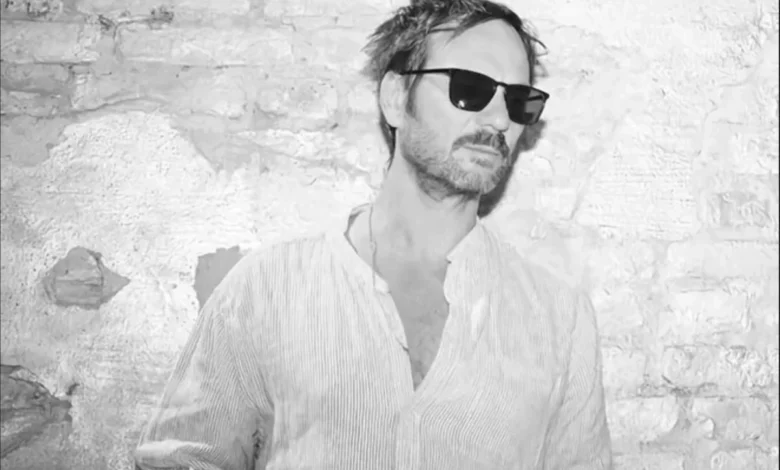
The global electronic music community is in mourning following the death of Philipp Jung, the visionary co-founder of the influential dance music label Get Physical Music and one-half of the legendary production and DJ duo M.A.N.D.Y. Jung passed away at the age of 55, leaving behind an indelible mark on the landscape of house and techno. Over a career spanning more than three decades, Jung was a cultural architect who helped shape the sound of European club culture, bridging the gap between underground minimal house and global dance floors. Friends, collaborators, and fans from across the music industry have flooded social media and music publications with tributes, remembering him not only as an innovative artist and label head, but as a warm, collaborative spirit.
Main Facts of a Storied Career
Philipp Jung’s impact on electronic music is defined by two major pillars: his partnership in M.A.N.D.Y. alongside Patrick Bodmer, and his instrumental role in establishing Get Physical Music. Formed in the early 2000s, M.A.N.D.Y. became synonymous with a fresh, melodic approach to minimal house and techno. At a time when club music was often characterized by stark, industrial, and heavy-handed beats, Jung and Bodmer injected a deep sense of warmth, groove, and emotion into the genre.
Their breakout tracks, including the hypnotic single “Tonite” and the ubiquitous global anthem “Body Language”—a legendary collaboration with production powerhouse Booka Shade—became defining records of the mid-2000s club era. These releases did not merely fill dance floors; they redefined the sonic palette of international nightlife, proving that electronic music could be both deeply emotional and relentlessly hypnotic.
Beyond his output as a producer and touring DJ, Jung was a titan of music commerce and artist development. In 2002, he joined forces with Patrick Bodmer, DJ T. (Thomas Koch), and the members of Booka Shade (Walter Merziger and Arno Kammermeier) to launch Get Physical Music in Berlin. The imprint quickly evolved into one of the most respected and enduring independent record labels in electronic music history, serving as a launchpad for numerous artists and maintaining a prolific output of genre-defining records for over two decades.
A Chronological Journey Through Electronic Music Innovation
To understand the scope of Philipp Jung’s influence, one must examine the timeline of his creative endeavors, which mirrored the evolution of modern electronic music from the analog-to-digital transition of the late 1990s to the global festival boom of the 2010s.
The Late 1990s: Formation and Foundations
Before the establishment of M.A.N.D.Y. and Get Physical, Jung was deeply entrenched in the burgeoning European club scene. Operating out of Germany, he immersed himself in the culture of late-night mixing and record curation. During this period, he forged deep creative bonds with contemporaries who would later become his lifelong business partners and collaborators, laying the groundwork for a unified collective effort.
2002: The Birth of Get Physical
Recognizing a need for a platform that reflected their unique artistic vision—one that favored groove, melody, and sophisticated songcraft over rigid techno purism—Jung, Bodmer, DJ T., and Booka Shade founded Get Physical Music in Berlin. The label quickly became a focal point for the city’s post-Wall creative renaissance, capturing the energetic spirit of the capital’s shifting nightlife districts.
The Mid-2000s: Global Breakthrough with M.A.N.D.Y.
The years 2005 and 2006 marked a commercial and critical watershed for Jung. The release of “Body Language” propelled M.A.N.D.Y. into international superstardom. The track became an inescapable anthem at clubs and festivals worldwide, cementing the duo’s reputation as master curators of mood and rhythm. Their DJ sets became masterclasses in tension and release, taking audiences on cinematic journeys from deep house to rolling techno.
Expanding the Empire: Kindisch and METAPHYSICAL
As Get Physical matured, Jung took on an increasingly pivotal role in steering the creative direction of its sister labels and offshoots. He helped guide Kindisch, an imprint dedicated to deeper, more hypnotic, and experimental late-night sounds that catered to sunrise beach parties and intimate club spaces. Later in his career, Jung spearheaded METAPHYSICAL, an LP-focused label designed to explore territories beyond the traditional club format, including ambient soundscapes, indie-dance, and expansive listening-room experiences.
2018: Stepping Back and Prioritizing Well-Being
Following decades of relentless international touring, punishing jet lag, and the intense operational demands of running a global record label, Jung made the conscious decision to step back from active touring with M.A.N.D.Y. around 2018. He redirected his energy toward personal health, archival catalog curation, and mentoring the next generation of artists. In his later years, he split his time between Berlin and Costa Rica, balancing urban creative pursuits with a slower-paced, restorative lifestyle. During this chapter, he curated retrospective projects such as the “Rewind Forward Vol. 1” compilation, honoring the rich history of the Get Physical catalog.
Supporting Data and Industry Context
The legacy of Get Physical Music under Jung’s co-leadership is reflected in its staggering output. Over more than twenty years, the label has released hundreds of EPs, albums, and compilations, launching or elevating the careers of major electronic music acts such as Claude VonStroke, Ryan Crosson, DJ Sneak, and Popof, among many others.
According to data compiled across independent electronic music distribution platforms, Get Physical consistently ranked among the top independent imprints of the 2000s and 2010s, bridging the commercial peak of tech-house with the underground ethos of Berlin’s club scene. Furthermore, "Body Language" remains widely cited by musicologists and dance music historians as one of the most important crossover tracks of the minimal house era, bridging radio-friendly accessibility with deep-rooted club authenticity.
Official Responses and Tributes from the Electronic Music Community
News of Jung’s passing sent shockwaves through the international music community, prompting an outpouring of grief and remembrance from prominent DJs, producers, promoters, and media outlets.
Resident Advisor compiled an extensive collection of artist tributes, reflecting the profound personal and professional impact Jung had on his peers. Fellow producers praised his unwavering integrity, his sharp ear for talent, and his generous spirit. Unlike many figures in the high-stakes music industry, Jung was widely remembered for his humility, warmth, and genuine enthusiasm for new sounds and young artists.
Staff members and editors at XLR8R, with whom Jung shared a decades-long friendship and professional collaboration, expressed deep sorrow over his loss, noting that his contributions to the publication’s community and the broader ecosystem of electronic music were immeasurable.
"Philipp was not just a pioneer of sound, but a pillar of our creative community," noted colleagues close to the artist. "His vision for Get Physical was built on inclusivity, groove, and a profound love for the dance floor. His absence leaves a void that cannot easily be filled."
Broader Impact, Legacy, and Future Implications
The passing of Philipp Jung marks the end of an era for a specific generation of European electronic music architects—those who helped transition the culture from regional underground movements into a globally recognized art form and industry.
Jung’s influence can be heard in the DNA of contemporary melodic house and techno. The blueprint he helped establish—combining organic instrumentation, warm analog textures, and sophisticated song structures with dance floor functionality—remains a dominant force in modern electronic music production. Producers today continue to draw inspiration from the Get Physical catalog, utilizing the spatial dynamics and groove-centric philosophies that Jung championed throughout his life.
While Jung stepped away from the grueling touring circuit in his final years, his commitment to music never waned. Through archival curation projects and his dedication to supporting emerging talent, he ensured that his artistic philosophy would endure.
As the electronic music world prepares memorial tributes, club nights dedicated to his memory, and retrospective music releases, Philipp Jung’s legacy remains anchored in the beats that moved millions. He leaves behind a catalog that will continue to inspire dancers, DJs, and producers for generations to come, ensuring that the music will indeed play on.