Xgimi Prototypes Dual-Projector 3D System at IFA 2026 to Spark a Home Cinema Renaissance


The recent conclusion of IFA 2026 in Berlin, one of the world’s most significant showcases for consumer electronics and home appliances, served as a launchpad for a variety of high-end home cinema technologies. While the convention floor was dominated by discussions of 8K resolution, AI-integrated image processing, and ultra-short-throw laser projection, one specific experimental demonstration from Xgimi drew significant attention. The manufacturer unveiled a prototype 3D projection system that, while not currently slated for a retail release, suggests a potential resurgence for a format that has largely faded from the consumer market over the last decade.
The Engineering Behind the Prototype
The experimental setup displayed at the Xgimi booth was a masterclass in brute-force technical application. Rather than relying on a single, integrated 3D-capable lens system, the company utilized a dual-chassis approach. Engineers deployed two of their flagship Titan Noir Ultra Max projectors, positioned side-by-side and synchronized to a single workstation.
To achieve the stereoscopic effect, Xgimi installed high-precision polarizing filters in front of each projector’s lens. In this configuration, one projector handles the imagery intended for the viewer’s left eye, while the second projector handles the right. By utilizing passive polarized 3D glasses, the viewer’s brain merges the two distinct light signals into a single, cohesive three-dimensional image. This methodology mirrors the professional-grade digital cinema projection systems found in high-end IMAX theaters, moving away from the active-shutter glasses technology that historically plagued consumer 3D with flickering and lower brightness levels.
Titan Noir Ultra Max: Specifications and Performance
The hardware at the core of this demonstration, the Titan Noir Ultra Max, represents the current pinnacle of Xgimi’s projection technology. With a retail price point of approximately £4,799 ($5,000 / AU$9,040) per unit, the system is positioned firmly within the enthusiast and professional-grade tier.
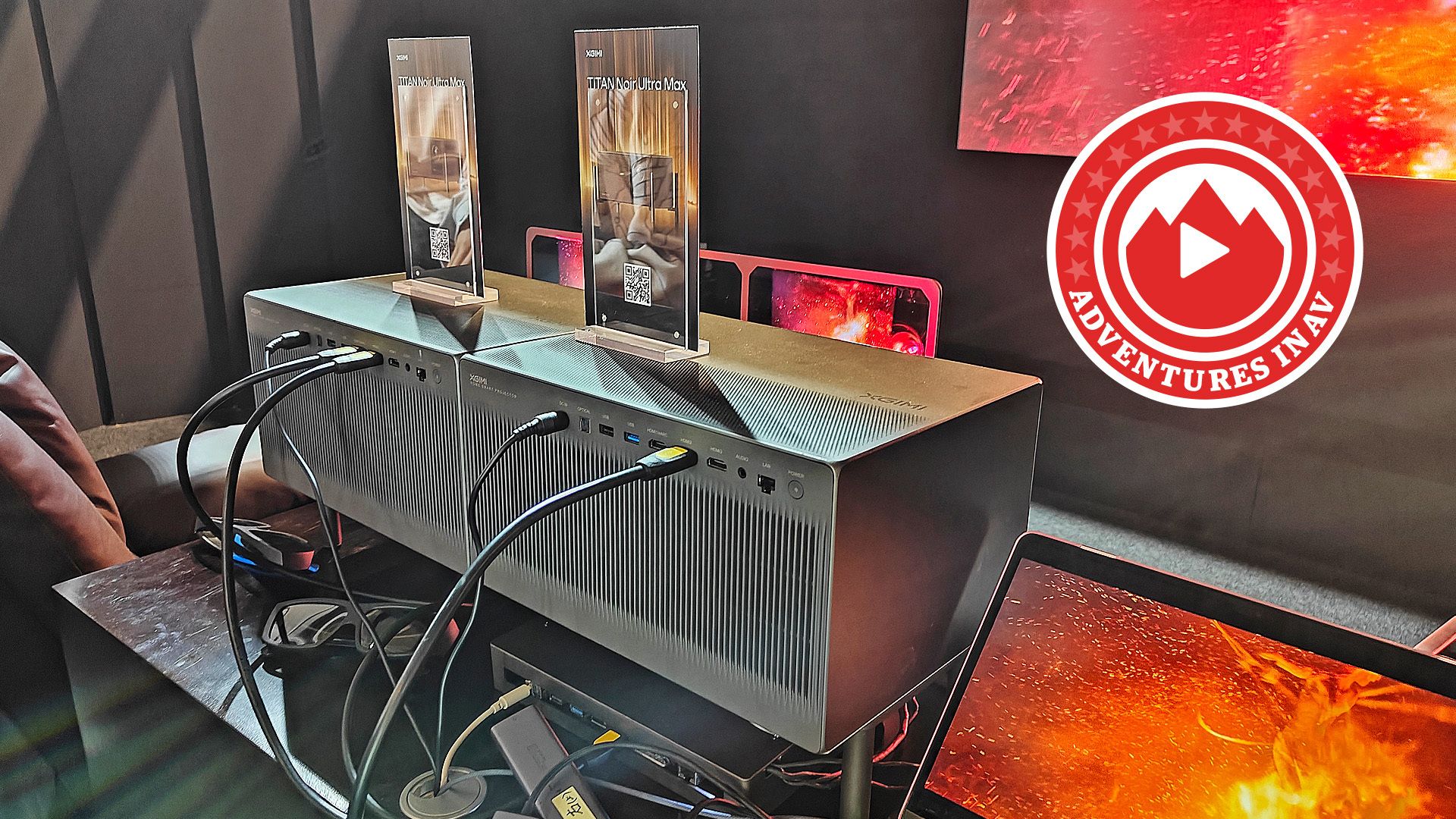
Key technical specifications for the Titan Noir Ultra Max include a peak brightness output of 8,000 ISO lumens. This level of luminance is critical for 3D projection, as the polarizing filters and passive glasses naturally reduce the total light reaching the viewer’s eyes. The native contrast ratio of 12,000:1 provides the necessary depth for high-dynamic-range content. Furthermore, the projector incorporates advanced gaming features, including a claimed 1ms input lag, support for Variable Refresh Rate (VRR), and Auto Low Latency Mode (ALLM). While these features are typically marketed toward console and PC gamers, they also contribute to the overall responsiveness and motion clarity required for fluid, immersive 3D sequences.
A Cinematic Experience: The Avatar Benchmark
For the purpose of the demonstration, Xgimi utilized footage from the upcoming Avatar: Fire And Ash. The choice of content was deliberate; James Cameron’s franchise is widely considered the gold standard for stereoscopic cinematography.
Observers noted that the implementation successfully addressed the primary criticism of historical home 3D: the lack of perceived depth and "dimness." Because the system utilized two separate light engines, the brightness remained punchy even in the well-lit exhibition environment. During high-action sequences, such as the aerial maneuvers of the Leonopteryx, the depth of field extended significantly beyond the physical confines of the screen. The bioluminescent textures of the flora and fauna of Pandora were rendered with precision, avoiding the common "ghosting" or crosstalk artifacts often associated with consumer-grade 3D hardware.
Contextualizing the 3D Market
The re-emergence of 3D technology at a major trade show like IFA is noteworthy given the industry’s trajectory. Following the initial 3D television boom of 2010–2013, consumer interest waned due to the inconvenience of proprietary glasses, a lack of consistent content, and the aesthetic burden of bulky hardware. By 2017, major television manufacturers had effectively ceased production of 3D-capable displays.
However, the professional exhibition sector has seen a different trend. Recent years have seen a steady increase in 3D releases in theatrical settings, driven by premium large-format (PLF) screens. The experiment at the Xgimi booth implies that while the mass-market television audience may have moved on, the home cinema enthusiast market remains interested in the "theatrical experience" at home. This shift is mirrored by the rise of high-lumen laser projectors, which make the necessary brightness for effective 3D significantly more attainable for the average consumer than it was a decade ago.

Industry Implications and Future Outlook
While Xgimi has been clear that this dual-projector rig is currently a "Frankenstein’s monster" prototype, its presence at IFA 2026 acts as a proof of concept. The implications for the home cinema industry are twofold:
- The Rise of "Prosumer" Modular Setups: By demonstrating that multiple projectors can be synchronized to create a higher-fidelity image, Xgimi may be encouraging a new trend in home theater design where enthusiasts utilize multiple light sources to achieve cinema-grade performance that single units cannot yet replicate.
- The Potential for a 3D Renaissance: As virtual reality and spatial computing continue to mature, the appetite for depth-based visual content is growing. If manufacturers can lower the barrier to entry for 3D projection—perhaps by integrating dual-lens systems into a single chassis—there is a viable path for the format to return to the living room.
Analytical Summary
From a technical standpoint, the Xgimi demonstration was a success in visual fidelity, though it highlighted inherent challenges in hardware footprint and cost. Requiring two high-end projectors for a single display creates a massive barrier to entry, both in terms of physical space and total system expenditure. Furthermore, the audio performance of the integrated speakers, which struggled to compete with the ambient noise of the IFA show floor, serves as a reminder that such a system requires a dedicated, acoustically treated environment and a robust external sound system to be truly effective.
Despite these hurdles, the emotional response from attendees suggests that when 3D is executed correctly—without the compromises of early-2010s technology—it remains a powerful tool for immersion. The industry is currently at a crossroads; whether this prototype leads to a specialized product line or remains a curiosity of the 2026 show season will likely depend on consumer appetite for premium, non-traditional home cinema formats. For now, Xgimi has successfully refocused the conversation on the potential for a high-end, three-dimensional future in the home, challenging the assumption that the format was destined for obsolescence.
Related posts: