The importance of audio quality in home cinema and the often-overlooked performance of integrated projector sound systems

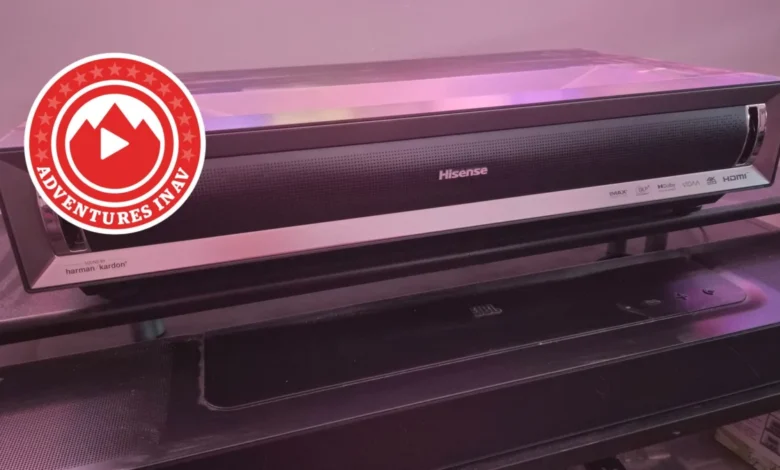
At the What Hi-Fi? test facilities, a consistent mantra guides the evaluation of home entertainment technology: high-fidelity sound is a universal requirement, regardless of whether the hardware is classified as traditional hi-fi or home cinema. Despite this, the industry has historically witnessed a significant imbalance in the development of Ultra-Short Throw (UST) projectors, where the focus on visual precision often overshadows the necessity for high-quality integrated audio. This disparity between the visual capability of modern 4K projectors and the technical limitations of their onboard speaker systems remains a point of contention for both reviewers and consumers who seek an authentic "as the director intended" cinematic experience.
The Evolution of the UST Market and Audio Disparity
The UST projector market has grown rapidly since 2020, driven by the demand for large-screen experiences in residential spaces where traditional long-throw projectors are impractical. By placing the unit directly against a wall, these devices can project images exceeding 100 inches from a distance of mere centimeters. However, the hardware constraints of such a compact chassis pose a fundamental challenge for acoustic engineering.
Integrating robust speaker drivers, amplification, and adequate internal volume for air movement into a sleek, low-profile box is an engineering feat that many manufacturers have failed to master. Data from recent industry testing cycles suggests that while color accuracy and peak brightness in UST projectors have improved by an estimated 25% year-over-year, the audio performance has remained largely stagnant. Most consumer-grade units prioritize mid-range clarity for dialogue at the expense of soundstage width, bass extension, and overall musicality.
Chronology of the 2026 Awards Evaluation Process
During the lead-up to the What Hi-Fi? Awards 2026, a comprehensive group test was initiated to evaluate the current state of the UST projector market. This process is designed to benchmark performance against a standardized set of criteria, including motion processing, HDR handling, and audio fidelity.
- Phase One (Q1 2026): Procurement of flagship and mid-range UST models from leading global manufacturers.
- Phase Two (Q2 2026): Controlled environmental testing to evaluate color gamut, contrast ratios, and peak brightness.
- Phase Three (Q3 2026): Auditory stress testing. This phase utilizes specific film sequences—such as the musical medley in the 4K Blu-ray release of Sinners—to test how effectively a device handles complex soundscapes, rhythmic timing, and high-frequency transients.
During these trials, the majority of units displayed the typical characteristics of underpowered integrated systems: thin, boxy sound profiles and an inability to maintain composure during dynamic shifts in volume. It was not until the final unit in the test rotation was engaged that this trend was notably disrupted.
The Role of Musicality in Cinema
The recent testing revealed a distinct outlier—a unit capable of rendering the Sinners musical sequence with unexpected poise. The difference was not in volume, but in "musicality." In audio engineering, musicality refers to a system’s ability to maintain rhythmic timing, harmonic accuracy, and spatial coherence.
While most projectors are optimized solely for speech intelligibility, this particular unit demonstrated the capacity to handle a complex mix—such as a blues-inspired guitar performance—without the common "clutter" that arises when a system struggles with multiple frequency ranges. The implications for the average consumer are significant: when a projector’s audio system fails to handle music or ambient scores with finesse, the emotional impact of the film is diminished. The "suspension of disbelief" required for true cinematic immersion is broken when the soundstage feels confined or artificially processed.
System Matching and the Consumer Responsibility
The technical consensus remains that an integrated system will rarely, if ever, match the performance of a dedicated 5.1 surround sound system or a high-end Dolby Atmos soundbar. The laws of physics dictate that smaller drivers and lack of cabinet volume limit low-frequency extension (bass).
However, the "system matching" philosophy is frequently ignored by consumers who invest thousands of dollars into a high-end display while neglecting the acoustic environment. KEF, a prominent manufacturer in the audio space, has frequently emphasized that the relationship between the sound system and the room acoustics is just as critical as the resolution of the screen. When users choose to rely solely on internal speakers, they are effectively bottlenecking their home cinema performance.
Industry Implications and Future Trends
As the home cinema market matures, there is increasing pressure on manufacturers to address the "audio deficit." Several industry analysts predict a shift toward "sound-first" projector design, where the chassis of the device is engineered with larger internal acoustic chambers, potentially increasing the physical footprint of future UST models.
Furthermore, there is a growing trend of partnerships between projector manufacturers and established audio brands. By incorporating high-fidelity drivers or DSP (Digital Signal Processing) technology from companies like Harman Kardon, Bowers & Wilkins, or Klipsch, projector manufacturers are attempting to close the gap without requiring the consumer to purchase external equipment.
Summary of Best Practices for Home Cinema Enthusiasts
To ensure a high-fidelity experience, experts recommend the following considerations:
- Prioritize Dedicated Audio: Regardless of the quality of a projector’s internal speakers, the addition of a dedicated soundbar or a discrete surround system will provide a disproportionate improvement in the overall experience.
- Evaluate for Musicality, Not Just Dialogue: When auditioning equipment, do not rely solely on action scenes. Use musical sequences or complex orchestral scores to test how the equipment handles range, timing, and distortion.
- Acoustic Treatment: Even the best sound system will be undermined by poor room acoustics. The use of soft furnishings or dedicated acoustic panels can significantly mitigate the negative effects of hard surfaces in typical living rooms.
- Manage Expectations: Understand the limitations of compact hardware. If a projector is marketed primarily on its visual specifications, it is reasonable to assume that the audio has been treated as a secondary feature.
Ultimately, the goal of any home cinema installation is to create a seamless synergy between sight and sound. While visual technology continues to push the boundaries of what is possible in the home, the audio component remains the soul of the cinematic experience. As the 2026 awards cycle concludes, the industry serves as a reminder that a truly immersive environment cannot be achieved through visuals alone. Consumers are encouraged to audit their current setups and consider whether their audio infrastructure is truly doing justice to the content they are watching.
Related posts: