Bradford Cox Revives Atlas Sound After Seven Years With Surprise Philadelphia Festival Set And Eight New Songs

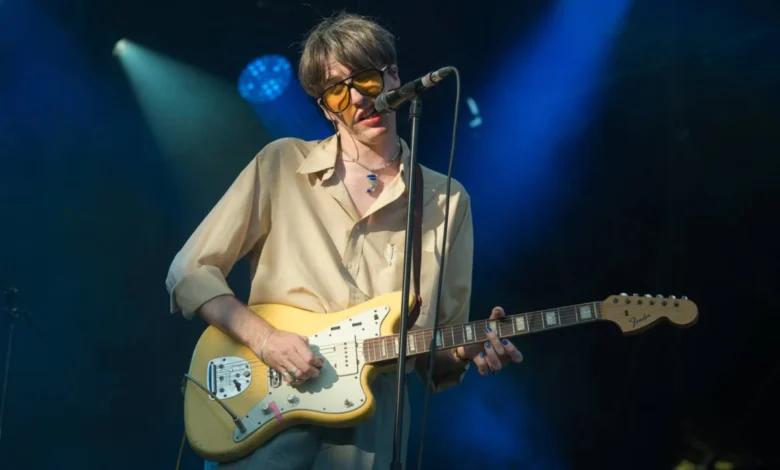
The contemporary indie-rock landscape witnessed a rare and unexpected resurgence on September 20, as Deerhunter frontman Bradford Cox stepped onto the Transcendental Stage at Philadelphia’s Making Time festival to revive his long-dormant solo moniker, Atlas Sound. The performance marked Cox’s first fully realized, announced concert under the Atlas Sound project in seven years, ending a prolonged period of public musical silence from the influential singer-songwriter and multi-instrumentalist.
Unannounced as a solo performer until roughly a week prior to the event, Cox delivered an intimate, roughly half-hour set that entirely bypassed his established catalog. Instead, the musician treated the festival audience to a complete sequence of eight previously unheard compositions. Performing entirely solo, Cox managed the vocal duties while simultaneously playing bass, hand bells, and operating a sampler, showcasing the minimalist yet deeply textured approach that first defined his solo work in the mid-2000s.
The surprise return not only reinvigorated interest in one of alternative music’s most idiosyncratic figures but also provided a poignant milestone. Cox opened his set by leading the festival crowd in a collective rendition of Happy Birthday for his mother, Edie, who was in attendance to celebrate her 80th birthday. The personal touch set a warm tone for an evening that otherwise leaned into the experimental and avant-garde sensibilities characteristic of Cox’s broader career.
Directly following the music, Cox engaged with fans by distributing physical setlists and lyric sheets for the debut tracks. Printed in blue ink and stamped prominently with the word “DRAFT” in red, the mementos underscored the provisional, work-in-progress nature of the performance, leaving attendees with tangible artifacts of a historically significant comeback.
A Chronology of Silence and Resurgence
To understand the weight of Cox’s performance at the Making Time festival, one must examine the extended hiatus that preceded it. Both Atlas Sound and Deerhunter—the critically acclaimed Atlanta-based band Cox co-founded in 2001—have effectively remained on unannounced hiatuses since 2019.
The most recent Atlas Sound studio album, Parallax, was released in November 2011 via 4AD. Serving as Cox’s third full-length release under the moniker following 2008’s Let The Blind Lead Those Who Can See But Cannot Feel and 2009’s Logos, Parallax was praised by music critics for its sonic deceleration and lyrical introspection. Reviewing the album at the time, publications highlighted how Cox was continuing to refine his bedroom-pop origins into more mature, melancholic territory.
Throughout the remainder of the 2010s, Cox maintained a relentless creative output with Deerhunter. The band cemented its status as a critical darling of the indie rock revival and post-punk landscape through a string of celebrated releases. Following 2010’s Halcyon Digest, the group returned with Monomania in 2013 and Fading Frontier in 2015. The latter record received widespread critical acclaim, earning a rare five-star rating from major music publications, which lauded it as the most direct and unflinching statement the band had ever produced.
Deerhunter’s eighth and most recent studio album, Why Hasn’t Everything Already Disappeared?, arrived in January 2019. Featuring a baroque, politically charged, and climate-anxious sonic palette, the record was supported by international touring before the band retreated from the public eye.
The final known Atlas Sound concert prior to the Philadelphia revival took place at the Desert Daze festival in October 2019. In the years following, Cox retreated almost entirely from conventional touring and media engagement. Aside from a brief, unannounced appearance in 2023—where he reportedly performed an impromptu experimental noise set at a vintage market in his long-time base of Athens, Georgia—Cox remained virtually invisible to the music industry. This prolonged absence fueled widespread speculation among fans regarding whether the songwriter had permanently retired from performing live.
The Catalyst for Return and Behind-the-Scenes Mechanics
The catalyst for Cox’s return to the stage was Making Time founder Dave P, whose persistent encouragement ultimately coaxed the musician out of his extended hiatus. Acknowledging the promoter’s role during his festival set, Cox addressed the audience directly with characteristic candor.
“Thank you to Dave for having me because if it weren’t for him, I might’ve stayed at home for another seven years,” Cox told the crowd, highlighting the personal relationships and localized festival curation that often make unique musical revivals possible.
The booking on the Transcendental Stage at Making Time—a Philadelphia-based festival known for celebrating experimental, electronic, and left-of-center underground music—provided an ideal environment for Cox’s idiosyncratic performance style. Operating without a backing band, Cox relied on his core competencies as a multi-instrumentalist, utilizing basslines, rhythmic hand bells, and electronic loops to construct a dense, atmospheric soundscape.
The Eight New Songs Explored
The most significant takeaway from the Making Time performance was the wholesale unveiling of brand-new material. Rather than leaning on nostalgic fan favorites from the Atlas Sound catalog—such as “Walkabout,” featuring Panda Bear, or “Terra Incognita”—Cox opted exclusively to premiere eight unreleased compositions.
The complete setlist, as documented through the physical "DRAFT" lyric sheets distributed after the show, featured the following tracks in order:
- Octoberland
- Arcadia
- Akron
- Day For Night
- My Ship Sank In Daylight
- Come And See
- Roots Without A Tree
- Kora
Musically, the tracks bridged the gap between Cox’s classic ambient-pop sensibilities and the more stripped-down, confessional songwriting style that characterized his later work. The titles themselves—ranging from regional allusions like “Akron” to evocative, maritime imagery like “My Ship Sank In Daylight”—suggest a cohesive thematic arc centered on memory, geographic displacement, and emotional weathering.
By distributing lyric sheets stamped with "DRAFT," Cox signaled to the audience that these songs are living documents, potentially subject to revision, studio recording, or further live iteration should he decide to continue performing under the Atlas Sound banner.
Broader Impact and Industry Implications
The surprise return of Bradford Cox via Atlas Sound carries notable implications for the broader independent music ecosystem. In an era where legacy acts frequently return to the stage exclusively for nostalgia-driven anniversary tours of canonical albums, Cox’s choice to eschew his back catalog in favor of entirely new, unrecorded material represents a distinct artistic rejection of safe commercial formulas.
For years, the future of both Deerhunter and Atlas Sound has been a subject of frequent speculation on online music forums and among dedicated fanbase communities. Cox’s health struggles over the years—including Marfan syndrome, a genetic disorder that has occasionally impacted his physical endurance and touring capabilities—have historically contributed to long stretches of inactivity. The physically demanding nature of touring often necessitates long recovery periods for the musician, making his return to the stage in Philadelphia a particularly encouraging development for those concerned about his well-being.
Furthermore, the performance raises questions about the future status of the new material. While no official album announcement, label backing, or forthcoming tour dates have been confirmed by Cox or his representatives, the physical distribution of lyric sheets strongly implies that these eight songs are part of an active creative cycle rather than a one-off performance experiment.
Whether the Philadelphia set serves as a singular anomaly or the official opening salvo of a permanent return to active duty remains to be seen. However, for a generation of independent music enthusiasts who watched one of the 2000s and 2010s most vital songwriters slip into relative obscurity, Cox’s half-hour set on the Transcendental Stage demonstrated that his creative impulse remains as sharp, unpredictable, and compelling as ever.