Houston Mayor John Whitmire Directs Police Department to Sever Ties with ICE Following Historic Political Shift in Texas

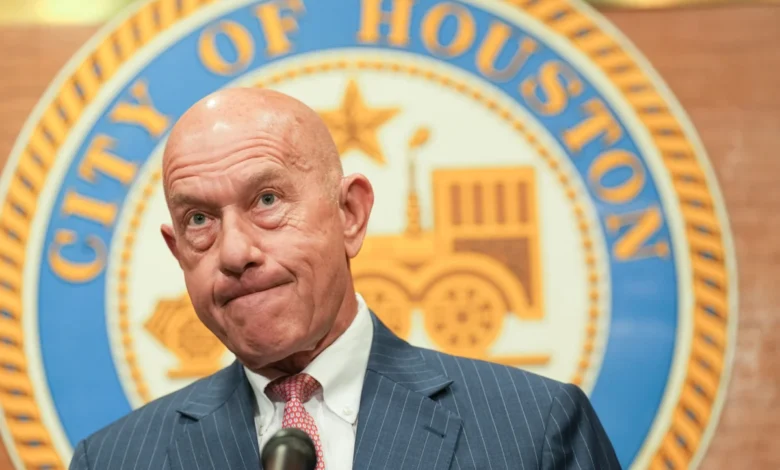
The political landscape of Texas underwent a profound and unprecedented transformation following the 2026 midterm elections, sending immediate shockwaves through municipal governance across the state. Emboldened by a generational political shift that saw Democrats secure victories across every statewide office and capture control of the statehouse, local leaders wasted no time in dismantling polarizing policies enacted by the previous conservative administration. In Houston, this shift materialized swiftly on a Friday morning, when Mayor John Whitmire signed a formal executive action instructing the Houston Police Department to immediately halt all cooperative enforcement activities with U.S. Immigration and Customs Enforcement (ICE).
The directive marks a dramatic departure from the enforcement posture that had gripped Texas since the passage of Senate Bill 4 (SB 4), a controversial piece of legislation enacted earlier in the decade. SB 4 had fundamentally altered the relationship between state authorities and federal immigration agencies by empowering local and state law enforcement to actively engage in immigration enforcement and strictly prohibiting cities and municipalities from maintaining sanctuary policies designed to protect undocumented residents. Under the threat of severe legal retaliation, loss of state funding, and the removal of local elected officials, Texas cities had largely fallen into line, integrating local policing with federal immigration operations. However, with the political majority in Austin upended, the looming threat of state-level penalization evaporated, paving the way for municipal leaders to reclaim local policy autonomy.
Background Context and the Legislative History of Senate Bill 4
To fully understand the gravity of Mayor Whitmire’s executive action, one must examine the contentious history of Senate Bill 4 and its implementation in Texas. For years, the intersection of local policing and federal immigration enforcement has been a battleground in American politics, with Texas serving as the primary incubator for aggressive state-led immigration initiatives.
When SB 4 was originally debated and passed by the Republican-controlled legislature, it was championed as a necessary measure to enhance public safety and secure the border in the face of what proponents described as federal inaction. The law faced fierce opposition from civil rights organizations, immigrant advocacy groups, and municipal leaders representing major urban centers such as Houston, Austin, Dallas, and San Antonio. Critics argued that the law would severely erode trust between immigrant communities and local police departments, creating an environment of fear where victims and witnesses of crimes would refuse to come forward for fear of deportation.
Mayor Whitmire, who served in the Texas State Senate during the grueling debates over SB 4, recalled his steadfast opposition to the measure during his Friday press conference. Having voted against the bill on the Senate floor, Whitmire reiterated that his primary concern then, as now, was the profound anxiety and psychological distress the law inflicted on neighborhoods across the state. By signing the executive order, Whitmire sought to fulfill a long-held vision of municipal policing that decouples local public safety from federal immigration enforcement mandates.
A New Policing Paradigm in Houston
Under the terms of Mayor Whitmire’s newly signed executive order, the operational relationship between the Houston Police Department and federal immigration authorities will undergo a fundamental reset. Moving forward, local law enforcement officers will no longer participate in joint sweeps, honor immigration detainers absent a judicial warrant, or proactively inquire about the immigration status of individuals during routine police encounters.
Clarifying the scope of the new directive, Whitmire emphasized that the city is not adopting a blanket policy of non-cooperation with federal law enforcement, but rather drawing a distinct line between municipal police work and federal civil immigration enforcement. “ICE will only be contacted if someone commits a jailable offense,” Whitmire explained to reporters. He expressed optimism that the policy change would serve as a vital mechanism to rebuild fractured relationships between law enforcement and marginalized populations, thereby reducing systemic fear and fostering community-wide cooperation with local authorities.
Escalating Tensions and Recent Incidents Involving ICE Agents
The timing of Mayor Whitmire’s executive action comes against a backdrop of escalating tensions and high-profile violent encounters involving federal immigration agents operating within Texas. The aggressive posture adopted by federal immigration operations in recent months had already strained community relations to a breaking point, creating immense political pressure on local leaders to intervene.
Chief among these incidents was a violent confrontation in Houston involving a federal immigration agent who allegedly ran over a Mexican construction worker named Miguel Parra Hernandez with an SUV during an aggressive ICE raid. The incident, which left Hernandez severely injured, sparked widespread outrage and led to the agent being formally charged with aggravated assault. The case underscored the volatile nature of urban immigration enforcement operations, where the deployment of tactical gear and high-speed vehicle maneuvers in densely populated neighborhoods posed direct threats to public safety.
Compounding these local grievances was an alarming episode in Austin in September, where federal immigration agents shot and wounded Wilber Rafael Garces Perez, a Venezuelan national, during a routine traffic stop. The shooting triggered massive protests throughout the capital city, drawing sharp condemnations from civil rights advocates who questioned the tactical necessity and legal authority of federal agents engaging in violent confrontations over civil immigration infractions.
The Human Toll of Migrant Detention Facilities in Texas
Beyond the street-level confrontations, the infrastructure supporting federal immigration enforcement in Texas had become a focal point of intense humanitarian scrutiny. Throughout the year, migrant detention centers across the state faced blistering criticism from human rights monitors, legal aid organizations, and federal lawmakers regarding allegations of severe abuse, medical neglect, and systemic civil rights violations.
Public records and investigative reports highlighted dire conditions within facilities operating under federal oversight in Texas, where families and unaccompanied minors faced prolonged confinement in overcrowded spaces. The human cost of these systemic failures became painfully clear as the year progressed: official records indicate that at least six migrants died while in the custody of Texas ICE detention facilities during the reporting period. These fatalities galvanized public opposition to federal immigration policies and catalyzed a profound political realignment among Hispanic voters in Texas, who decisively abandoned conservative candidates in the 2026 midterms.
Official Responses and Stakeholder Reactions
The announcement of Mayor Whitmire’s executive order drew swift and polarized reactions from political stakeholders across the state, reflecting deep ideological divisions over immigration governance.
Immigrant advocacy coalitions and civil rights organizations lauded the mayor’s decision as a courageous and necessary step toward restoring constitutional protections and humanitarian standards in local governance. Representatives from the Texas Civil Rights Project issued a statement praising the executive action, noting that local police should never be co-opted to enforce federal civil administrative laws that terrorize immigrant families and undermine community policing.
Conversely, conservative lawmakers and proponents of strict border enforcement strongly condemned the directive, warning that it would compromise public safety and undermine the rule of law. Critics argued that restricting local cooperation with federal authorities sends a dangerous signal and creates jurisdictional safe havens that could hinder broader national security objectives. Legal analysts suggest that while the shift in state-level leadership insulates Houston from immediate statutory penalties under SB 4, the executive action may still face legal challenges from federal authorities or remaining conservative factions within the state legislature.
Broader Impact and Implications for Municipal Governance
Mayor Whitmire’s executive order represents a watershed moment for municipal governance in Texas, signaling a broader trend of urban centers reclaiming policy independence in the wake of the 2026 electoral realignment. For years, cities found their policy agendas constrained by preemption laws passed by the state legislature, which sought to impose uniform conservative governance across diverse urban populations.
With Democrats now holding significant sway in Austin, municipal leaders feel newly empowered to enact progressive reforms tailored to the specific needs of their constituents. Legal and political analysts note that Houston’s decision to sever ties with ICE could serve as a blueprint for other major metropolitan areas in Texas, such as Dallas, Austin, and San Antonio, which have similarly struggled to balance state mandates with local community values.
As the new political reality settles in, the long-term implications of Whitmire’s directive remain to be seen. The policy will undoubtedly be tested by future criminal justice scenarios, federal-local jurisdictional disputes, and ongoing legal battles over the constitutional limits of state and municipal authority in immigration enforcement. Nonetheless, Houston has firmly drawn a line in the sand, redefining the boundaries of local policing and setting a new precedent for how municipalities navigate the complex intersection of federal policy and community trust.