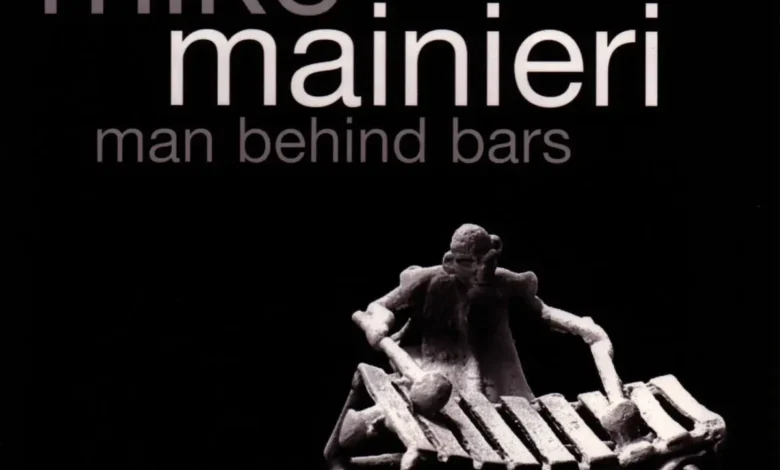
Thirty years ago, the landscape of contemporary jazz was defined by a transition toward introspection and technical experimentation, a shift perfectly encapsulated in the 1996 Jazz Journal review of Mike Mainieri’s solo project, Man Behind Bars. Mainieri, a figure synonymous with the high-energy fusion of his group Steps Ahead, unveiled a deeply personal, multi-instrumental aesthetic that diverged sharply from the polyrhythmic intensity of his earlier career. This retrospective examination explores the genesis, execution, and lasting influence of an album that served as a pivot point for one of the most prolific vibraphonists in modern jazz history.
The Evolution of a Virtuoso
To understand the significance of Man Behind Bars, one must contextualize Mainieri’s trajectory within the jazz avant-garde. By the mid-1990s, Mainieri had spent decades at the vanguard of the instrument. Having risen to prominence in the 1960s with his group, Jeremy and the Satyrs, he helped bridge the gap between hard bop and the burgeoning jazz-rock fusion movement. His work with Steps Ahead, formed in the late 1970s, redefined the role of tuned percussion in a high-octane ensemble setting, utilizing MIDI technology to expand the sonic capabilities of the vibraphone.
However, the mid-1990s signaled a thematic shift. Following the 1995 release of An American Diary, Mainieri embarked on a journey of sonic minimalism and structural exploration. Man Behind Bars was not merely a follow-up; it was a manifesto of self-reliance. By playing every instrument on the record—from vibraphone and marimba to drums and piano—Mainieri opted for a singular, isolated creative process, moving away from the collaborative chaos of the ensemble format toward a contemplative, studio-centric approach.
Technical Architecture and Studio Craft
The production of Man Behind Bars stands as a testament to the mid-90s advancements in home recording and multi-tracking. Mainieri’s decision to overdub his own performances created an intricate tapestry of sound. In the original 1996 analysis, critics noted that while the record occasionally betrayed the limitations of 4-track production—specifically regarding the rhythmic "stiffness" and a perceived lack of depth in the soundstage—the sheer ambition of the project remained unparalleled.
Mainieri utilized a vast array of tuned percussion, including the concert marimba, bass marimba, xylophone, and chimes, alongside MIDI-augmented vibraphone. This allowed him to create a dense, layered soundscape that functioned as a singular organism. Tracks such as the opening samba-inflected reading of Wayne Shorter’s "ESP" showcased his ability to transform well-known jazz standards into delicate, hammered textures. This approach required a level of rhythmic precision that few vibraphonists at the time had attempted in a solo capacity, effectively challenging the notion that the instrument was solely an ensemble voice.
Musical Analysis: From Satyrs to Standards
The album’s tracklist represents a deliberate balance between homage and invention. By incorporating standards such as "All The Things You Are" and "The Nearness Of You," Mainieri demonstrated a profound respect for the jazz canon, albeit through a prism of modern harmonic re-interpretation. His resourcefulness in disguising these familiar melodies allowed him to deconstruct them, forcing the listener to engage with the architecture of the songs rather than their traditional vocal-centric delivery.
Perhaps the most significant track remains "Satyr Dance." This composition provided a vital link to Mainieri’s historical roots. By utilizing a hip-hop-influenced modal groove, Mainieri bridged the gap between his 1960s origins with Jeremy and the Satyrs and the contemporary electronic-infused jazz of the 1990s. The track served as a bridge between the cerebral nature of the album’s quieter moments and the rhythmic vitality of his fusion history. It stands today as one of the finest examples of his improvisational prowess, proving that even within a restrictive solo environment, the improviser’s spirit could thrive.
Chronology of an Artist in Transition
The timeline of Mainieri’s output in the 1990s provides a clear window into his creative evolution:
- 1990–1994: Continued global touring and recording with the iteration of Steps Ahead, focusing on high-energy, technically complex fusion.
- 1995: Release of An American Diary, which signaled a turn toward more lyrical, narrative-driven compositions.
- 1996: Release of Man Behind Bars, marking his most significant departure into solo multi-instrumentalism.
- 1997–1999: A return to ensemble collaborations, influenced by the lessons learned during the solitary recording sessions of the previous two years.
This period remains one of the most productive and critical phases in Mainieri’s career, as it proved that a master of fusion could sustain audience interest without the need for a traditional backing band.
Industry Implications and Legacy
The release of Man Behind Bars arrived at a time when the jazz industry was grappling with the rise of digital production. Mainieri’s use of MIDI vibes and multi-tracking anticipated the democratization of the home studio. By showing that a single jazz musician could craft a full-length, professional-grade album without a large-scale studio budget, Mainieri influenced a generation of independent jazz artists.
While some purists at the time debated the "stiffness" of the programmed rhythms, the long-term consensus has leaned toward appreciation of the album’s conceptual audacity. The record proved that the vibraphone, an instrument historically relegated to the melodic lead or harmonic support, could hold the weight of an entire production. It pushed the boundaries of what could be considered a "jazz record," moving the genre toward a more fluid, multi-instrumental landscape that has since become standard in contemporary experimental jazz.
Official Reception and Critical Consensus
Upon its release, the album was lauded for its lyrical approach to the percussion family. Industry analysts pointed to the "sensitive" nature of Mainieri’s playing, a departure from the pyrotechnics that often defined fusion in the 1980s. The ability to switch between the deep, resonating tones of the bass marimba and the sharp, shimmering chimes allowed Mainieri to paint with a wider color palette than any previous project had permitted.
In retrospect, the album is viewed not as a failure of ensemble dynamics, but as a success of personal expression. The "Man Behind Bars" (a clever play on his identity as a vibraphonist and his desire for studio isolation) effectively allowed Mainieri to step out of the shadow of his own group’s brand. It remains a mandatory study for those interested in the history of tuned percussion and the evolution of the independent jazz producer.
Conclusion
Thirty years later, the impact of Mike Mainieri’s Man Behind Bars continues to resonate. It stands as a document of a pivotal moment when a legendary performer chose to look inward, utilizing the technology of his time to explore the limits of his own virtuosity. By harmonizing the legacy of the 1960s with the electronic advancements of the 1990s, Mainieri created a work that remains both a historical artifact and a blueprint for the modern, multi-instrumental jazz musician. As we look back, the album is less about the technical limitations of the era and more about the enduring, lyrical spirit of an artist who refused to remain behind the bars of his own established reputation.