The Centennial of a Jazz Titan: Remembering the Infinite Musical Evolution of John Coltrane

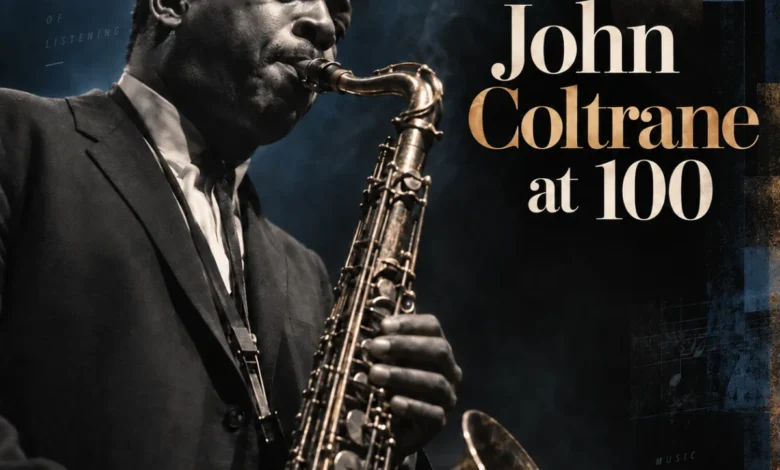
September 23, 1926, marked the birth of a musician whose trajectory would fundamentally alter the landscape of modern music. One hundred years later, John Coltrane’s legacy remains less a historical artifact preserved in the amber of the mid-20th century and more a living, breathing language that continues to be studied, interrogated, and expanded upon by contemporary artists globally. Coltrane passed away in 1967 at the age of 40, yet the sheer velocity of his creative output—a journey from hard-bop craftsmanship to avant-garde spiritualism—contained enough evolution to fill several lifetimes. Today, on his centennial, the jazz world pauses not merely to commemorate a birthday, but to reflect on an artist whose work remains the gold standard for technical rigor and emotional vulnerability.
A Chronology of Transformation
To understand the scope of Coltrane’s impact, one must view his career not as a static collection of albums, but as a rapid-fire sequence of reinventions. His professional ascent began in earnest during the early 1950s, though it was his mid-decade tenure with the Miles Davis Quintet that placed him in the spotlight.
The chronology of his mastery is striking:
- 1955–1957: The formative years. After joining Miles Davis, Coltrane began to refine the "sheets of sound" technique, a dense, virtuosic approach to improvisation that redefined the tenor saxophone’s capabilities.
- 1957–1959: The Blue Note and Atlantic era. Recordings like Blue Train solidified his standing as a bandleader, while Giant Steps (1960) introduced a harmonic complexity so intricate it remains the definitive hurdle for aspiring jazz musicians today.
- 1960–1965: The Classic Quartet period. Alongside pianist McCoy Tyner, bassist Jimmy Garrison, and drummer Elvin Jones, Coltrane moved away from rigid chordal structures toward modal improvisation and, eventually, a deeply meditative, spiritual soundscape.
- 1965–1967: The final frontier. During his last years, Coltrane embraced the "New Thing"—a free-jazz movement characterized by ecstatic, atonal, and emotionally uninhibited performances, as seen in his later works like Interstellar Space.
The Architecture of Genius: Technical and Spiritual Impacts
The technical influence of John Coltrane cannot be overstated. When he recorded Giant Steps, he introduced a series of chord changes that forced musicians to navigate key centers with unprecedented speed and precision. In music theory, these are now colloquially known as "Coltrane Changes," a hallmark of modern jazz education. However, Coltrane was not content with technical mastery alone.
By the time he recorded his 1965 magnum opus, A Love Supreme, the saxophone had become an extension of his own devotional practice. This four-part suite represented a departure from the "cool" detachment of the previous decade, favoring an intense, prayer-like sincerity. In 2015, the Library of Congress honored this shift by inducting A Love Supreme into the National Recording Registry, citing its profound cultural, aesthetic, and historical impact. The work proved that jazz could function as a vehicle for philosophical and religious inquiry, expanding the genre’s reach to audiences who had little prior experience with traditional music theory.
COLTRANE 100: Global Commemorations
To mark the centennial of his birth, the Coltrane Estate has launched "COLTRANE 100," a year-long, international series of events. The initiative aims to bridge the gap between historical preservation and modern education. Programming includes academic symposiums at major music conservatories, global listening sessions, and the digital restoration of previously unreleased archival materials.
One of the most significant components of the anniversary is the renewed focus on the "Tiberi Tapes." Recorded by saxophonist Frank Tiberi during the early 1960s, these tapes capture intimate, raw performances in New York and Philadelphia clubs. For decades, these recordings existed only in private circles; their inclusion in the public sphere provides a rare, granular look at Coltrane’s nightly improvisational process, stripping away the polish of the studio to reveal the perspiration and trial-and-error of the bandstand.
Industry and Academic Perspectives
Contemporary musicologists and educators view the 2026 centennial as a necessary moment to re-evaluate the pedagogical importance of Coltrane’s music. Dr. Aris Thorne, a researcher in contemporary jazz studies, notes: "Coltrane represents the ultimate tension in music—the balance between total mastery of the rules and the total necessity to break them. We are not just teaching his scales; we are teaching his courage to be uncomfortable."
The influence of the "Classic Quartet" is still audible in the work of modern innovators. From the experimental compositions of Kamasi Washington to the technical explorations of younger jazz virtuosos, the DNA of Coltrane’s 1960s output remains visible. The transition from the structured, architectural brilliance of his early work to the free-form, ecstatic exploration of his final years provides a roadmap for any artist looking to evolve past their initial influences.
Data and Cultural Significance
Beyond the subjective appreciation of his art, the objective data surrounding Coltrane’s career highlights his enduring market relevance. Since the advent of digital streaming, Coltrane’s catalog has consistently outperformed many of his contemporaries, with A Love Supreme remaining one of the most-streamed jazz albums annually. Furthermore, the publication of hundreds of scholarly books and theses on his life and work makes him one of the most documented figures in the history of African American music.
The economic and cultural impact of his work is particularly notable in his hometown of Philadelphia, which has declared this year as the "Year of Coltrane." The city’s efforts include city-wide music education initiatives, proving that his legacy is being used as a tool for community development and arts advocacy.
Looking Forward: The Living Language
The most profound realization at the 100-year mark is that the music has not aged into obsolescence. Unlike many genres that shift with technological advancements, the fundamental "language" Coltrane pioneered—the idea that improvisation is a real-time compositional process—remains the primary driver of jazz innovation.
The act of listening to a Coltrane record in 2026 feels remarkably similar to the experience of a listener in 1965. Whether it is the soft, lyrical intimacy of "Naima" or the blistering intensity of his final live performances, the listener is confronted with a human being striving for something beyond their current reach.
As the jazz world celebrates his birthday, the consensus among performers is that the most appropriate tribute is not merely to recount his history, but to emulate his methodology. The invitation is simple: sit with the music, track the progression of his lines, and recognize that the "giant steps" he took were never meant to be the final word. They were, and remain, an open-ended invitation for future generations to continue the search.
As the centennial celebrations continue, the global music community remains united in the belief that John Coltrane’s work has successfully transcended the limitations of its era. By pushing his instrument to the edge of what was physically and harmonically possible, he left behind a blueprint for creative freedom that is just as vital today as it was a century ago. The evolution continues, the music remains, and the search for the divine in the sound persists. Happy 100th birthday, John Coltrane.