Modern Jazz Perspectives: New Releases from Tyrone Allen II, Ryan Meagher, and Anggie Obin

The contemporary jazz landscape is currently undergoing a period of intense reflection, characterized by a synthesis of pandemic-era introspection and the revival of diverse stylistic idioms. This evolution is perhaps best captured in three recent releases: Tyrone Allen II’s Upward, Ryan Meagher’s Snakes, and Anggie Obin’s Luz. Each artist approaches the medium from a distinct geographic and philosophical vantage point, yet all three albums signal a departure from traditional quartet structures toward more fluid, collaborative, and narrative-driven compositions.
Tyrone Allen II: The Mosaic Architecture of Upward
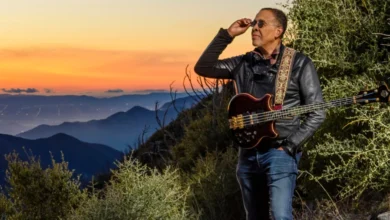
Tyrone Allen II’s Upward, released on Dreams & Fears Records, represents a significant contribution to the experimental jazz canon. Recorded in Brooklyn in April 2024, the album functions as a sonic archive of the COVID-19 pandemic. Allen, primarily known for his work on the upright bass, demonstrates a minimalist approach, acting more as an architectural facilitator than a traditional front-man.
The album is structured around a central suite of five tracks that chronicle the psychological toll of isolation. This narrative arc begins with "Stuck," a track defined by the use of arco bass—a technique involving the use of a bow, which lends the instrument a mournful, human-like resonance. As the suite progresses, the introduction of Samantha Feliciano’s harp serves as a sonic counterweight, shifting the tone from entrapment to a cautious, hopeful trajectory before descending into the frustration captured in "Alt. Stuck."
Beyond the suite, the record utilizes a "mosaic" production technique. Allen reuses rhythmic motifs and atmospheric textures across the 14-track listing, creating a sense of circularity. The track "Smp Sng" serves as a pivotal point for the album’s electronic experimentation; here, Allen trades his acoustic bass for synthesizers, bolstered by the presence of trumpeter Aidan Lombard. The decision to integrate electronic sampling highlights the influence of contemporary production styles on modern jazz, bridging the gap between acoustic improvisation and digital composition. Analysts have noted that Allen’s restraint allows the six featured collaborators to define the album’s identity, resulting in a project that is, by design, greater than the sum of its parts.
Ryan Meagher: The Synthesis of Idioms in Snakes
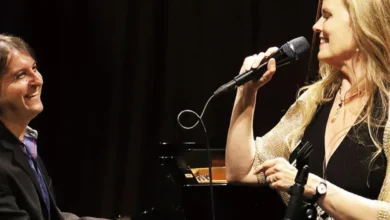
In contrast to the introspective nature of Allen’s work, guitarist Ryan Meagher’s Snakes (PJCE Records, 2025) offers a visceral exploration of genre fluidity. With a career spanning over two decades, Meagher has cultivated an ability to weave elements of folk, rock, bebop, and swing into a cohesive narrative. The release features a core quintet including tenor saxophonist Noah Preminger, pianist George Colligan, bassist Michael Feinberg, and drummer Jonathan Pinson.
The recording sessions, which took place in Portland, Oregon, in June 2025, highlight a unique camaraderie among the musicians. The track "Snakin’ It" exemplifies this kinship; born from an inside joke regarding a fantasy baseball league, the composition blends country-inflected guitar lines with a high-energy swing rhythm. The track serves as a testament to the band’s technical versatility, particularly Preminger’s ability to navigate the extreme registers of the saxophone.
"Snakes" also incorporates live performance recordings, a critical element in maintaining the album’s "free-and-easy" atmosphere. Tracks such as "Pillage A Village" and "Mongoose Of Damascus" were captured in front of live audiences, capturing the kinetic energy of improvisational interaction. These live moments provide a necessary friction to the studio-recorded tracks, such as the melancholic "Uncle Paul," which demands a slower, more deliberate listening experience. The album serves as a masterclass in balance, juxtaposing the "waggish" humor of its lighter tracks with the deep, visceral sincerity of its slower compositions.
Anggie Obin: The Nurturing Resonance of Luz
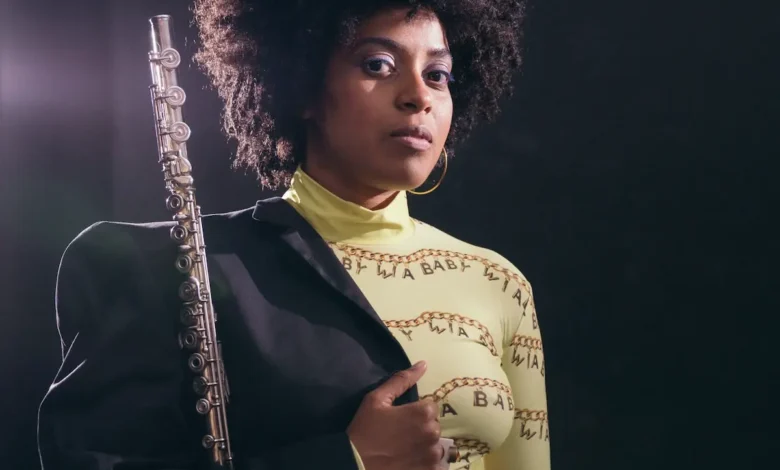
Panamanian flutist Anggie Obin’s debut album, Luz, marks a departure toward a "feelings-first" approach to jazz. Recorded live at the Estival de Jazz in Igualada, Spain, in June 2025, the record captures a rare intimacy. Obin, whose background spans both classical training and jazz performance, utilizes the flute as a conduit for emotional resonance, drawing inspiration from the legacy of her great-grandmother.
The ensemble—comprising Bill McHenry (tenor sax), Miguel "Wiwi" García (piano), Masa Kamaguchi (bass), and Estefanía Chamorro (drums)—demonstrates a high degree of sensitivity to Obin’s leadership. The album’s structure, consisting of four originals and one interpretation, moves through what critics have described as "gentle sonic tides." On "La Eucaristía," Obin employs a quivering vibrato to suggest a sense of longing, while Chamorro’s drumming provides a subtle, unstable intensity.
A notable deviation occurs with the inclusion of "Flash Of The Spirit," a composition by Santi Debriano. By utilizing devices associated with Thelonious Monk, the track introduces a "twisty" and "wonky" melodic structure that contrasts sharply with the rest of the album’s fluid aesthetic. The record concludes with the blues-inflected "Ballot Or The Bullet," where Obin’s performance reaches a crescendo of serrated, high-note improvisation, prompting an ecstatic reaction from the live audience.
Comparative Analysis and Industry Implications
The emergence of these three albums during the 2024–2025 period highlights several emerging trends within the jazz industry:
- The Persistence of Pandemic Influence: While many industries have moved past the COVID-19 era, jazz composers like Tyrone Allen II continue to treat it as a foundational period for artistic exploration. The "lockdown suite" structure is becoming a recognized format for exploring isolation and communal recovery.
- The Hybridization of Performance Spaces: The decision by Meagher and Obin to include live recordings—or, in Obin’s case, to record the entire debut in a live setting—suggests a growing preference for "capturing the moment" over the sanitized perfection of traditional studio environments. This shift reflects a post-pandemic desire to reconnect with the energy of live audiences.
- Collaborative Non-Hierarchy: In all three records, the "leader" functions less as a soloist and more as an organizer of talent. Whether it is Allen’s subtle bass work or Obin’s "watchful" flute melodies, the emphasis is placed on the collective group dynamic rather than individual virtuosity.
Broader Impact on the Genre
The critical reception of these albums suggests that the audience for modern jazz is increasingly receptive to complexity that does not sacrifice emotional accessibility. The use of electronic elements in Allen’s work, the multi-genre blending in Meagher’s compositions, and the classical-jazz fusion in Obin’s debut indicate that the boundaries of what constitutes "jazz" continue to expand.
From a commercial standpoint, the independent distribution models employed by Dreams & Fears, PJCE Records, and UnderPool demonstrate the viability of smaller, niche labels in promoting avant-garde or experimental projects. By focusing on cohesive, theme-based albums rather than single-track streaming performance, these artists are successfully curating a listening experience that encourages repeated engagement.
As the jazz world moves into the latter half of the decade, the emphasis on "patience" and "care"—as noted in both the compositions of Obin and the poise of Allen—may well define the next movement of the genre. These artists are not merely playing notes; they are constructing environments. Whether through the mournful bow of a bass or the serrated edge of a flute, these records provide a roadmap for how jazz can continue to evolve while remaining rooted in the shared human experience.
Technical Specifications and Chronology
- Tyrone Allen II, Upward (Brooklyn, April 2024): A 14-track exploration of the pandemic, utilizing electronic and acoustic hybridity.
- Ryan Meagher, Snakes (Portland, June 2025): A 58-minute synthesis of folk, rock, and bebop, featuring both studio and live performance captures.
- Anggie Obin, Luz (Igualada, June 2025): A 44-minute live debut focusing on classical-jazz fusion and emotional storytelling.
The convergence of these releases in such a short window offers a compelling snapshot of a genre in flux, moving toward a future that is simultaneously more electronic, more live, and more intimately personal than the jazz of the early 2000s. Whether listeners gravitate toward the structural experimentation of Allen, the playful versatility of Meagher, or the gentle, evocative melodies of Obin, the current jazz environment offers a rich tapestry of sound that prioritizes depth and narrative over mere technical display.