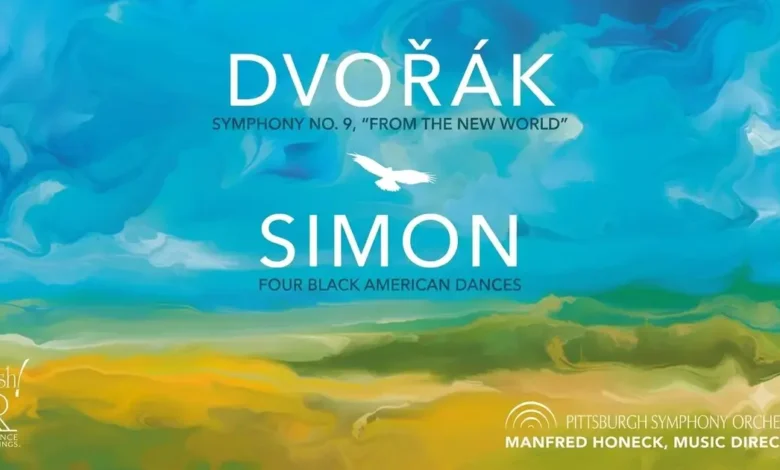
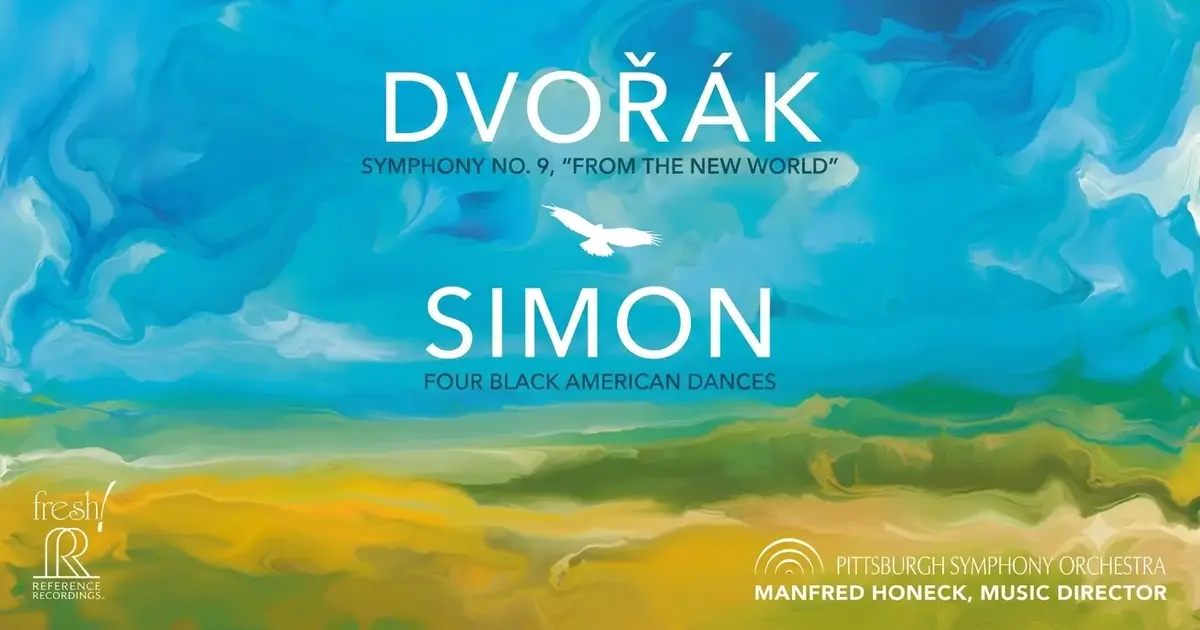
Reference Recordings has officially released the latest collaboration between Music Director Manfred Honeck and the Pittsburgh Symphony Orchestra (PSO), featuring Antonín Dvořák’s Symphony No. 9 in E Minor, Op. 95, “From the New World,” coupled with Carlos Simon’s “Four Black American Dances.” This Hybrid Multichannel SACD marks a continuation of the partnership’s highly acclaimed series of recordings, characterized by meticulous preparation, technical precision, and audiophile-grade engineering. The release enters a competitive field of Dvořák interpretations, positioning the Pittsburgh ensemble alongside historic benchmarks set by the Cleveland Orchestra under George Szell and Christoph von Dohnányi.
The recording captures the PSO at a peak of ensemble unanimity, exhibiting a chamber-music-like sensitivity that has become a hallmark of Honeck’s tenure. While the performance matches the technical standards of previous definitive recordings, it is distinguished by the specific interpretive choices made by Honeck and the high-fidelity transparency provided by the Reference Recordings engineering team.
The Evolution of the Pittsburgh-Honeck Partnership
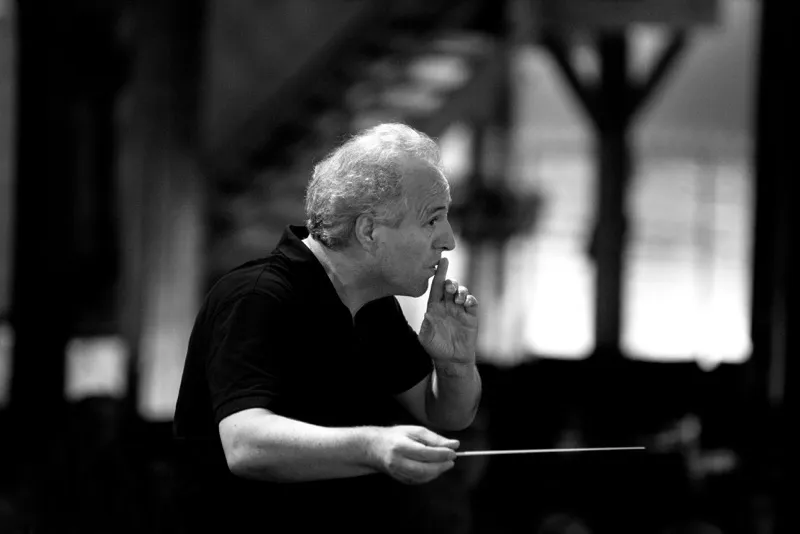
Since Manfred Honeck assumed the role of Music Director in 2008, the Pittsburgh Symphony Orchestra has undergone a significant transformation, gaining international recognition for its distinct sound and interpretive boldness. Honeck, a former violist with the Vienna Philharmonic, brings a Central European tradition to the American ensemble, blending rigorous discipline with a willingness to challenge established performance conventions.
The partnership with Reference Recordings has been instrumental in documenting this era. Utilizing the "Sound Recording" technology developed by Keith O. Johnson, these releases are frequently cited for their warmth, dynamic range, and spatial clarity. This latest Dvořák release follows a lineage of successful recordings of works by Beethoven, Brahms, and Bruckner, many of which have received Grammy nominations and critical accolades for their "Pittsburgh sound"—a combination of brass power, string warmth, and woodwind character.
Interpretive Innovations in Dvořák’s Symphony No. 9
Honeck’s approach to the "New World" Symphony is defined by a deep engagement with the score, often resulting in modifications to dynamics, articulation, and phrasing that deviate from traditional interpretations. These "unmarked" tweaks are a central feature of the conductor’s philosophy, which seeks to uncover the dramatic and emotional core of the music through contemporary lens and historical research.
A notable example in the first movement is the application of an unmarked crescendo in the brass sections during the second theme. This creates a bridge between the antecedent and consequent phrases, adding a layer of tension not typically found in standard readings. Additionally, Honeck reshapes specific crescendos—such as those found early in the first movement—to heighten the symphonic drama.
One of the more radical departures occurs in the timpani part. Honeck argues in the recording’s liner notes that the timpani of Dvořák’s era were limited by mechanical constraints that prevented certain executions the composer likely intended. By utilizing the capabilities of modern instruments, Honeck alters the percussion lines to provide a more percussive and modern impact. Furthermore, the conductor employs significant tempo fluctuations, most notably "slamming on the brakes" for the third theme’s flute solo, dropping to a substantially slower tempo before regaining momentum.
The Largo and the Programmatic Influence
The second movement, the famous Largo, is approached by Honeck as a miniature tone poem rather than a simple folk-inspired slow movement. Drawing on Dvořák’s own writings, which cited Henry Wadsworth Longfellow’s poem The Song of Hiawatha as an influence, Honeck creates an atmosphere of deep rhetorical weight. The opening and closing wind chorales are rendered with an organ-like sonority, providing a foundation for the English horn solo, performed here by Ian Woodworth.
While many conductors, such as Jiří Bělohlávek or Sir Charles Mackerras, opt for a plainer, faster approach that emphasizes the "folk-like" simplicity of the melody, Honeck’s reading is more gestural. This interpretation leans into the unwritten program of the music, emphasizing the "sketch-like" nature Dvořák mentioned when describing the movement as a study for a longer composition.
The final two movements of the symphony—the Scherzo and the Allegro con fuoco—showcase the orchestra’s technical prowess with fewer interpretive interventions. The Scherzo’s Trio is noted for its "folksy warmth," allowing the woodwinds and strings to demonstrate the ensemble’s characteristic blend.
Historical Context: Dvořák in the United States
The "New World" Symphony remains one of the most popular works in the orchestral repertoire, composed in 1893 during Dvořák’s tenure as director of the National Conservatory of Music of America in New York City. The work was premiered at Carnegie Hall by the New York Philharmonic and was immediately hailed as a masterpiece that captured the American spirit through the lens of a Bohemian immigrant.
Dvořák was famously inspired by Native American music and African American spirituals, which he learned about through his student Harry T. Burleigh. This historical context is vital to understanding the "New World" Symphony, as it represents a synthesis of European symphonic form and American melodic influences. Honeck’s recording enters a discography that spans over a century, offering a version that prioritizes high-definition clarity and individualistic expression over the "of-the-moment" spontaneity found in live-captured recordings like those of Andris Nelsons or Nathalie Stutzmann.
Contemporary Coupling: Carlos Simon’s Four Black American Dances
A significant feature of this release is the inclusion of Carlos Simon’s Four Black American Dances. Commissioned by the Boston Symphony Orchestra and Andris Nelsons, Simon’s work serves as a contemporary dialogue with Dvořák’s American-influenced symphony. Simon, the current Composer-in-Residence at the Kennedy Center, is known for works that explore the Black American experience through a sophisticated orchestral palette.
The suite consists of four distinct movements:
- Ring Shout: An ecstatic opening that pays homage to the ritual dance practiced by enslaved Africans in the West Indies and the United States. This movement allows the PSO to showcase a jazz-influenced rhythmic vitality.
- Waltz: A gently affecting movement where Honeck draws parallels to the sensuous orchestral writing of Richard Strauss, particularly Der Rosenkavalier.
- Tap Dance: (Implicit in the rhythmic structure of the suite’s progression).
- Holy Dance: The closing movement mimics the fervor of a religious congregation "speaking in tongues." It builds to a riotous coda before concluding unexpectedly with a simple plagal cadence.
The inclusion of Simon’s work provides a thematic bridge, linking Dvořák’s 19th-century observations of American music to a modern, authentic Black American voice. The Pittsburgh Symphony’s performance of the dances is marked by the same level of commitment and detail as their Dvořák, suggesting a versatile ensemble capable of navigating diverse stylistic demands.
Technical Specifications and Engineering
Reference Recordings has utilized its "Fresh Aire" philosophy for this production, ensuring that the listener experiences the natural acoustics of Heinz Hall in Pittsburgh. The FR-769SACD is a Hybrid Multichannel SACD, meaning it contains a high-resolution 5.1 surround sound track, a high-resolution stereo track, and a standard CD-compatible stereo track.
The engineering is credited with providing a level of transparency that surpasses older legendary recordings. While the Szell and Dohnányi recordings are praised for their "brilliant playing," they often suffer from the limitations of mid-to-late 20th-century analog and early digital technology. The Pittsburgh recording offers a wider dynamic range and a more accurate representation of orchestral textures, particularly in the lower frequencies and the complex layering of the brass and percussion.
Comparative Analysis and Market Impact
The release of another "New World" Symphony recording raises questions about its necessity in a saturated market. However, the combination of Honeck’s idiosyncratic leadership and the PSO’s technical execution provides a compelling argument for its place.
Critics have often compared Honeck’s polished, highly shaped performances to those of Herbert von Karajan with the Berlin Philharmonic, noting that such perfection can sometimes come at the expense of "vulnerability" or "humanness." While some listeners may prefer the more "plainer" routes taken by Czech conductors who emphasize the score’s Bohemian roots, Honeck’s version is aimed at those who appreciate a high degree of conductorial "vision" and sonic luxury.
The inclusion of Carlos Simon’s work also makes this release a significant contribution to the effort of diversifying the orchestral canon. By pairing a standard "warhorse" like Dvořák with a modern Black American composer, the Pittsburgh Symphony Orchestra aligns itself with current trends in the industry that seek to contextualize classical masterpieces within a broader historical and social framework.
Conclusion
The Pittsburgh Symphony Orchestra’s recording of Dvořák’s Symphony No. 9 and Carlos Simon’s Four Black American Dances stands as a testament to the high standards of modern American orchestral performance. Under Manfred Honeck’s direction, the ensemble continues to push the boundaries of interpretation, offering a "New World" that is both technically flawless and provocatively individual. Coupled with the state-of-the-art engineering of Reference Recordings, this release is positioned to be a significant entry in the 21st-century discography of these works, appealing to both traditionalists and those seeking a fresh perspective on the American symphonic tradition.