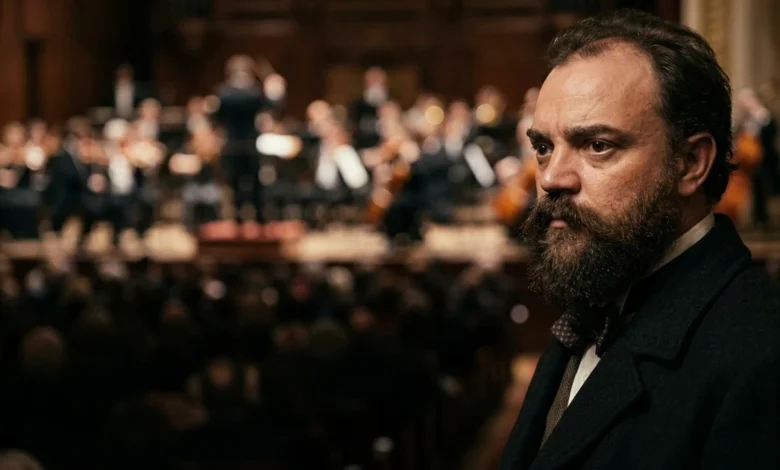
Composed in the waning months of 1892 and finalized in the spring of 1893, Antonín Dvořák’s Symphony No. 9 in E minor, Op. 95, widely known as the From the New World symphony, remains one of the foundational pillars of the orchestral repertoire. Written during Dvořák’s tenure as the director of the National Conservatory of Music of America in New York City, the work encapsulates a fascinating cultural and artistic dialogue between the Old World and the New. Over a century since its triumphant world premiere at Carnegie Hall by the New York Philharmonic under the baton of Anton Seidl, the symphony continues to captivate listeners, scholars, and performers alike. As part of its ongoing critical survey of masterworks, The Classic Review editorial team has compiled an authoritative guide to the ten finest recordings of this enduring masterpiece, examining how different conductors have unlocked the manifold complexities of Dvořák’s score.
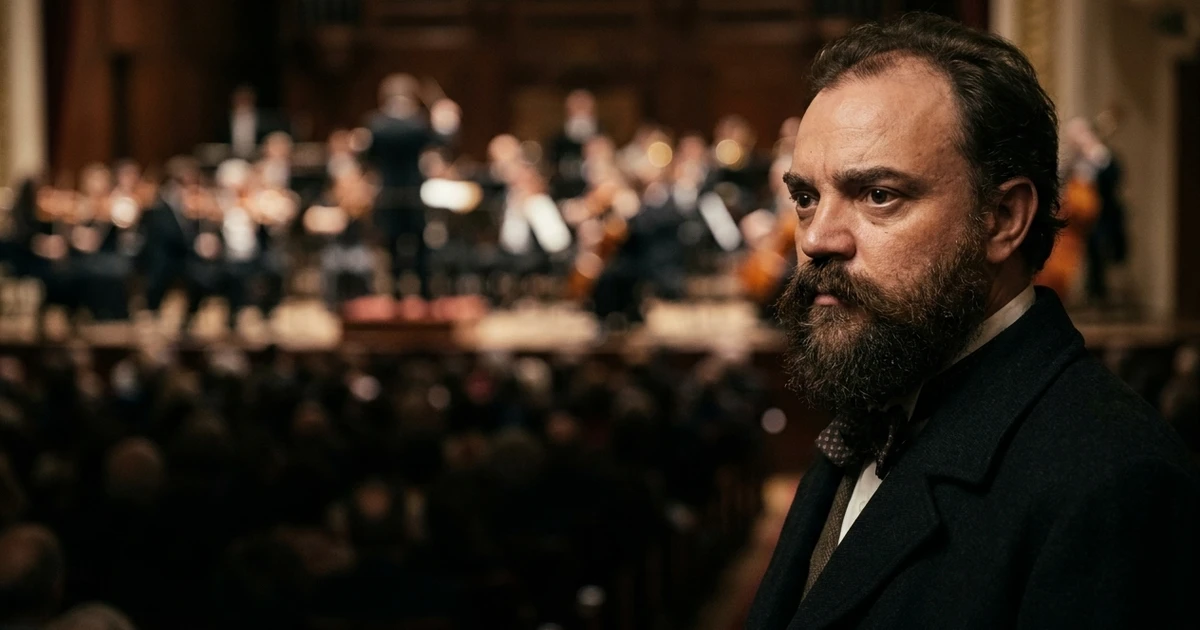
Historical Background and Genesis of the New World Symphony
The genesis of Dvořák’s ninth symphony is deeply intertwined with a pivotal moment in American cultural history. In 1892, wealthy patron of the arts Jeannette Thurber invited the prominent Czech composer to relocate to New York City to lead the National Conservatory of Music. Thurber hoped that Dvořák would help foster a distinct American school of classical composition. Immersing himself in the musical landscape of the United States, Dvořák famously stated in interviews with the press that he found the true foundation of American music in the traditional melodies of Native Americans and African Americans.
During his time in New York and a subsequent summer retreat in Spillville, Iowa, Dvořák sketched the thematic material that would comprise the symphony. The full score was completed in May 1893. The official premiere took place on December 16, 1893, at Carnegie Hall. The public reception was nothing short of ecstatic; contemporary accounts note that the audience broke into enthusiastic applause after every single movement, compelling the composer to rise from his private box and bow repeatedly to the packed house.
Despite Dvořák’s stated intentions regarding American musical influences, the question of how much genuine "American" idiom resides in the work has remained a subject of persistent musicological debate. While the pentatonic melodies and syncopated rhythms evoke the expansive landscapes of the American frontier and the poignant vocalizations of spirituals, prominent harmonic and rhythmic structures unmistakably bear the imprint of Dvořák’s Bohemian homeland.
Orchestration and Structural Overview
Scored for a standard late-Romantic orchestra—featuring double woodwinds, four horns, two trumpets, three trombones, a tuba, timpani, a triangle, a single cymbal stroke, and strings—the symphony unfolds across four distinct movements. The structure balances intimate solo passages with immense, driving orchestral energy.
The opening movement establishes a dramatic atmosphere, frequently debated among conductors regarding whether to observe the exposition repeat. The second movement, the Largo, centers upon one of the most recognizable English horn melodies in classical music history, a theme later adapted into the popular spiritual-style song "Goin’ Home." The Scherzo offers a kinetic, dance-like pulse before the expansive finale gathers and integrates thematic material from all three preceding movements, bringing the work to a resounding conclusion.
Critical Evaluation: The Top 10 Recordings
To navigate the vast discography of the New World Symphony, The Classic Review has evaluated historic and modern interpretations, highlighting how specific podium decisions shape the listener’s experience.
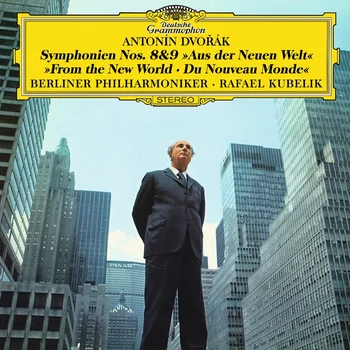
Berlin Philharmonic, Rafael Kubelík (1972)
For half a century, Rafael Kubelík’s 1972 recording with the Berlin Philharmonic has served as a primary benchmark for the work. Kubelík allows the music to breathe naturally, employing subtle rubato that grants the lyrical lines ample room to expand. The Berlin woodwinds deliver poetry of the highest order in the Largo, evoking a palpable sense of homesickness. While the first-movement repeat is omitted, and loud climaxes occasionally congest due to the engineering, the warmth and full-toned brass secure its status as an essential interpretation.
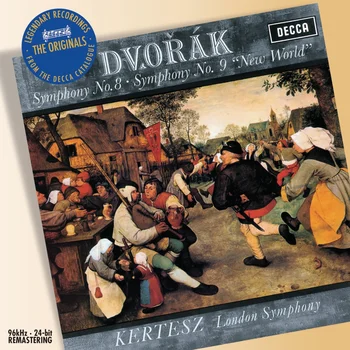
London Symphony Orchestra, István Kertész (1966)
Taking the first-movement exposition repeat that Kubelík leaves out, István Kertész frames the London Symphony Orchestra in a reading of grand proportions. The LSO plays with fierce commitment and a searching lyricism, combining robust string tone with a distinct brass rasp. Kertész maintains buoyant, dance-like rhythms that prevent the broader tempos from feeling leaden, capturing the expansive scale of the symphony with remarkable structural integrity.
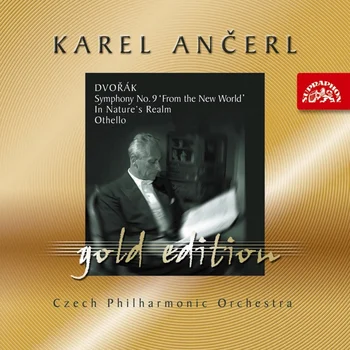
Czech Philharmonic, Karel Ančerl (1961)
Rooted in authentic Bohemian tradition, Karel Ančerl’s 1961 recording with the Czech Philharmonic offers a dark, steady, and unpretentious interpretation. Relying on an unforced pulse and the orchestra’s rustic string and wind colors, Ančerl lets the rhythm drive the narrative. Notably, he adopts a slower tempo for the Scherzo’s trio, allowing the triangle’s delicate figures to emerge with crystalline clarity, while keeping the Largo flowing without excessive sentimentality.
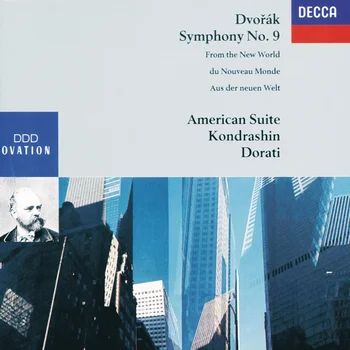
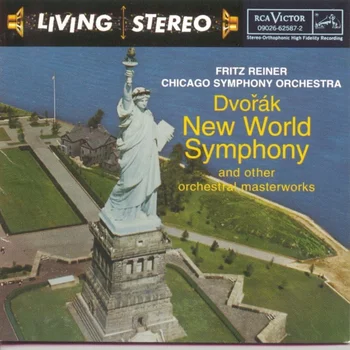
Chicago Symphony Orchestra, Fritz Reiner (1957)
Fritz Reiner’s sole commercial recording of a Dvořák symphony remains a masterclass in urgency and precision. Following a measured introduction accented by sharply pointed timpani, the Chicago Symphony Orchestra presses forward with relentless rhythmic momentum. The Scherzo possesses a raw, biting edge, while the Largo achieves a hymn-like stillness. Reiner’s straightforward approach eschews added pathos, presenting the score with uncompromising architectural rigor.
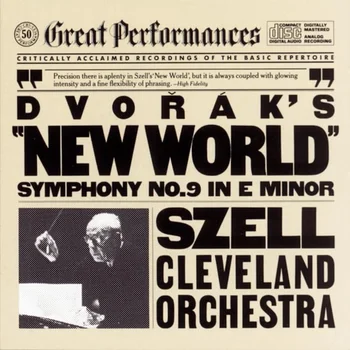
Cleveland Orchestra, George Szell (1959)
Recorded just a few hundred miles away from Chicago, George Szell and the Cleveland Orchestra approached the work through a lens of absolute transparency. Eschewing heavy weight for lean, clean balances, Szell ensures every strand of Dvořák’s orchestration remains audible. The Cleveland horn section performs with peerless discipline. Though the driving tempos can occasionally feel uncompromising, this version is unequaled for listeners who prioritize textural clarity.
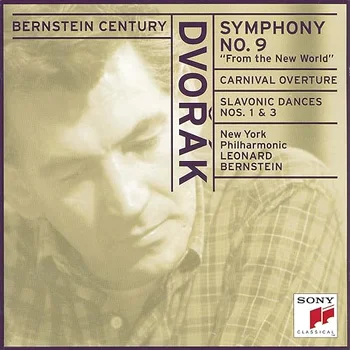
Vienna Philharmonic, Kirill Kondrashin (1979)
Characterized by the glowing warmth of the Vienna Philharmonic strings, Kirill Kondrashin’s 1979 digital recording emphasizes vocal grace over brute force. Employing small expressive pauses to elevate the rhythmic swing, Kondrashin adopts a slightly brisk tempo in the Largo that avoids any hint of rushing. The wide dynamic range captures an ensemble brimming with vitality, offering an immensely appealing alternative for those valuing buoyancy and melodic charm.
New York Philharmonic, Leonard Bernstein (1962)
As one of the earliest conductors to champion the first-movement exposition repeat, Leonard Bernstein infuses his 1962 studio recording with the New York Philharmonic with explosive forward momentum. Often cited as a definitive reading of mid-century American performance practice, Bernstein scales the Largo down to chamber-like intimacy before unleashing the full dramatic fury of the outer movements. Despite minor roughness in ensemble polish, the sheer vitality of the performance remains unmatched.
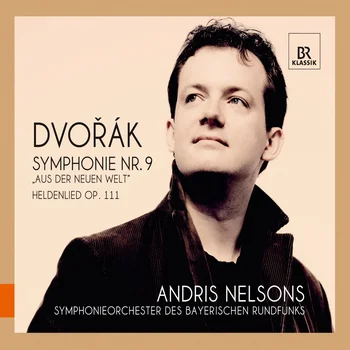
Bavarian Radio Symphony Orchestra, Andris Nelsons (2010)
Representing the finest modern iteration of the grand symphonic tradition, Andris Nelsons’s 2010 live concert recording with the Bavarian Radio Symphony Orchestra delivers immense scale and dynamic range. Nelsons observes the exposition repeat and unearths deep veins of nostalgia beneath the fast movements. The Largo transitions effortlessly from vast expanses to quiet, chamber-like whispers, while the finale brilliantly synthesizes the thematic threads of the entire work.
Royal Concertgebouw Orchestra, Nikolaus Harnoncourt (1999)
Nikolaus Harnoncourt approaches the familiar score with radical analytical fresh-thinking in his 1999 concert recording with the Royal Concertgebouw Orchestra. Driven by meticulous adherence to editorial markings in the score, the woodwinds and brass execute sharp dynamic extremes with rare finish. While this detail-oriented, high-contrast interpretation challenges traditional expectations, it offers profound intellectual and aesthetic rewards.
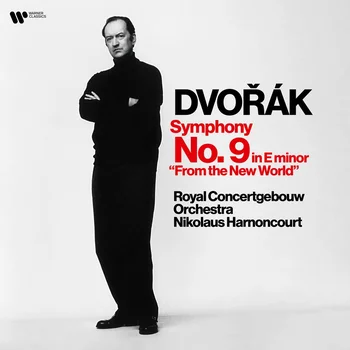
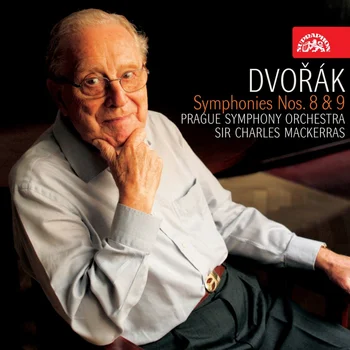
Prague Symphony Orchestra, Charles Mackerras (2005)
Captured live during concerts celebrating his eightieth birthday in 2005, Charles Mackerras’s interpretation with the Prague Symphony Orchestra reflects the wisdom of a lifelong master of the Czech repertoire. Maintaining a consistent pulse that keeps the Largo flowing naturally, Mackerras elicits warmth and gusto from the orchestra without resorting to over-inflation. The performance builds to a powerfully cohesive conclusion, cemented by the unbroken silence of the audience until the final chord decays.
Implications and Broader Cultural Impact
The enduring appeal of Dvořák’s Symphony No. 9 lies in its unique capacity to synthesize disparate cultural elements into a universally resonant artistic statement. Whether viewed as an American tone poem imbued with the spirit of the New World or as a nostalgic meditation on a Bohemian homeland from across the Atlantic, the work continues to serve as a primary vehicle for orchestral self-expression. Through the diverse interpretive lenses of Kubelík, Kertész, Bernstein, and others, the New World Symphony remains as vital to the contemporary classical music landscape as it was on that crisp December evening at Carnegie Hall in 1893.